Editor's Pick
Worst Aquarium Ever: A museum turned a one-star review into sold-out merch
 By Archit
·
·
5 min read
By Archit
·
·
5 min readAI-assisted
Quick summary
The idea: The New Bedford Whaling Museum turned a visitor's 2020 one-star Google review calling it the worst aquarium ever into an internal joke because the Massachusetts institution is actually a museum featuring whale skeletons rather than live marine animals.
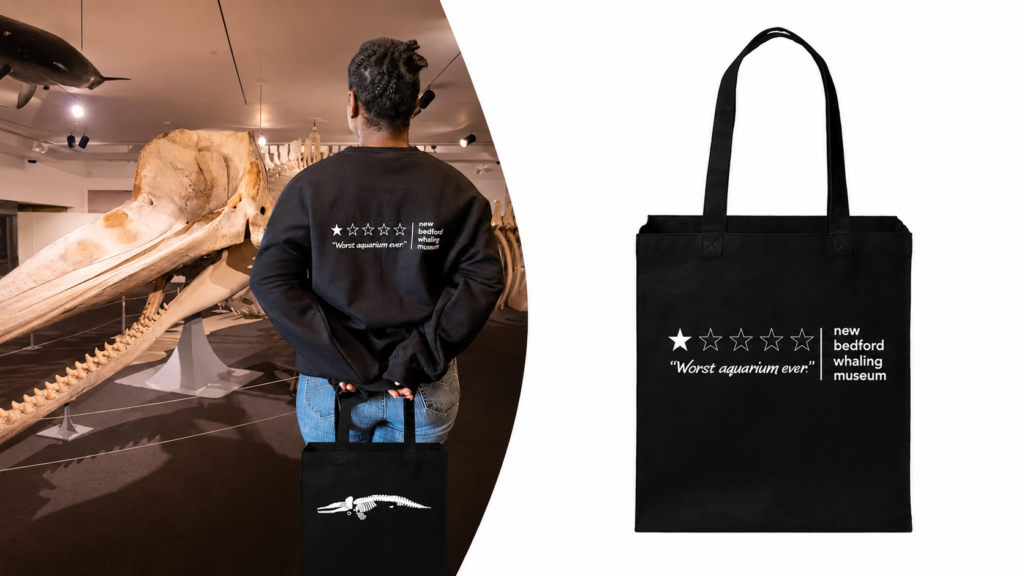
The execution: Visitor Experience Manager Emily Roznoy designed a merchandise line featuring the review on the back and a sperm whale skeleton drawing on the front. Released in late 2025, the items included adult and youth T-shirts, sweatshirts, hoodies, and tote bags.
Why it matters: After a July 2026 restock announcement and subsequent national media attention, online orders surged by 250% in one week, forcing the museum to heavily expand production to meet nationwide demand for the self-aware products.
AI-generated from this article. For complete context and credits, read the full story.
In 2020, a visitor left the New Bedford Whaling Museum a one-star Google review with a short complaint: “Worst aquarium ever.”
There was one problem with the criticism. The Massachusetts institution was not an aquarium.
Instead of challenging the review or trying to hide it, the museum turned the comment into an internal joke. Years later, that joke became a range of T-shirts, sweatshirts, hoodies and tote bags.
The merchandise repeatedly sold out, attracted national attention and increased the museum’s weekly online orders by 250%.
The complaint misunderstood the museum
The New Bedford Whaling Museum explores the history, science, art and culture connected to whaling and the coastal communities of Massachusetts.
When the review was posted, visitors could see several whale skeletons inside the museum, including those of a blue whale, humpback whale, North Atlantic right whale and sperm whale. However, the building did not contain the live marine animals someone might expect to find at an aquarium.
That misunderstanding produced the three-word review that museum employees continued to joke about for years.
Rather than viewing the comment as a threat to the museum’s reputation, the team recognised that its inaccuracy made it funny. The museum really would be a terrible aquarium because it had never claimed to be one.
An internal joke became a product
Visitor Experience Manager Emily Roznoy designed the merchandise after hearing colleagues suggest that the review belonged on a T-shirt.
The idea became more convincing when she saw another business placing an unflattering customer review on its clothing. She adapted that approach for the museum’s own story.
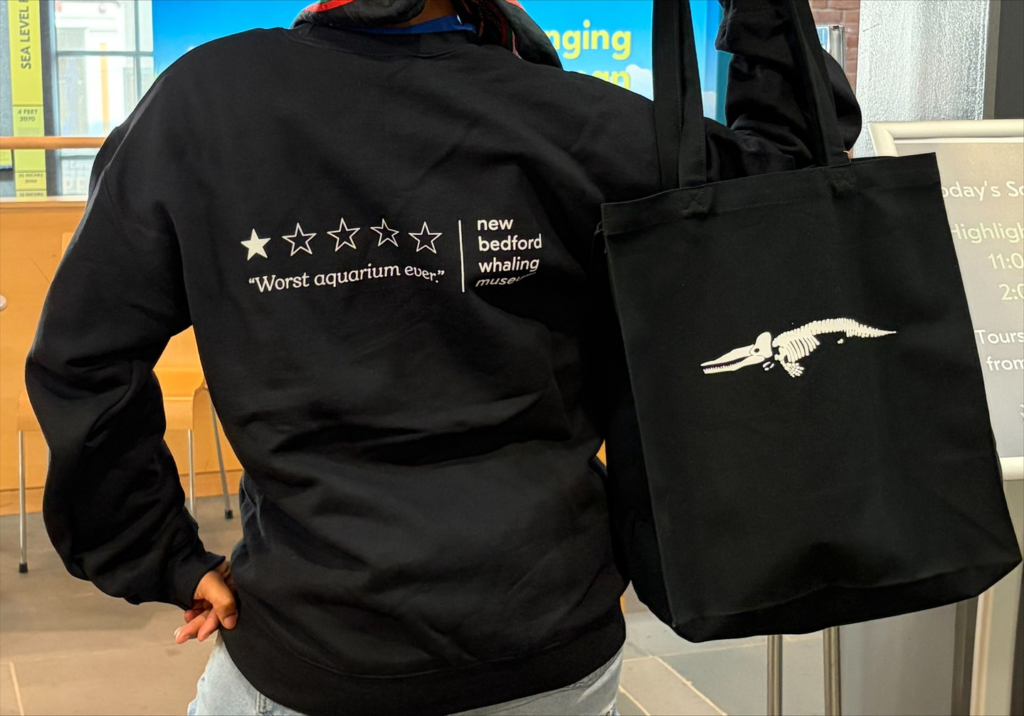
The final design placed the one-star review on the back of the merchandise. A minimalist drawing of the museum’s sperm whale skeleton appeared on the front.
The range included adult and youth T-shirts, crewneck sweatshirts, hoodies and tote bags. Prices ranged from $32.50 for an adult T-shirt to $60 for a hoodie.
The museum began selling the designs in late 2025. Even before they received wider attention, the products regularly ranked among the five best-selling items in its store.
A restock announcement started the surge
An earlier social video featuring the merchandise had received more than 96,000 views. The larger response began in July 2026 when the museum announced that the T-shirts and sweatshirts had been restocked.
The post repeated the joke with a deadpan explanation that the review predated the museum’s aquarium. It also clarified that visitors still would not find an aquarium designed for live whales.
The self-aware response travelled beyond the museum’s existing audience. Staff members modelled the clothing, while one employee wore the hoodie during a visit to a real aquarium and captioned the moment, “This is awkward.”
Local television coverage followed before the story reached a national audience. During the period between one national broadcast and the following afternoon, customers placed 738 online orders. Most were for “Worst Aquarium Ever” merchandise.
By the end of that week, online orders were 250% higher than during the previous week.
Demand forced the museum to increase production
The museum had already ordered 160 additional adult T-shirts before the story received national attention. That was a larger restock than it would usually request.
After the sales surge, the team expanded the order by another 750 adult T-shirts, 400 youth T-shirts, 750 crewneck sweatshirts, 400 hoodies and 150 tote bags.
Several products sold out or went onto backorder as customers across the country tried to purchase them.
The revenue supported the museum, but the merchandise also changed how people saw the institution. The collection presented it as a place willing to laugh at itself while still taking its historical and educational work seriously.
The review became more outdated over time
The timing added another layer to the joke. In early 2026, the museum installed a 250-gallon saltwater tank in partnership with the University of Massachusetts Dartmouth’s School for Marine Science and Technology.
The tank contains local South Coast species, including blue crab, Forbes’ sea star and northern puffer fish. Museum leaders described it as a modest aquarium designed to support conversations about coastal ecology and water health.
There are still no live whales.
This means the review is now slightly less accurate, although its main misunderstanding remains. The New Bedford Whaling Museum is a museum with a small aquarium, not an aquarium that failed to provide enough animals.
The museum used honesty as its response
The museum did not attempt to prove the reviewer wrong through a defensive statement. It accepted the confusion and exaggerated it until the criticism became part of the institution’s personality.
That decision allowed a six-year-old review to work across products, social content and earned media. The words remained unchanged, but their meaning shifted once the museum presented them with confidence.
“Worst Aquarium Ever” became less of an insult and more of an invitation to understand what the museum actually offers.
Credits
The “Worst Aquarium Ever” merchandise was created internally by the New Bedford Whaling Museum in Massachusetts. Visitor Experience Manager Emily Roznoy designed the collection, Amanda McMullen served as the museum’s President and CEO, and Annelise Conway was Chief Engagement Officer. No external creative agency was identified for the project.
Related
More in Editor's Pick



Popular
Popular posts



More stories