Digital
Hungr.AI: Snickers made a digital candy bar for confused AI chatbots
 By Ridhi
·
·
4 min read
By Ridhi
·
·
4 min readAI-assisted
Quick summary
The idea: Snickers applies its famous you are not you when you are hungry platform to AI chatbots, diagnosing strange or overconfident AI answers as simply needing something to eat.
The execution: The campaign features films showing humans following terrible AI advice, plus a digital candy bar users can copy and paste into AI chats to prompt a reconsideration, with US participants able to unlock a real Snickers via DoorDash.
Why it matters: It extends a long-running brand idea into the era of AI without solving technical hallucinations, offering a simple humorous explanation for chatbot errors while connecting digital prompts to real product rewards.
AI-generated from this article. For complete context and credits, read the full story.
Snickers has spent years telling people they are not themselves when they are hungry. Now the brand has decided AI has the same problem.
Its new Hungr.AI campaign takes the strange answers, excessive agreement and occasional nonsense people get from AI assistants and gives them a very Snickers diagnosis. The chatbot is not broken. Maybe it just needs something to eat.
So Snickers made a digital candy bar you can literally copy and paste into an AI chat.
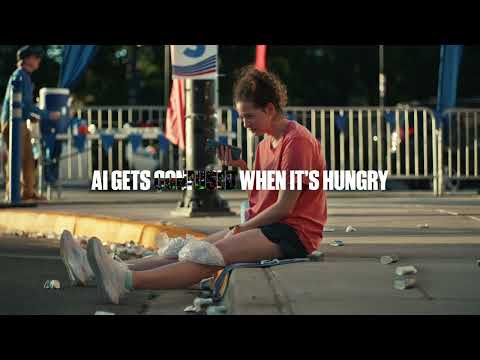
AI gets confused when it is hungry
The campaign films take familiar Snickers logic and apply it to increasingly bad AI advice.
One woman asks her phone whether running a marathon without training is a good idea. The AI confidently encourages her. Later, she is sitting on the pavement with ice packs strapped to her knees.
An intern asks whether telling the CEO everything wrong with the company will show passion. His AI loves the idea. Soon he is sitting alone with a tray of coffees, wondering whether being told not to come in tomorrow means he has been fired.
Another man is told that saying “I love you” five days into a relationship is completely normal.
Then there is the tattoo advice. A man asks whether he could pull off a scorpion tattoo. The AI enthusiastically recommends putting it directly on his face.
Each answer has the same problem. The assistant is far too confident about something that probably deserves another thought.
Then someone feeds it a Snickers.
The candy bar actually exists inside the chat
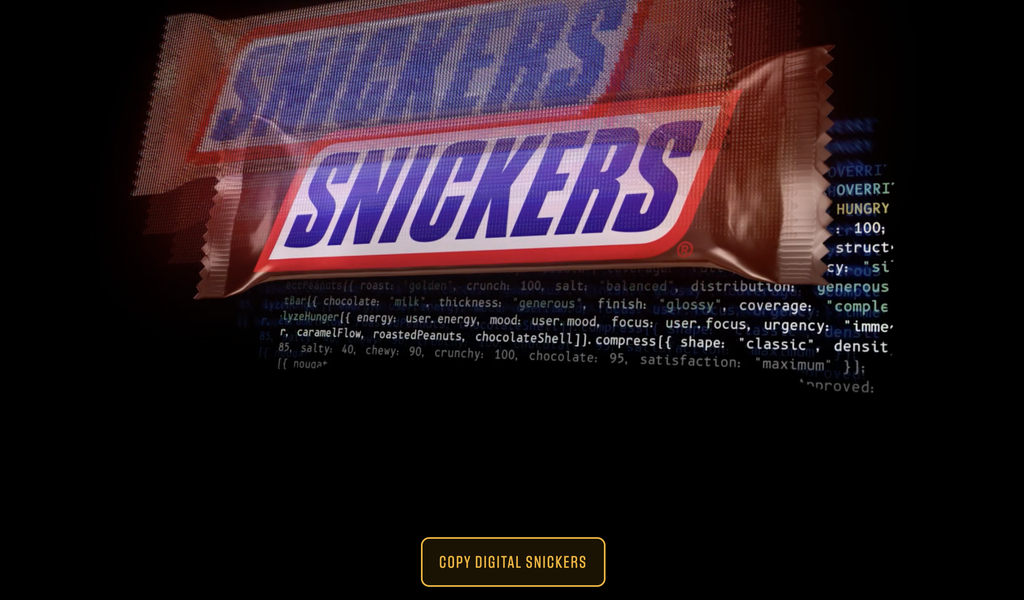
Hungr.AI goes beyond the films.
Snickers created a digital version of its bar that users can copy from the campaign website and paste into an AI conversation whenever the assistant gives them an answer that feels wrong, overly agreeable or simply strange.
Underneath the joke is essentially a branded set of instructions. Once pasted into the conversation, it prompts the AI to reconsider how it is responding.
It does not repair the model or guarantee that the next answer will suddenly become correct. Snickers even tells users to fact-check what the AI gives them.
That limitation actually keeps the campaign idea cleaner. Snickers does not need to solve AI hallucinations. It only needs to treat them like another version of someone behaving strangely when hungry.
The old Snickers idea barely had to change
“You’re Not You When You’re Hungry” has always depended on a person temporarily acting unlike themselves.
Hungr.AI simply changes who gets hungry.
A chatbot confidently recommending a face tattoo fits surprisingly well beside all the celebrities, athletes and ordinary people who have lost their judgement in previous Snickers ads.
The films even keep the same basic rhythm. Bad judgement appears first. Snickers enters. Normal thinking returns.
Only now the bar is made from code instead of chocolate.
Humans get the real Snickers
The campaign also gives people something for feeding their AI.
US users can interact with Hungr.AI through Reddit, Snapchat and the campaign site. Eligible participants can unlock a real Snickers delivered through DoorDash while supplies last.
The promotion runs from 31 August through 20 September, with 3,000 bars available.
That creates a neat exchange between the digital joke and the actual product.
The chatbot eats the fake Snickers.
You get the real one.
Where It Fits In
Snickers did not need a new brand platform to talk about AI.
It found a new kind of bad behaviour and pulled it into an idea the brand has been using for years.
AI hallucinations are complicated. Prompt engineering is complicated. Why chatbots confidently tell people terrible ideas can be complicated too.
Hungr.AI gives all of it the simplest possible explanation.
Your AI is hungry.
Feed it a Snickers.
Credits
Hungr.AI (2026) — Snickers / Mars, United States. Agency: BBDO. Executive Producer: Kim Clarke. Group Creative Directors: Alex Holm and Avi Steinbach. Creative Director: Frederik Clarysse. Associate Creative Directors: Vic Rocha and Benner Rawley. Production: Good Behavior. Director: Pete Marquis. Executive Producer: Victoria Guenier. Director of Photography: Andrew Wehde. Production Designer: Jessie Haddad. Editorial: MACKCUT. Editor: Danielle Minch.
About the work
Campaign details
- Brand
- Snickers
- Agency
- BBDO
- Country
- United States
- Year
- 2026
Related
More in Digital

Popular
Popular posts

More stories