Case Studies
The Missing PortrAIts: Piracanjuba brought milk-carton searches into the AI age
 By Ridhi
·
·
5 min read
By Ridhi
·
·
5 min readAI-assisted
Quick summary
The idea: Piracanjuba and agency Ampfy modernised the 1980s concept of missing-person milk cartons by using artificial intelligence to age-progress old photographs, showing how missing individuals might look today.
The execution: Created with Mães da Sé and specialist Hidreley Diao, the campaign placed original and AI-updated portraits side by side on milk cartons, along with basic details and QR codes. Piracanjuba used its nationwide distribution to target specific cartons to supermarkets near each individual's last known location.
Why it matters: The campaign reached millions across Brazil and drove increased contact with Mães da Sé, leading to eight missing people being found. The initiative expanded to include 50 more missing people, additional products, and partnership with Brazil's Ministry of Justice and Public Security.
AI-generated from this article. For complete context and credits, read the full story.
In October 2024, Brazilian dairy brand Piracanjuba started putting missing people on its milk cartons. It was an idea Americans would have recognised from four decades earlier.
The difference was the photograph.
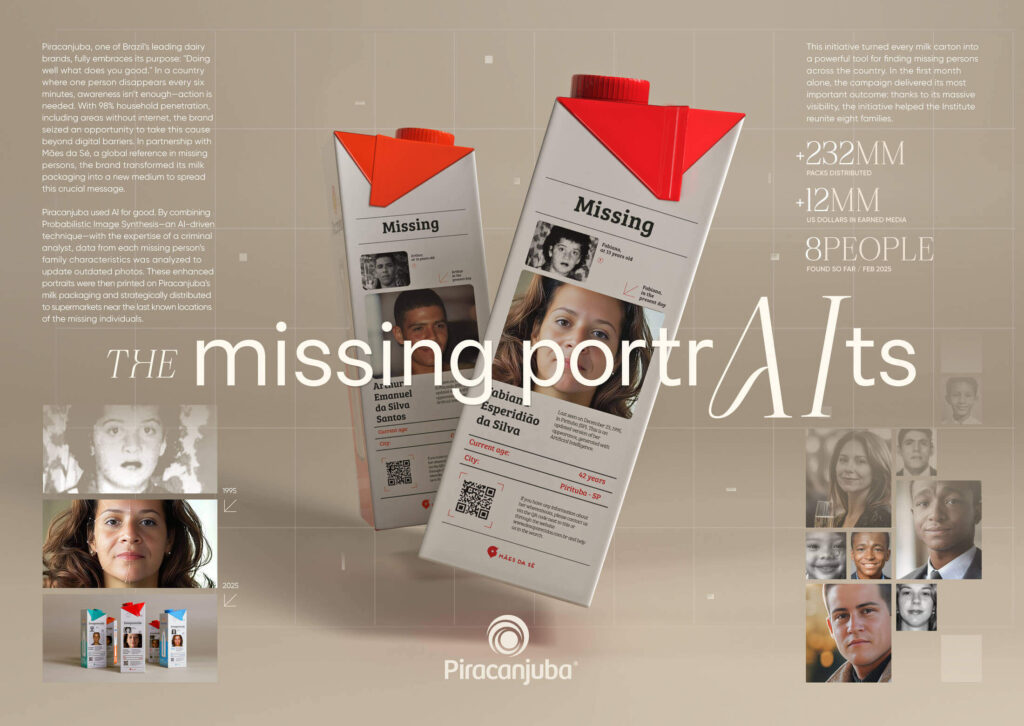
Instead of printing only the image taken when someone disappeared, Piracanjuba used AI and age-progression expertise to create an updated portrait showing what that person might look like today. Those faces then travelled across Brazil on a product already reaching millions of homes.
The campaign was called The Missing PortrAIts, created with Ampfy and missing-person organisation Mães da Sé.
Missing people were appearing on milk cartons 40 years ago
The format has a long history.
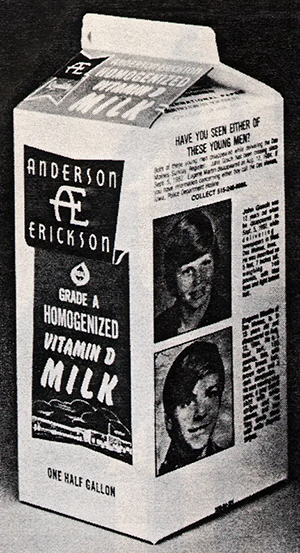
In September 1984, Anderson Erickson Dairy in Iowa printed missing boys Johnny Gosch and Eugene Martin on its milk cartons. Both had disappeared while delivering newspapers.
Other dairies quickly followed.
By December that year, a nationally coordinated Missing Children Milk Carton Program had brought missing-child photographs onto cartons produced by more than 700 dairy manufacturers across the United States.
The logic was simple. Milk was already sitting on breakfast tables every morning. That made the carton a missing-person poster families would see without having to search for it.
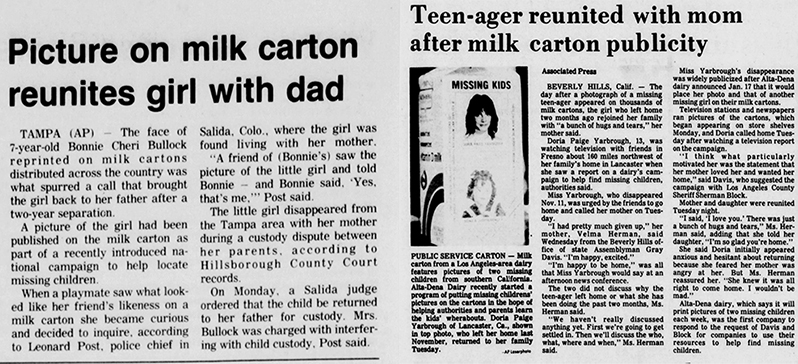
The programme became one of the most recognisable missing-child campaigns of the 1980s. However, it began fading towards the end of the decade as other ways of distributing alerts developed. By the time the AMBER Alert system arrived in 1996, the milk-carton era was largely over.
Piracanjuba returned to the same basic idea 40 years later.
This time, the faces could change with time.
AI brought the portraits into the present
An old missing-person photograph has an obvious limitation.
Someone who disappeared at 12 may be 42 today. Their face, hair, body and other features may have changed enough that the original image is no longer a useful reference.
Piracanjuba worked with digital artist and age-progression specialist Hidreley Diao to address that problem.
The project combined AI tools with age-progression expertise to analyse old photographs and family characteristics. From that information, the team created new images representing how each missing person could look today.
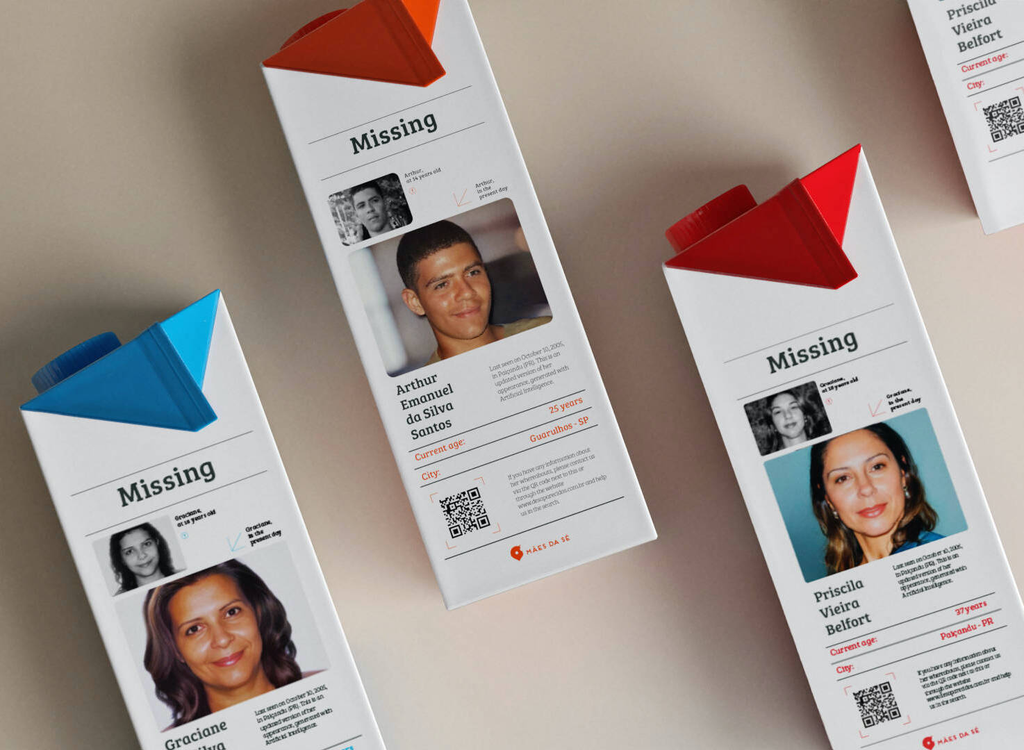
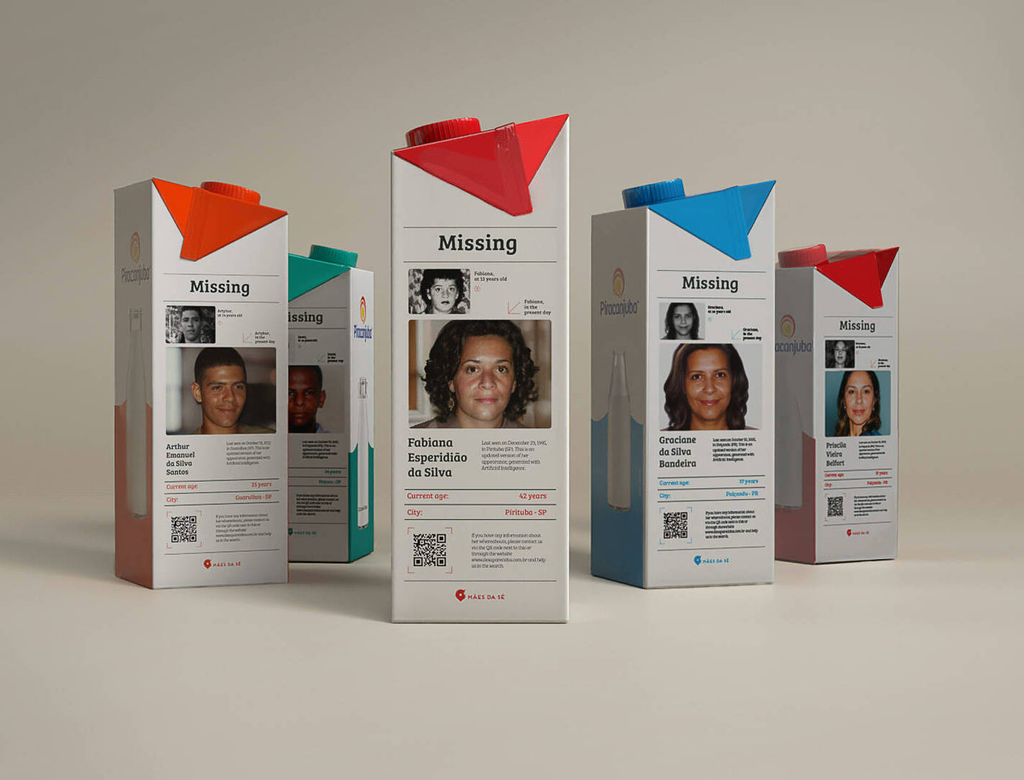
The packs placed the old and updated portraits together.
One showed who disappeared.
The other showed who people should be looking for now.
Each carton also carried basic information about the person and a QR code leading to more details.
Piracanjuba already had the distribution network
Updating the photographs solved only half the problem.
People still needed to see them.
Piracanjuba had something Mães da Sé could never build on the same scale. A nationwide physical distribution network already sending milk into supermarkets and homes across Brazil.
That mattered in a country where internet access is still uneven in some regions.
The campaign turned those existing milk packs into search notices without asking people to download an app, follow a new account or change their daily behaviour.
More importantly, the distribution could be targeted.
Cartons carrying a particular missing person were sent to supermarkets around areas connected to their disappearance or last known location. The brand could use national reach while still putting each face in places where recognition might be more likely.
The old milk-carton programmes understood the power of everyday distribution.
Piracanjuba added data, location and updated faces.
Eight missing people were found as the campaign grew
The first phase launched in October 2024 and quickly expanded.
By early 2025, the campaign had put the issue in front of millions of people and helped drive a major increase in contact with Mães da Sé. Eight missing people were found during the period after the campaign began.
Importantly, those eight people were not among the specific faces printed on Piracanjuba cartons. The wider visibility of the initiative brought more people to Mães da Sé with information, leads and requests for help.
Piracanjuba continued rather than ending the project after its first run.
A second phase announced in March 2025 added 50 more missing people and expanded the idea onto more products. Later, Brazil’s Ministry of Justice and Public Security also joined the initiative.
The campaign eventually became a longer-term programme rather than a one-off piece of packaging.
The Bigger Point
The AI is the obvious new part of The Missing PortrAIts. The older idea underneath it may be even more important.
Forty years ago, milk cartons helped put missing faces in front of millions of people because they already travelled into millions of homes.
Piracanjuba kept that distribution idea and fixed one of its biggest weaknesses.
The original cartons could only show what someone looked like when they disappeared.
These cartons could show who they might have become.
AI updated the face. Age-progression expertise made it useful. Mães da Sé brought the cases. Piracanjuba put those faces back into everyday life.
The medium came from the 1980s.
The portraits finally caught up with time.
Credits
The Missing PortrAIts (2024) — Piracanjuba, Brazil. Agency: Ampfy, São Paulo. Partner: Associação Mães da Sé. AI Forensic Expert: Hidreley Diao. Production: Piloto. Directors: Alexandre Chalabi and Daniel Soro. Post-production: Fiteiro. Sound: A9 Sound. Packaging: Tetra Pak. Awards: Bronze Pencil for Creative Use of AI and Merit for Data Visualization at The One Show 2025.
About the work
Campaign details
- Brand
- Piracanjuba
- Agency
- Ampfy
- Country
- Brazil
- Year
- 2023
Related
More in Case Studies


Popular
Popular posts



More stories