Digital
The Birdwatcher: Spoor turned wind-farm bird data into conservation art
 By Archit
·
·
4 min read
By Archit
·
·
4 min readAI-assisted
Quick summary
The idea: Created with FP7 McCann, The Birdwatcher turned wildlife data from Spoor into an interactive website, social content, and an augmented-reality field guide to make technical environmental reports visible to the public, regulators, investors, and wind-energy companies.
The execution: The campaign used data from an AI camera system that monitored an Aberdeen Bay wind turbine for 19 months, capturing 2,007 bird tracks, confirming zero collisions, and visualizing verified flight paths through a scroll-driven website, an Instagram account, and a physical guidebook.
Why it matters: The campaign demonstrated how continuous monitoring can replace assumptions with site-specific evidence, supporting better turbine placement, permitting, targeted protective action, and temporary curtailment when birds enter areas with collision risks.
AI-generated from this article. For complete context and credits, read the full story.
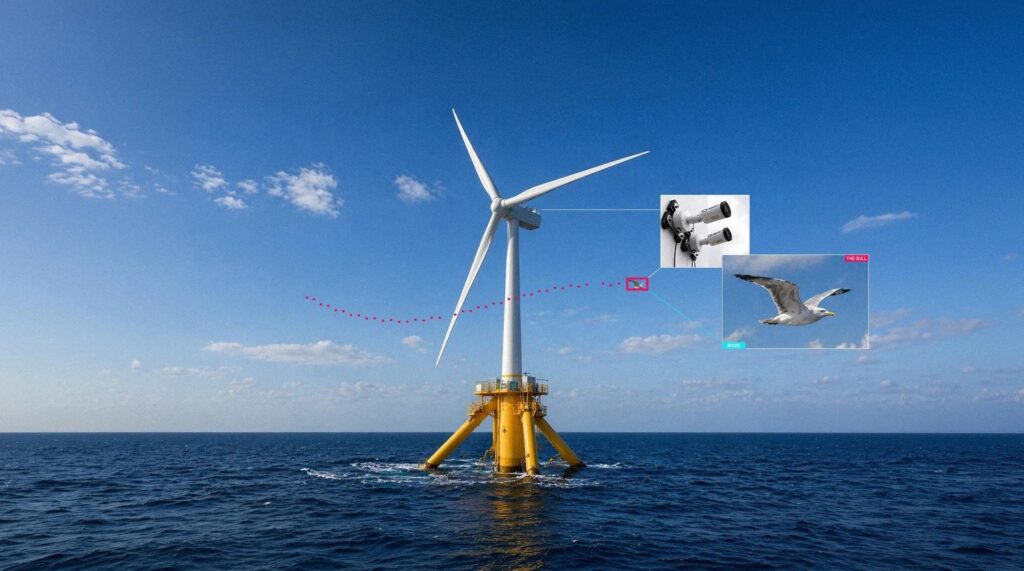
One camera system recorded 2,007 bird tracks around a wind turbine at Aberdeen Bay. Five possible collision events were flagged, but further examination confirmed that no collisions had occurred.
The evidence showed that wind energy and birdlife could coexist with effective monitoring. However, that evidence remained inside technical reports that few people would read.
Created with FP7 McCann, The Birdwatcher transformed Spoor’s wildlife data into an interactive website, social content and an augmented-reality field guide.
The information became visible to regulators, investors, wind-energy companies and the public.
Wind projects needed clearer evidence
Wind energy can help reduce dependence on fossil fuels. At the same time, turbines can present genuine risks to birds and bats through collisions and habitat disruption.
Developers need to understand those risks before choosing a location or receiving permission to build. Once a wind farm becomes operational, they must continue monitoring the surrounding wildlife.
For decades, much of that work relied on human observers using binoculars. These surveys covered limited periods and produced fragmented information.
The uncertainty could lead to wide buffer zones, delayed permits and restrictions on turbine operation. Meanwhile, useful monitoring data often appeared inside long compliance documents.
Spoor developed a system that could watch the airspace continuously and provide more detailed evidence.
The Birdwatcher gave that evidence a public form.
AI watched birds from 1.5 kilometres away
Spoor’s Sky Intelligence Platform combines cameras with AI-powered computer vision, geometric flight analysis and ecological knowledge.
The technology was trained using data from more than one million birds. It can detect, track and classify species from distances of up to 1.5 kilometres with at least 95% accuracy.
Each bird becomes a verified flight path. The system records its direction, altitude, speed and movement around turbines.
The cameras can operate at both onshore and offshore wind farms. They also work with different camera systems, allowing wind operators to use the platform with existing equipment.
This information supports environmental assessments, permit applications and long-term compliance. It can also enable turbine curtailment when birds enter areas where a collision may occur.
Instead of treating every movement as the same level of danger, wind operators receive evidence about what is actually happening around each turbine.
Every particle represented a real flight
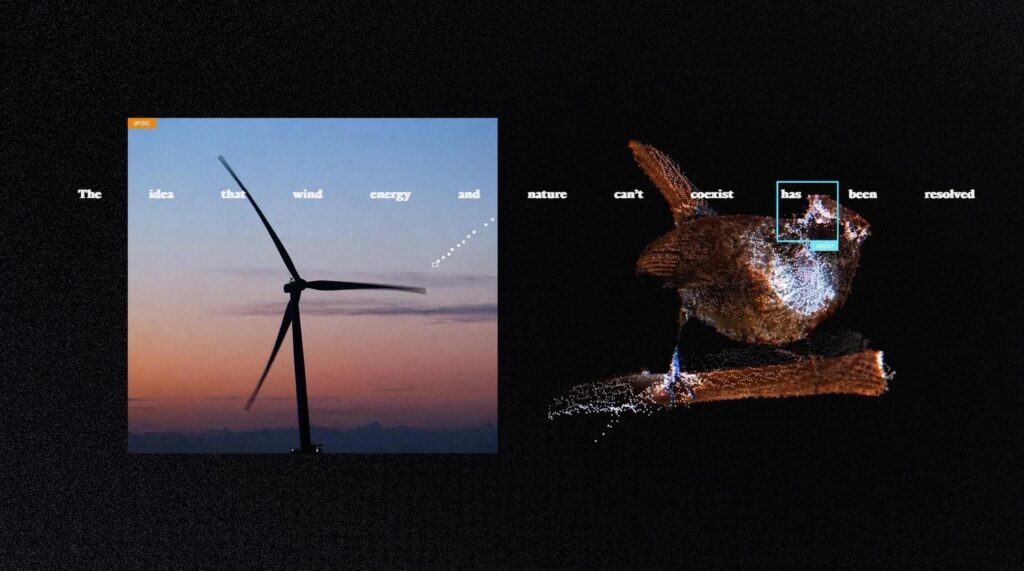
The campaign’s scroll-driven website turned Spoor’s data into a visual journey.
Users followed the Great Black-backed Gull, the world’s largest gull, through airspace around a wind farm. Moving particles represented verified paths captured by Spoor’s cameras.
As visitors continued scrolling, they could explore the bird’s behaviour and see how the monitoring technology identified potential risks.
The experience kept the complexity of the original data while presenting it in a form that did not require scientific training.
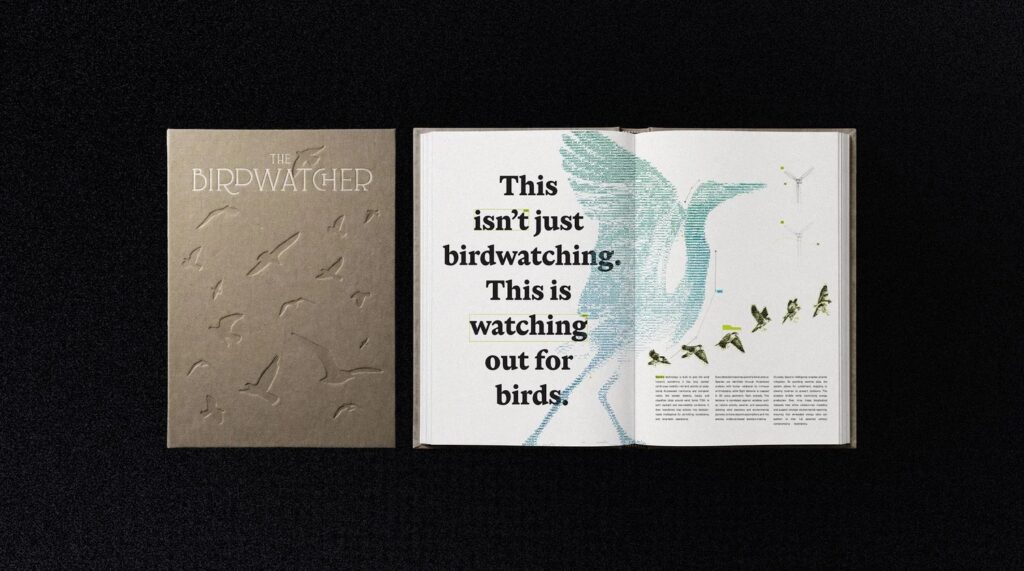
A physical guidebook extended the idea. Designed in the tradition of naturalist field guides, it combined bird information with visualised tracking data.
Augmented-reality features allowed readers to activate additional content through their phones. Copies were distributed to policymakers, wind-energy decision-makers and other important stakeholders.
An Instagram account also documented bird activity and shared new tracking information with a wider audience.
Aberdeen Bay supplied the proof
The campaign used monitoring conducted at Aberdeen Bay, home to powerful offshore wind turbines.
One Spoor system monitored bird activity around a turbine for 19 months. It recorded approximately 95% of available daylight hours and captured 2,007 individual bird tracks.
The system flagged five events as possible collisions. Further scientific review confirmed that none of the five had resulted in an actual collision.
During the breeding season, the system recorded a peak of 369 birds. The detailed tracking helped researchers understand when activity increased and how birds moved around the turbine.
The findings did not suggest that turbines carry no risk. Instead, they demonstrated how continuous monitoring can replace assumptions with site-specific evidence.
That evidence can support better turbine placement, targeted protective action and temporary curtailment when required.
The Birdwatcher won three Cannes Lions in 2026. It received a Silver Lion for Innovative Use of Technology, a Bronze Lion for Curation of Data and a Bronze Lion for Digital Design.
Credits
The Birdwatcher (2026). Client: Spoor. Marketing Director: Uliana Mohyletska. Chief Creative Officer: Ralph Natter Berg. Content Director: Edgar Kamga-Sande. Agency: FP7 McCann Dubai. Regional Chief Creative Officer: Federico Fanti. Executive Creative Director: Nayaab Rais. Group Creative Director: Jonathan Cruz. Creative Director: Paulo Engler. Associate Creative Directors: Rob Hall, Bruno Montoro and Diego Fernandez-Cid. Senior Copywriter: Taha K. Senior Art Director: Roy Sebastian. Art Directors: Kauê Akimoto and Anna Smolkina. Copywriter: Liudmyla Ivakhnenko. Design Director: Arthur Melo. Website Development: MRM MENAT. Executive Creative Director: Andrej Arsenijevic. UI Designer: Hasan Nawaz. Technology Director: Simon Geer. Creative Technology: Diogo Borges and Blou Studio. Sound Design: BUMBLEBEAT and Creative Audio Hive.
Related
More in Digital




Popular
Popular posts


More stories