Film
We Want Your Pee: Liquid Death and Garage Beer targeted AI’s water use
 By Archit
·
·
5 min read
By Archit
·
·
5 min readAI-assisted
Quick summary
The idea: Liquid Death and Garage Beer launched a satirical campaign featuring former NFL player Jason Kelce to mock the massive fresh water consumption of AI data centres by asking Americans to collect and mail their urine as a cooling alternative.
The execution: The campaign centres on a 90-second mock charity anthem film that mimics 1980s benefit songs, supported by a sold-out branded glass collector jar priced at 18 dollars while fine print explicitly instructs viewers not to mail actual urine.
Why it matters: The campaign uses crude humour and satire to draw public attention to the environmental debate surrounding the water and energy demands of growing AI data centre facilities without adopting a serious corporate voice.
AI-generated from this article. For complete context and credits, read the full story.
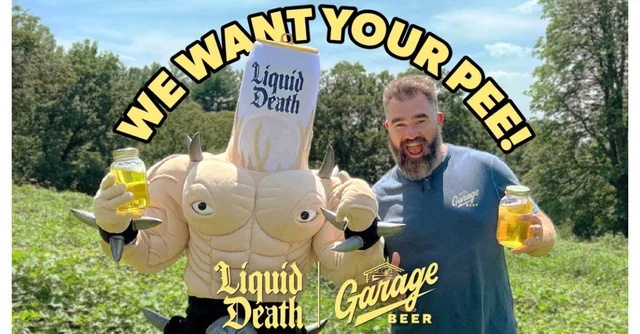
Liquid Death and Garage Beer found an unusual alternative to the fresh water used for cooling AI data centres.
Human urine.
The brands recruited former NFL player and Garage Beer co-owner Jason Kelce for “We Want Your Pee,” a satirical campaign asking Americans to collect their urine and send it to an AI data centre.
A disclaimer makes the real instruction clear. Nobody should actually mail urine anywhere.
Behind the deliberately disgusting joke is a serious conversation about the amount of water some data centres require to prevent their servers from overheating.
Jason Kelce leads a mock charity anthem
The 90-second film opens with Kelce standing beside a toilet and apparently filling a glass jar.
He explains that AI data centres can consume millions of gallons of water for cooling. Liquid Death and Garage Beer then present urine as their ridiculous alternative.
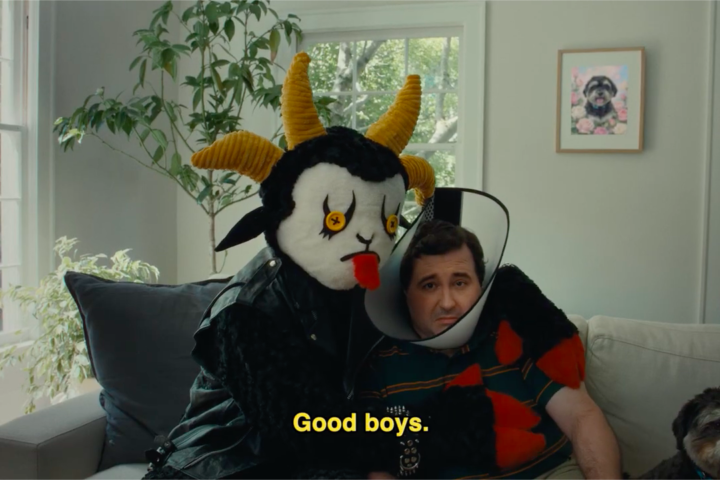
Kelce moves into a field, where he is joined by Liquid Death’s skull-faced Murder Man mascot and a growing group of people carrying containers of yellow liquid.
The group performs a dramatic song asking people to contribute their pee and help save humanity.
The sequence copies the sincere tone of large benefit concerts and public-service songs from the 1980s. The music sounds hopeful and important, even as the words become increasingly absurd.
At one point, the film shows an eagle joining the national effort.
The products complete the campaign’s logic
The film encourages people to drink Garage Beer or Liquid Death Sparkling Energy before producing the proposed coolant.
This gives both products a role inside the joke.
Garage Beer is positioned as a simple light beer, while Liquid Death describes its Sparkling Energy drink as a lighter and more drinkable alternative within the energy category.
The campaign follows a deliberately simple sequence. Drink one of the products, collect the inevitable result and provide it to an AI facility.
The proposal is not real, but its internal logic connects the brands, the products and the environmental subject.
The partnership originally began as an opportunity to place Liquid Death and Garage Beer together in retail stores. Their similar approaches to humour allowed the idea to grow into a larger campaign.
The film responds to a real water debate
Data centres contain large numbers of servers that produce heat while processing and storing information. Cooling systems prevent that equipment from overheating.
The amount of water used depends on the size, location and technology of each facility. Some use evaporative cooling and can require significant quantities of fresh water. Others use closed-loop or waterless systems that consume much less.
Estimates suggest that certain large facilities can use as much as five million gallons of water per day.
The rapid expansion of generative AI has increased public attention on this demand. Communities have also raised concerns about electricity use, noise, land requirements and the possible effect on local utility costs.
A 2026 survey found that 71% of Americans opposed the construction of an AI data centre in their local area. Almost half said they strongly opposed it.
Liquid Death and Garage Beer used an exaggerated solution to make this technical debate understandable and difficult to ignore.
A branded jar extended the joke
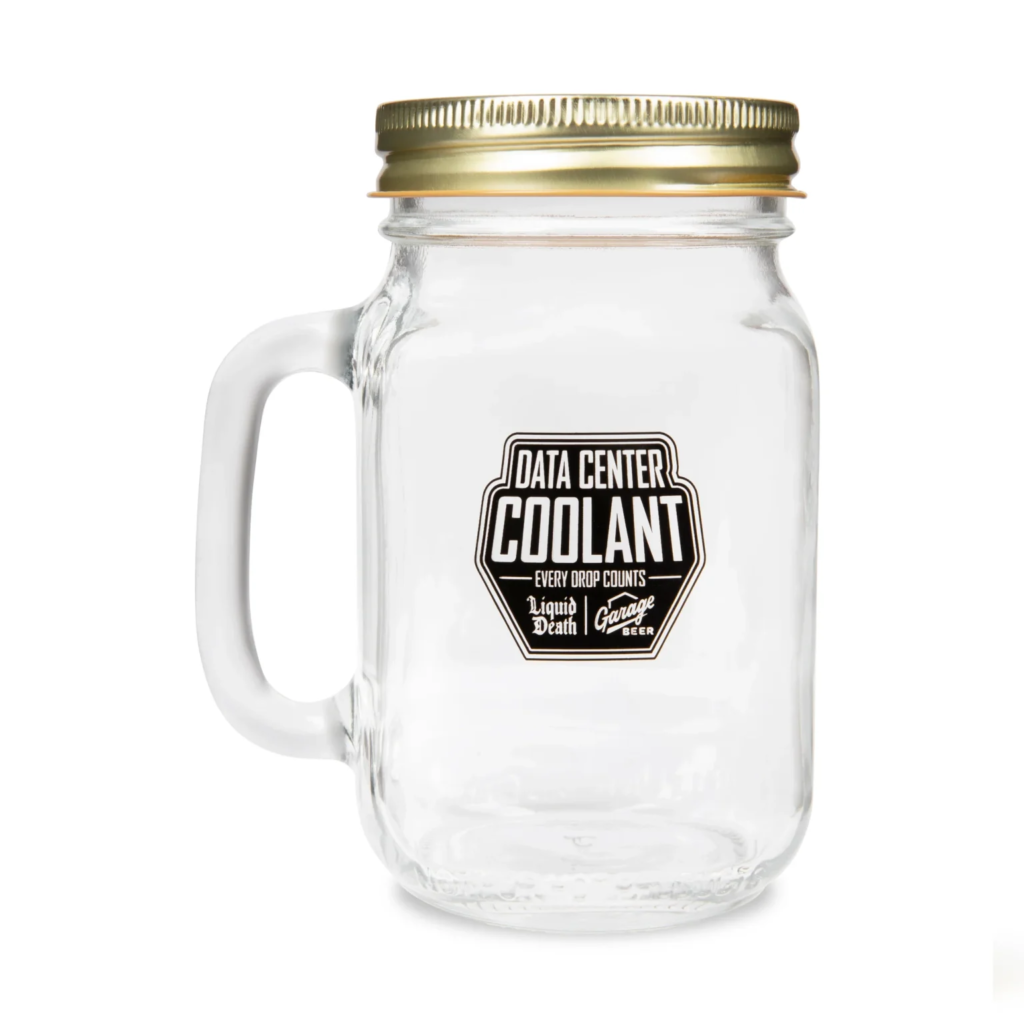
The campaign moved beyond the film with the Liquid Death x Garage Beer Data Center Coolant Collector.
The limited-edition product was a resealable glass jar carrying the names and visual identities of both brands. It was priced at $18.
Its product description jokingly presented the jar as an easier way to collect and mail urine to an AI facility. The campaign’s fine print again instructed customers not to follow that suggestion.
In practical terms, the container functioned as a reusable drinking jar and a physical souvenir from the campaign.
The collector quickly sold out. It allowed viewers to own the central prop from the film without requiring the brands to pretend that urine could genuinely cool computers.
The concept came from a comedy writer’s room
Liquid Death develops ideas through an internal writer’s room that includes external comedians and writers.
Comedian Sabrina Jalees originally proposed the data-centre concept. The idea was later adapted for the collaboration with Garage Beer.
Jason Kelce provided a suitable lead because of his connection to Garage Beer, his public personality and his experience recording music. He and his brother Travis became significant owners and operators of the beer company in 2024.
The creative team modelled the song on the large-scale charity events and benefit anthems that tried to unite people around a shared cause.
Music company Butter composed and produced the deliberately sincere soundtrack.
Satire made the issue accessible
The campaign does not provide a technical solution to data-centre water consumption. It also does not claim that every facility uses the same cooling method or quantity of water.
Its purpose is to attract attention to the wider issue through the comic styles of both brands.
Liquid Death has built its identity around dark humour, fictional products and entertainment. Garage Beer uses a similarly informal approach to promote a straightforward light beer.
“We Want Your Pee” allows both brands to discuss an environmental subject without suddenly adopting a serious corporate voice.
The film, celebrity, products, collectible jar and environmental issue all lead to the same joke. That consistency helps the crude premise feel connected to the brands rather than added only for shock.
Credits
“We Want Your Pee” was created for Liquid Death and Garage Beer by Liquid Death’s in-house agency, LD Death Machine. The campaign stars former NFL player and Garage Beer co-owner Jason Kelce alongside Liquid Death’s Murder Man mascot. Sabrina Jalees developed the original concept and served as writer, Andy Pearson and Will Carsola directed the film, Dan Kennedy was Director of Photography, Zoë Andrikidis served as Executive Producer, Jeanne Irwin was Brand Manager and Kellen Breen was Senior Graphic Designer. Butter handled music composition and sound production.
Related
More in Film

Popular
Popular posts




More stories