Outdoor
Thanks for Coke-Creating: Coca-Cola made unofficial logos official
 By Archit
·
·
5 min read
By Archit
·
·
5 min read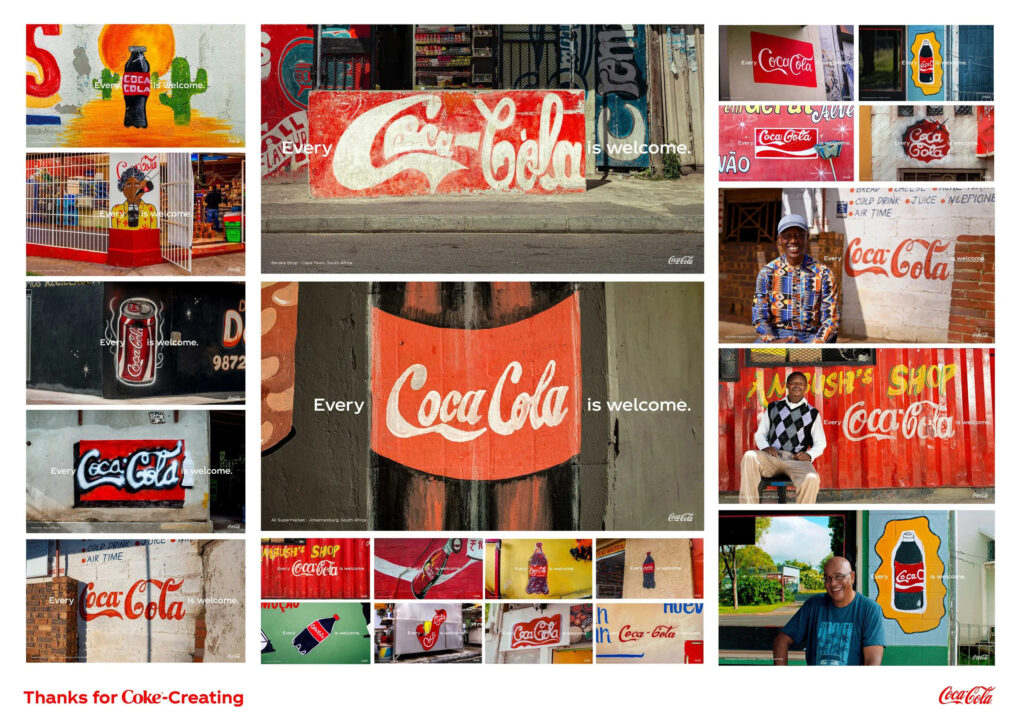
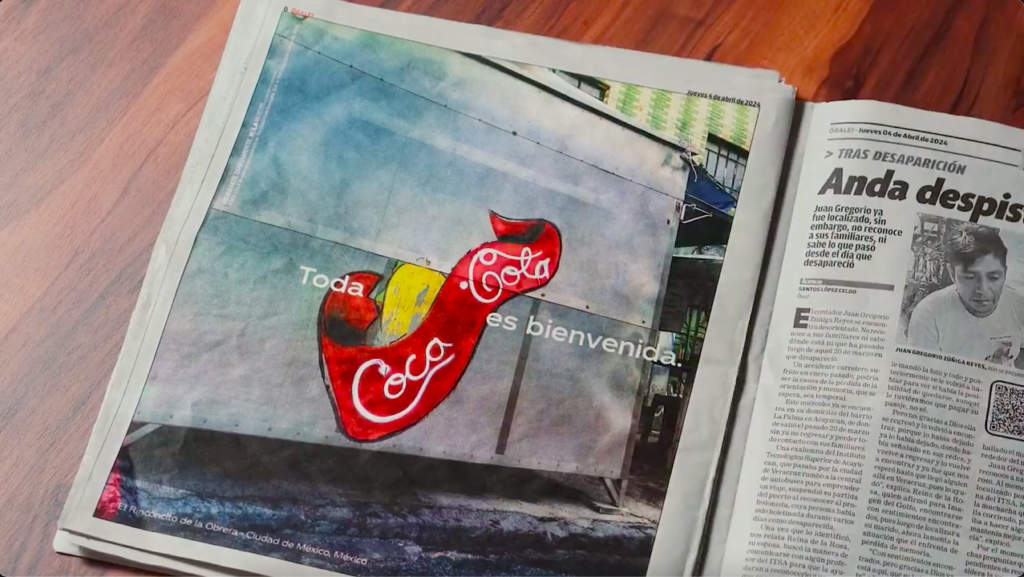
In 2024, Coca-Cola made hand-painted versions of its logo part of an official global campaign. The designs had already appeared on cafés, bodegas, kirana stores and neighbourhood shops, often painted by local artists with their own colours, lettering and proportions. Thanks for Coke-Creating found those versions, credited the people behind them and placed them across Coca-Cola advertising. WPP Open X created the campaign, led by VML.
The official logo did not replace the local artwork. Instead, the local artwork replaced the official logo.
The Logos Coca-Cola Never Designed
Coca-Cola’s script has been repeated for more than a century. However, the version painted on a small shop wall rarely follows the brand manual exactly.
Some artists stretched the letters to fill an awkward space. Others changed the colours, added shadows or redrew the ribbon from memory. The spelling was not always perfect either. Still, the result remained recognisably Coca-Cola.
These signs had grown naturally across local communities. Shop owners wanted customers to know that a cold Coke was available inside, so someone nearby painted the message on the wall.
Coca-Cola treated those interpretations as evidence of how far the identity had travelled. The logo had become familiar enough for people to recreate it without receiving an official file, template or set of instructions.
That gave the campaign its starting point. The artwork was already there. The artists had already made it their own.
Finding the People Behind the Paint
VML teams searched for local Coca-Cola signs across markets including India, Brazil, Mexico, Indonesia, Australia and South Africa.
The search went beyond finding an interesting logo. Teams documented the shop, the surrounding neighbourhood and the people responsible for the work. Meanwhile, local scouts shared photographs, location pins and information about the artists and shop owners.
The final campaign kept those settings visible. The signs were professionally photographed on the businesses where they had first appeared. As a result, a hand-painted wall in a small neighbourhood could become the centre of an international Coca-Cola advertisement without being separated from the person who made it.
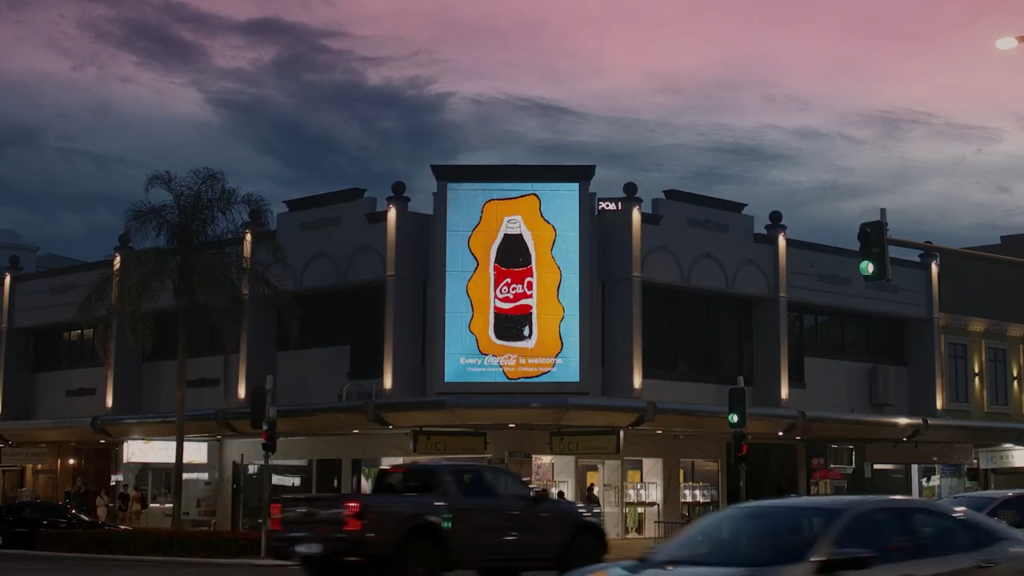
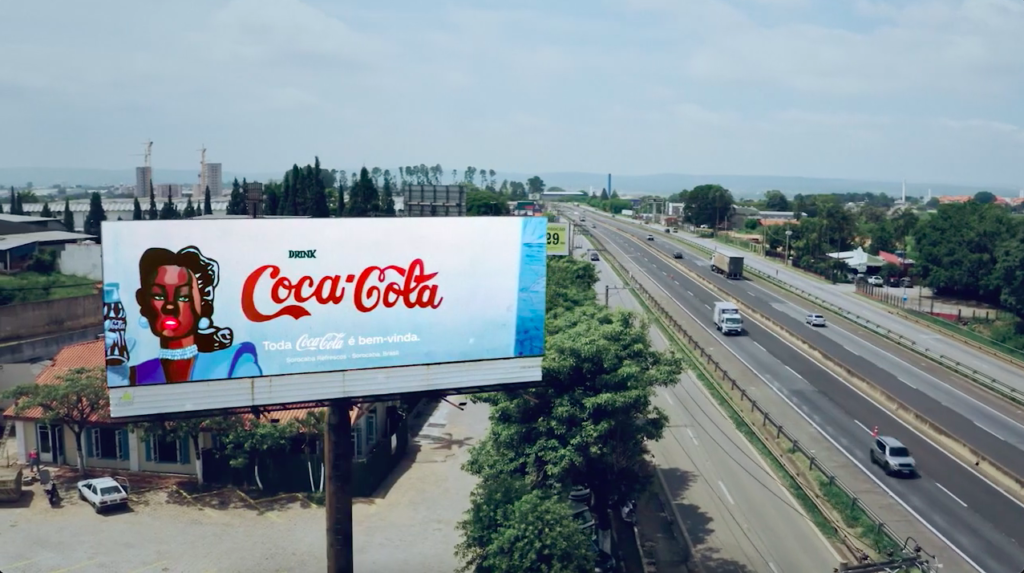
The campaign also returned to the communities where each design began. Outdoor placements appeared close to the original shops, allowing the artists and owners to see their work displayed as official Coca-Cola communication.
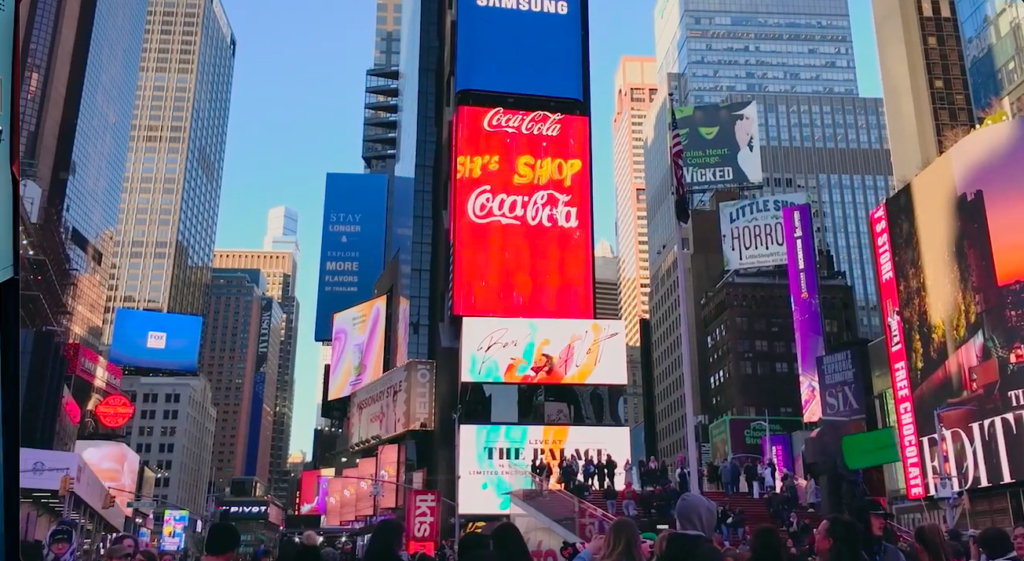
At the same time, larger placements carried the designs into global media locations, including Times Square. A local shop sign could therefore appear in its own neighbourhood and on one of the world’s busiest advertising screens.
From Shop Wall to Coca-Cola Can
Thanks for Coke-Creating did more than photograph the murals.
Selected designs replaced the standard Coca-Cola script on limited-edition cans. Those cans were then given to the artists and shop owners who had created the original versions. The change turned an informal interpretation into part of the product itself.
Furthermore, the artwork moved across fridges, vending machines, delivery vehicles, clothing and other brand touchpoints. Coca-Cola also produced a photography book featuring nearly 30 designs alongside the people and places behind them.
Each format preserved the differences between the logos. A letter was not corrected because it leaned too far. A colour was not standardised because it fell outside the usual palette. Instead, the variations became the visual system holding the campaign together.
That decision gave Coca-Cola hundreds of executions without making them look like a template. Every design came from the same brand, yet every one carried the hand of a different artist.
More importantly, the campaign gave the contributors a visible role. Their work was not treated as anonymous street texture. The shop owners and painters appeared in films, interviews and photography created around the project.
The Awards Followed the Artists
The campaign collected eight Lions in 2024, including three Golds across craft, print and business communication. In 2025, it added one Yellow, three Graphite and two Wood Pencils, followed by two Gold Pencils and further Silver, Bronze and Merit recognition.
That spread reflected how far the original idea travelled. The work could be judged as outdoor advertising, typography, illustration, brand identity, direct communication or participation. However, each category returned to the same painted shop signs.
The craft came from preserving the artwork rather than polishing it. The outdoor idea came from moving a neighbourhood wall onto another wall. Meanwhile, the direct element came from returning the finished work to the artists and businesses that had unknowingly started the campaign.
Coca-Cola did not need to manufacture the visual diversity. It needed to recognise it.
The Bigger Point
Coca-Cola’s identity remained visible even when almost every design rule had changed.
That is what the campaign revealed. The exact curve of the script mattered less than the memory people carried of it. A shop painter could redraw the logo imperfectly, yet the finished wall still communicated Coca-Cola in a fraction of a second.
Thanks for Coke-Creating turned that recognition into permission. Local artists were not presented as people who had copied the brand incorrectly. They became people who had helped carry it through their own communities.
The campaign therefore moved control in an unusual direction. Coca-Cola supplied the name and history. The shops supplied the art, colour and personality.
For once, the official version was the one inspired by the copy.
Credits
Thanks for Coke-Creating (2024). Coca-Cola, global campaign. WPP Open X, led by VML, with support from EssenceMediacom and Ogilvy PR. Global Chief Creative Officers, Debbi Vandeven and Rafael Pitanguy. Production across markets by SugarCane Filmes, Baliprod, Mango Films, Neto+Shookan Productions and Glitch Productions. Awards include eight Lions in 2024 and one Yellow, three Graphite and two Wood Pencils in 2025.
Related
More in Outdoor

Popular
Popular posts


More stories