Case Studies
Draw Ketchup: Heinz proved the bottle lived in everyone’s memory
 By Archit
·
·
5 min read
By Archit
·
·
5 min read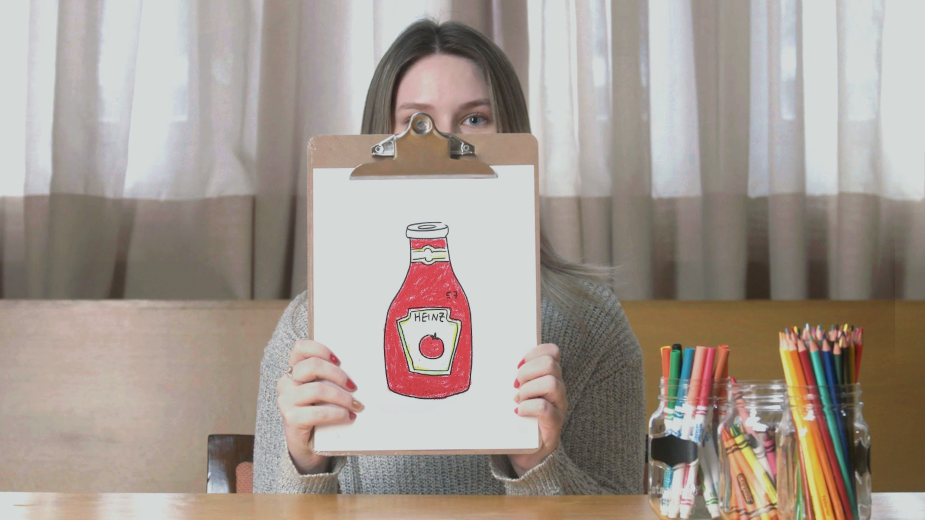
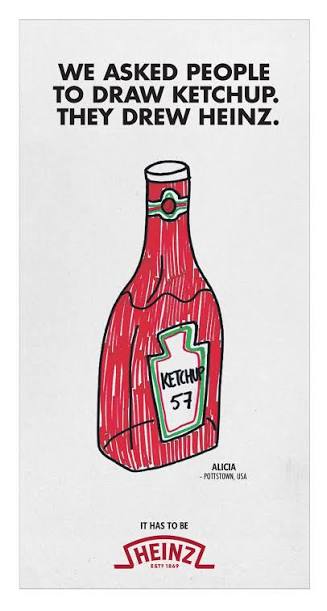
In 2021, Heinz asked people in 18 countries to draw ketchup without telling them which brand was behind the experiment. The sketches varied wildly, yet 97 percent of participants drew something recognisably Heinz. Rethink turned that result into Draw Ketchup, a global campaign made from the drawings themselves.
The work did not tell people that Heinz was the best-known ketchup brand. It gave them a blank page and let their memories provide the evidence.
The Experiment Behind the Campaign
The brief began with a concern that Heinz was losing some of its emotional connection as competing brands gained ground.
Rethink looked beyond product claims and taste comparisons. Instead, the agency tested how deeply Heinz already lived inside the category. Participants joined anonymous focus groups, international video calls and street interviews across five continents. Each person received the same short instruction.
Draw ketchup.
Nobody was shown a bottle. Furthermore, the researchers did not reveal that Heinz was involved. Still, people repeatedly reached for the same details. A red bottle. A white keystone label. The number 57. A tomato on the vine. The Heinz name written across the front.
Some drawings were careful. Others were misspelled, badly proportioned or barely recognisable as bottles. However, the brand kept appearing.
The experiment revealed that people were not starting with a general image of ketchup and choosing Heinz afterwards. For many of them, the image of ketchup was already Heinz.
The Bad Drawings Made the Proof Better
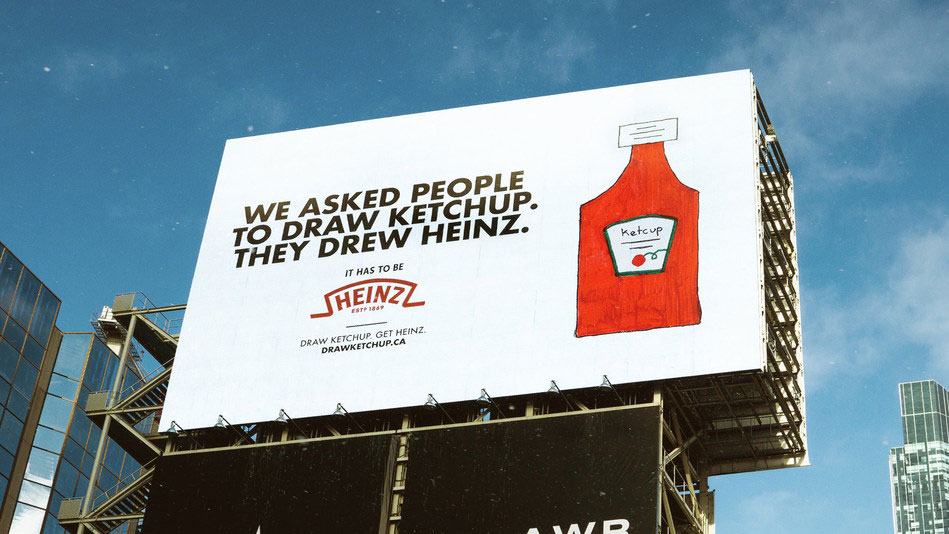
A professionally illustrated Heinz bottle would have weakened the idea. The evidence needed to look like it came from memory.
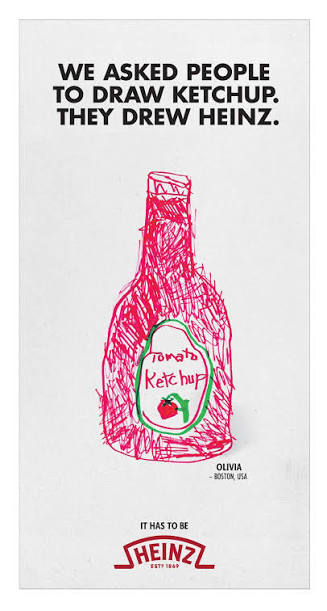
Rethink therefore kept the rough lines, uncertain lettering and strange proportions. One person wrote “K for Ketchup.” Another remembered the label but changed its colours. Several drew the familiar bottle shape while getting nearly everything else wrong.
Those mistakes made the campaign more convincing. A perfect copy could have come from someone looking at the product. Meanwhile, a messy drawing showed which parts of the design had survived without help.
The bottle shape mattered. So did the red colour and the keystone label. In fact, even people who could not reproduce the branding accurately often produced enough of it for the drawing to feel unmistakably Heinz.
That gave the campaign a visual style without asking an illustrator to create one. Every execution looked different because every memory was different. Yet the set held together because the same brand kept emerging from each page.
From the Page to the Bottle
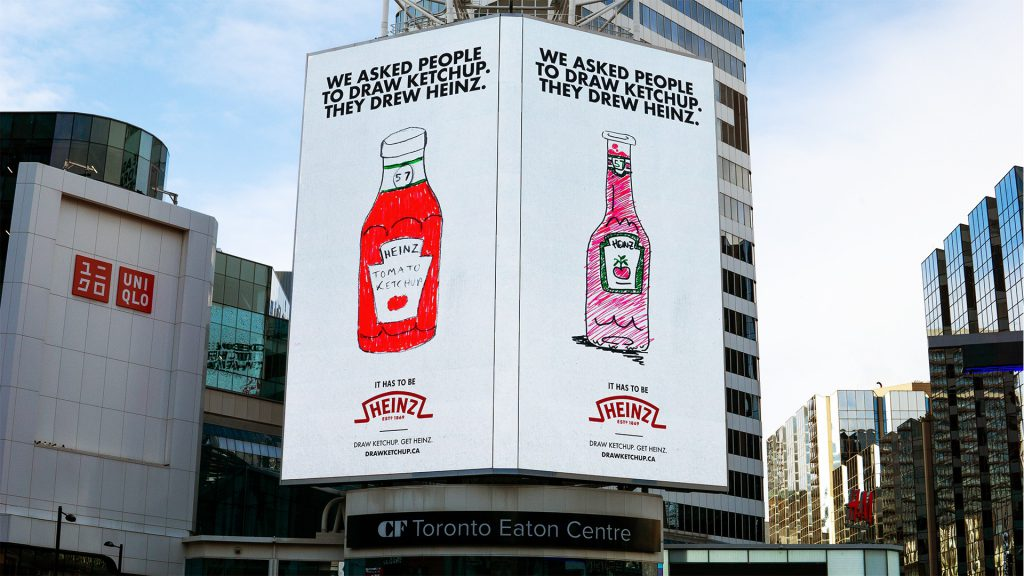
Heinz placed the original drawings across outdoor boards, newspaper ads, social media and a 30-second film. The campaign line explained the experiment in two sentences.
“We asked people to draw ketchup. They drew Heinz.”
The drawings also replaced Heinz’s normal labels on limited-edition bottles. As a result, the proof moved from the billboard back onto the product that inspired it.
That packaging decision completed the experiment. A rough sketch made from memory could now sit on a real Heinz bottle and still look right. The label might be crooked. The spelling might be wrong. However, shoppers could recognise the product before reading the name properly.
Heinz also invited people in Canada to submit their own drawings for a chance to receive personalised bottles. Therefore, the original research became a public activity rather than staying inside a case-study film.
The audience no longer had to accept that other people pictured Heinz. They could test the thought on themselves.
The Impact
Draw Ketchup became one of the campaigns that helped define Heinz’s modern creative platform.
The work won a Gold Pencil for social media at The One Show in 2021, along with further Silver and Merit recognition. It later received a Bronze Media Lion at Cannes Lions in 2022 and D&AD Wood Pencils for packaging and press and outdoor.
More importantly, the campaign found a claim that competitors could not easily copy. Another ketchup brand could use a red bottle or talk about taste. It could not make people unknowingly draw Heinz and present the result as its own.
Rethink later returned to the same territory with AI Ketchup. That experiment asked image generators to create ketchup and found that the results also resembled Heinz. The technology changed, but the argument remained the same.
Draw Ketchup began with paper, pens and one plain instruction. The people taking part supplied everything else.
Credits
Draw Ketchup (2021) — Heinz Ketchup / Kraft Heinz Canada. Agency: Rethink, Toronto. Chief Creative Officer: Aaron Starkman. Executive Creative Director: Mike Dubrick. Creative Director and Head of Art: Joel Holtby. Associate Creative Director and Art Director: Zachary Bautista. Writer: Geoff Baillie. Designer: Jaclyn McConnell. Strategy: Sean McDonald and Julian Morgan. Production: R+D Productions. Director of Photography: Scott McClellan. Editor: Stephen Parker. Media: Carat. Public relations: The Colony Project. Community management: SALT. Awards: Gold Pencil and further Silver and Merit recognition at The One Show 2021, Bronze Media Lion at Cannes Lions 2022, and D&AD Wood Pencils.
Related
More in Case Studies


Popular
Popular posts

More stories