Outdoor
We Speak Late Night: McDonald’s turned drunk orders into outdoor ads
 By Archit
·
·
4 min read
By Archit
·
·
4 min read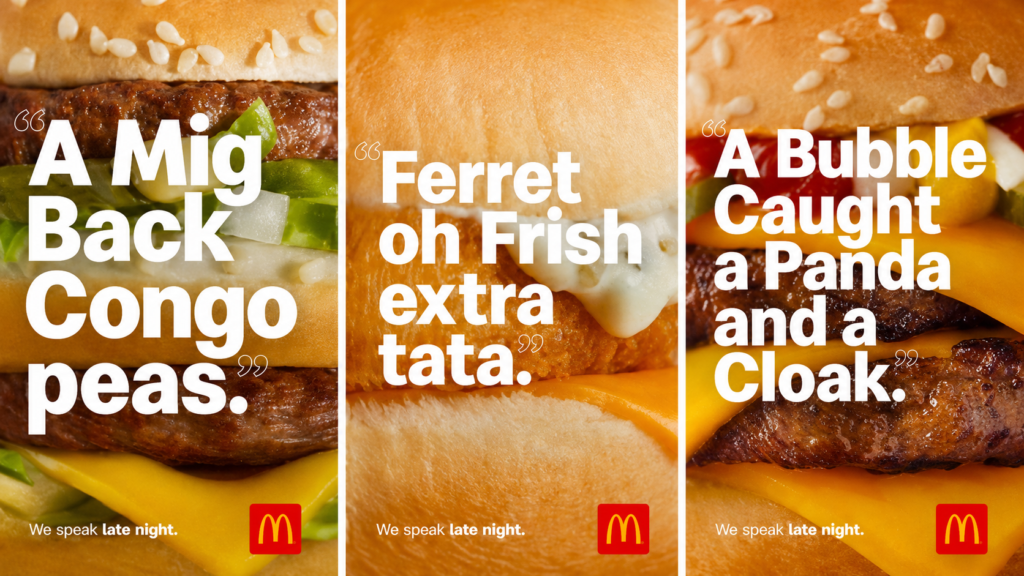
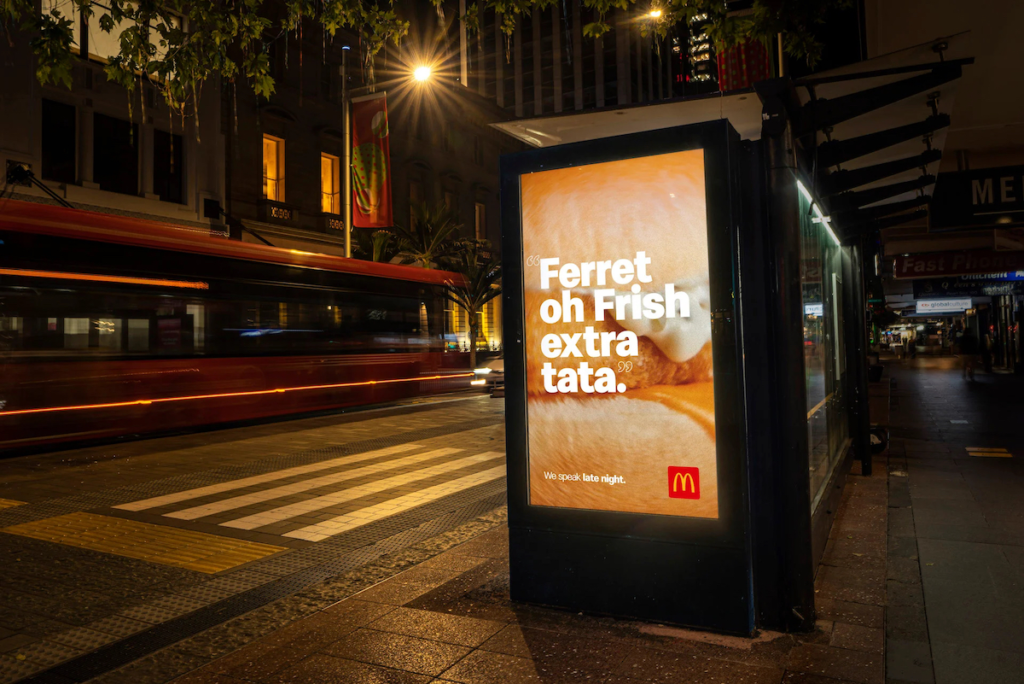
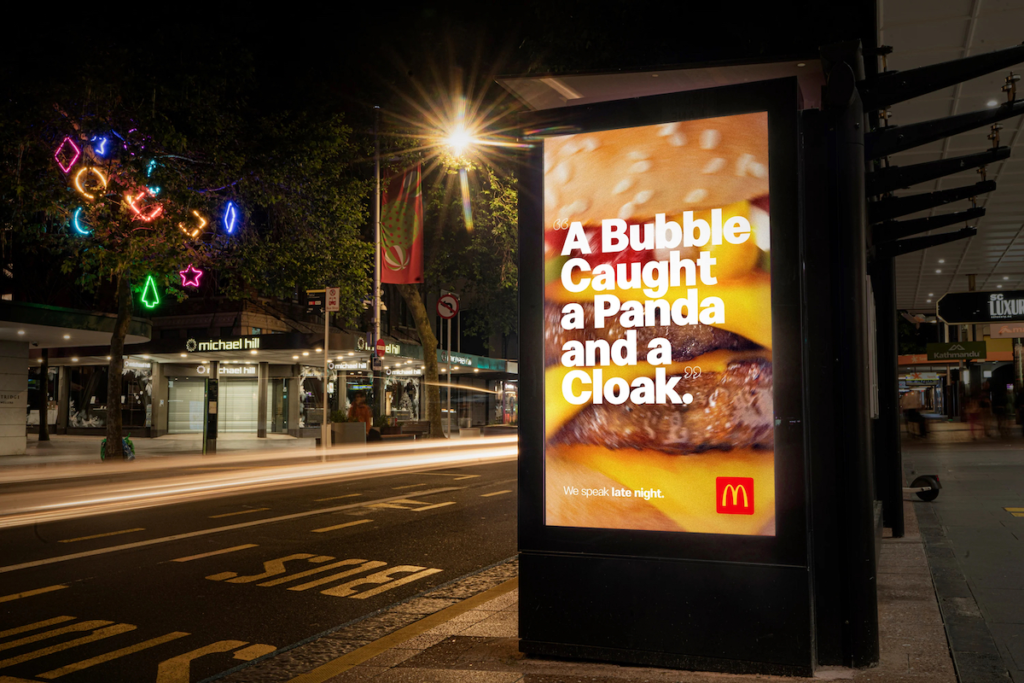
In January 2023, McDonald’s New Zealand wrote billboard headlines in a language that appears after a night out. A Big Mac Combo became “A Mig Back Congo.” A Filet-O-Fish with extra tartare became “Ferret oh Frish extra tata.” Created by DDB Aotearoa, We Speak Late Night promoted the restaurants that stayed open after clear pronunciation had gone home.
The campaign did not tell late-night customers to speak properly. It told them McDonald’s already understood.
The Language After Midnight
DDB Aotearoa started with something McDonald’s night-shift workers knew well. Hungry customers could still remember what they wanted, even when the words arrived in the wrong order.
The agency used data to identify popular late-night purchases. It then rewrote those orders as they might sound across the counter at the end of a long night.
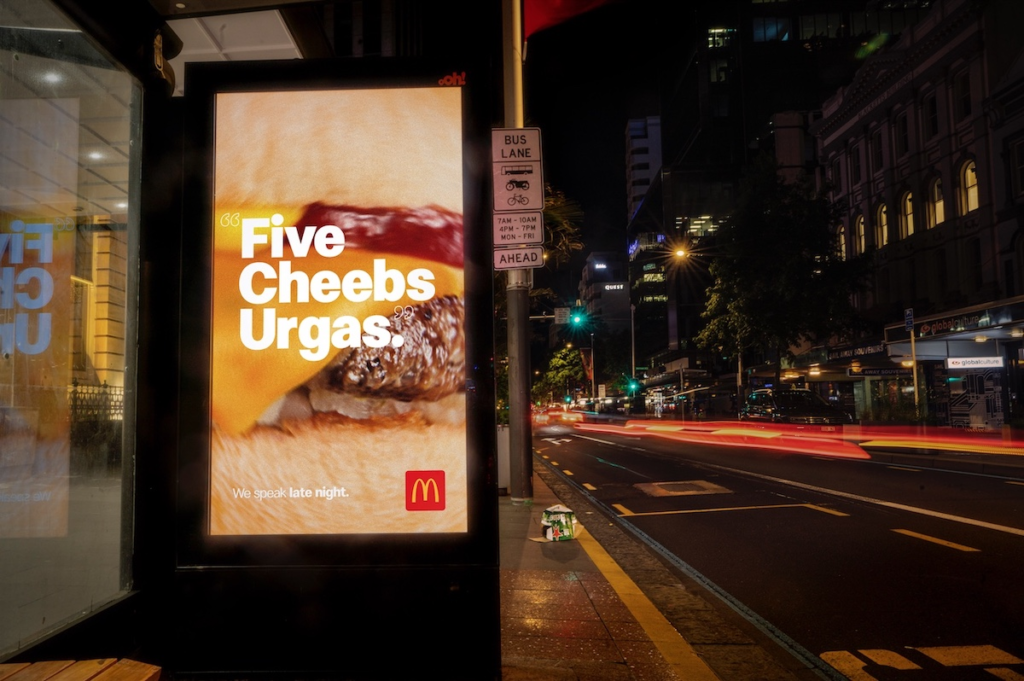
Five cheeseburgers became “Five Cheebs Urgas.” Meanwhile, a Double Quarter Pounder and a Coke became “A Bubble Caught a Panda and a Cloak.” Each headline gave the viewer a small decoding task before revealing a familiar menu item.
That made reading part of the entertainment. The stranger the sentence looked, the more satisfying it became when the correct order finally appeared in the reader’s head.
More importantly, the copy came from a real use of the product. McDonald’s was already where people went when other kitchens had closed and the night had run longer than planned. The campaign simply gave that behaviour its own language.
How the Billboards Worked
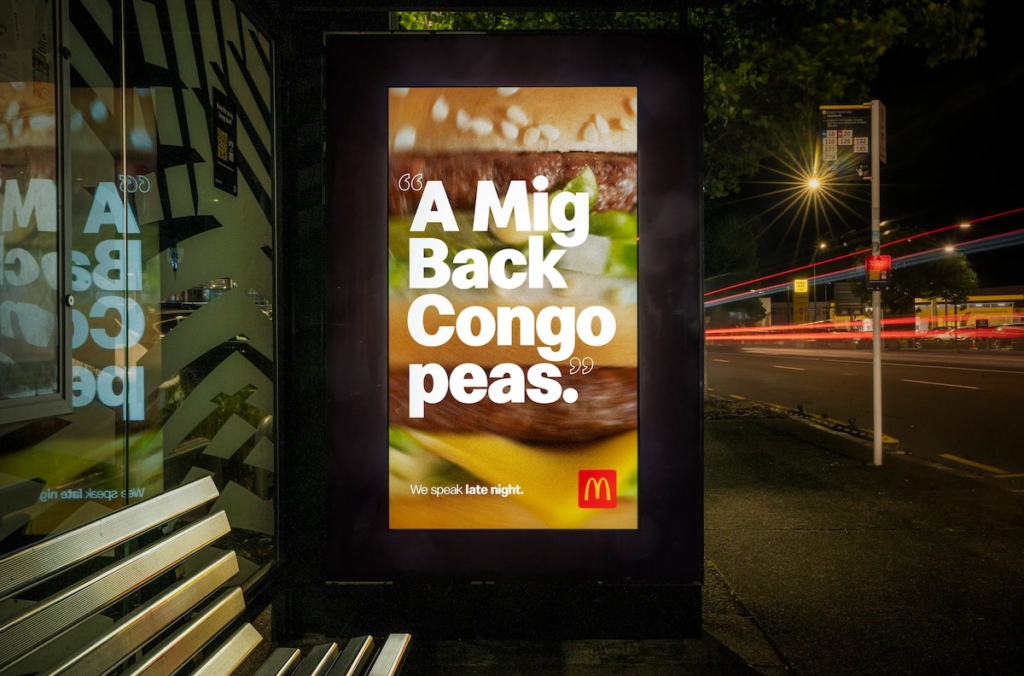
The headlines appeared beside close-up photographs of McDonald’s food. However, the images were softened and distorted, as though the viewer’s eyes were struggling to focus.
The effect continued the joke without adding another line of copy. The words sounded blurred. The food looked blurred. Still, the product remained recognisable enough to trigger the craving.
Each execution ended with the same promise.
“We speak late night.”
The line positioned McDonald’s as the patient translator behind the counter. A customer could arrive tired, hungry or unable to pronounce “Quarter Pounder,” and the restaurant would understand what they were trying to say.
The outdoor placements were also targeted by time. The campaign appeared during the hours when people were leaving bars, looking for food and deciding where the night would end. As a result, the media did more than carry the joke. It placed the joke in front of the people living it.
The Idea Left the Billboard
We Speak Late Night began as outdoor advertising, but it did not stay there.
The campaign expanded into posters inside restaurants, a late-night version of the McDonald’s app, film and customised public relations packs. Each format used the same basic dialect of misplaced letters and barely recognisable menu items.
That wider rollout gave the idea more room without changing its shape. A phrase such as “Nickin ChicMuggets” could sit on a billboard, appear on a screen or become part of the restaurant experience.
Meanwhile, the campaign travelled far beyond its original New Zealand placements through photographs shared online. People began attempting to decode every order, then comparing how quickly they had understood each one.
The work also attracted criticism for connecting a family restaurant with intoxicated customers. Even so, the campaign never showed alcohol or asked people to drink. It focused on a behaviour McDonald’s staff were already dealing with and made the customer feel welcomed rather than judged.
Why It Still Works
We Speak Late Night won Gold for copywriting and two Silver awards at the 2023 Axis Awards. It later received Gold at the 45th AWARD Awards.
The awards recognised the sharpest part of the campaign. Every element expressed the same state of mind. The headlines slurred the order. The photography softened the food. The media appeared after dark. Finally, the tagline made McDonald’s sound like the one place still fluent enough to help.
The campaign also avoided making a broad claim about being open late. Instead, it showed what late-night service looked and sounded like from behind the counter.
That is why the posters remain easy to understand years later. Anyone who has ordered food after a long night knows the moment. McDonald’s just wrote down what came out.
Credits
We Speak Late Night (2023) — McDonald’s New Zealand. Agency: DDB Aotearoa. Group Chief Creative Officer: Matty Burton. Chief Creative Officer: Gary Steele. Executive Creative Director, Tribal: Haydn Kerr. Creative Director: Ben Pegler. Senior Art Director: Adam Barnes. Senior Copywriters: Veronica Copestake and James O’Sullivan. Senior Producer: Julz Lane. Designer: Paul Edwards. Photographer: Trent Hall. Awards: Gold for copywriting and two Silvers at the Axis Awards 2023. Gold at the 45th AWARD Awards.
Related
More in Outdoor

Popular
Popular posts

More stories