Case Studies
SOS POS: BCP turned card readers into emergency account blockers
 By Archit
·
·
5 min read
By Archit
·
·
5 min read
In November 2025, BCP gave thousands of card readers across Peru a second job. After a phone theft, customers could visit a nearby BCP agent, enter their national ID number and PIN, and block their debit and credit cards in under two minutes. Created by Circus Grey, SOS POS turned the payment terminal into the emergency channel the stolen phone could no longer provide.
The idea used infrastructure that was already sitting inside corner shops, pharmacies and local markets across the country.
The Phone Was Also the Way Out
More than 4,000 mobile phones are stolen in Peru every day. The loss can quickly become a financial emergency because banking apps, email accounts, digital wallets and authentication codes often sit on the same device.
The victim needs to act immediately. However, the usual protection methods depend on access to another phone. They may need to call the bank, open an app or search for an emergency number online.
BCP saw a gap between the moment the phone disappeared and the moment the customer could reach help. Even a short delay gave criminals more time to attempt transfers, payments or credit transactions.
Meanwhile, the country already had a large network of machines connected securely to the bank. They were being used to approve purchases and withdrawals every day.
Circus Grey asked those machines to perform the opposite task.
How SOS POS Worked
A customer whose phone had been stolen or lost could enter any participating BCP agent and request an emergency block.
The shopkeeper opened the SOS POS function on the payment terminal. After that, the customer entered their national identity number and private PIN on the keypad. The system verified the information and stopped the operation of their BCP debit and credit cards.
The process needed neither the banking app nor an emergency phone call. More importantly, it used the same security infrastructure that already connected the terminal to BCP.
The technology behind the service was new. The physical experience was familiar.
People already knew how to enter information into a card reader. Shopkeepers already knew how to operate the terminal. As a result, the bank could introduce the new function without asking customers to understand an unfamiliar device during a stressful moment.
The terminal also printed confirmation once the cards had been blocked. That gave the customer immediate proof that the request had worked.
Every Corner Shop Became a Bank Emergency Point
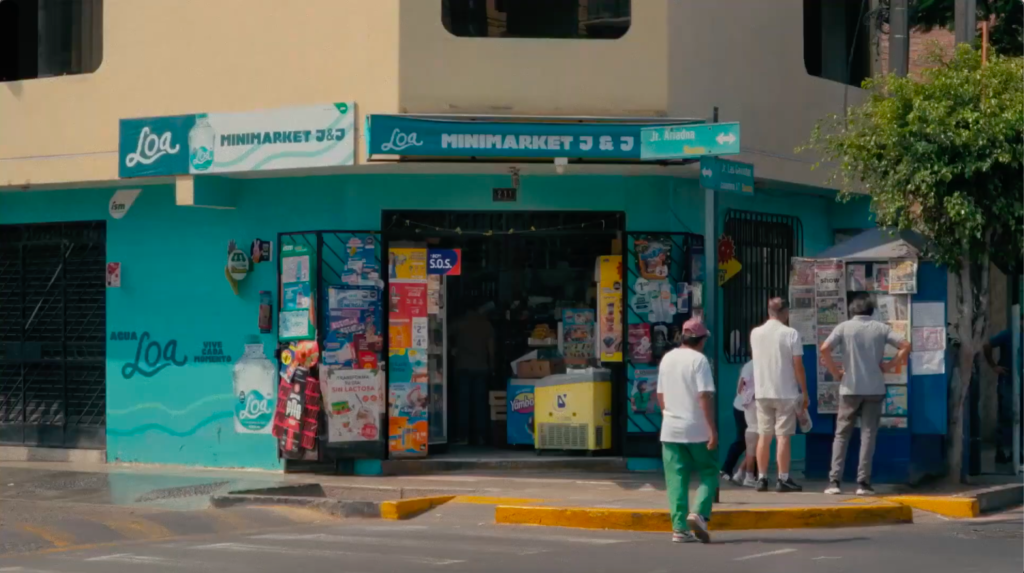
BCP agents operate inside bodegas, pharmacies, markets and other small businesses across Peru. These locations are often easier to reach than a bank branch, especially outside major city centres.
SOS POS gave that retail network a new public role. The shop was still somewhere to buy food, medicine or household goods. However, it could now become the first place someone visited after a theft.
Participating businesses displayed SOS POS signs so people could recognise where the service was available. Meanwhile, the terminals required no replacement. BCP updated the existing system and added the emergency function to the network.
The service reached 17,500 active locations. Expansion plans aimed to bring it to 120,000 terminals by the end of 2026.
That scale changed the value of the idea. One emergency machine inside a bank would have helped people who could reach it. Thousands of terminals placed throughout everyday neighbourhoods created a distributed safety network.
A device designed to move money could now stop it from moving.
The Impact
By June 2026, customers had completed more than 14,000 emergency blocks through SOS POS. The service had protected over S/74 million in customer balances.
The campaign also became one of Peru’s biggest international advertising successes. It won the Creative Data Grand Prix in 2026, along with three Gold, one Silver and two Bronze Lions across several categories.
The range of recognition reflected the different parts of the work. SOS POS was a banking product, a data system, a customer service and a nationwide network. The communication explained the idea, but the real result happened when someone used a terminal after losing their phone.
In fact, the strongest measurement was not how many people watched the case-study film. It was how much money remained protected because the service existed.
The Bigger Point
SOS POS used data to protect access to data.
The card reader already knew how to communicate with BCP. The agent network already reached neighbourhoods throughout Peru. Customers already understood the keypad. Circus Grey connected those existing pieces around a new moment of need.
Furthermore, the idea gave financial security a physical location. Digital banking had moved important services into the phone. SOS POS created a way back into the system when that phone was suddenly gone.
The service also showed what can happen when a brand looks at its infrastructure as media, product and public utility at the same time.
BCP did not build another object for people to find during an emergency. It gave a familiar object one more button to press.
Credits
SOS POS (2025). Banco de Crédito del Perú, Peru. Agency: Circus Grey, Lima. Creative Chairman and CEO: José Rivera y Piérola. Chief Creative Officer: Piero Oliveri. Creative Directors: Luisfe Ponce and José Linares. Copywriter: Carla Padilla. Art Director: Mariana Berrocal. Head of Planning: Renato Aguilar. Planner: Maquel Paredes. Head of Production: Vanessa Gómez. Brand Director: Vanessa Ortega. Awards include the Creative Data Grand Prix, three Gold, one Silver and two Bronze Lions in 2026.
Related
More in Case Studies



Popular
Popular posts




More stories