
Digital
Copycats Welcome: Clash Royale turned imitation games into recruitment
 By Archit
·
·
5 min read
By Archit
·
·
5 min read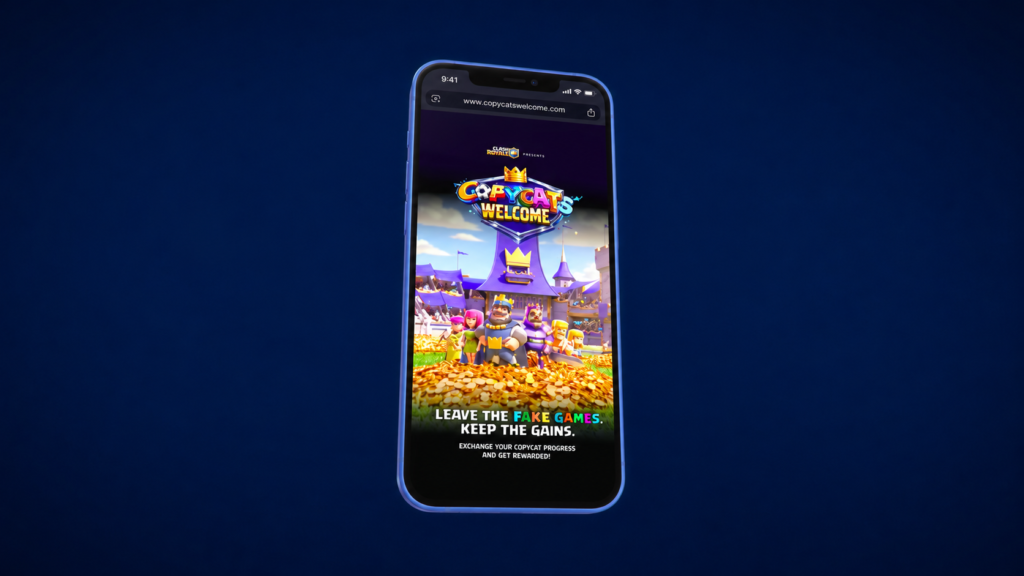
Clash Royale had spent years watching other mobile games copy its characters, weapons, name and gameplay. In April 2026, it stopped treating those players as lost customers. Copycats Welcome invited them to exchange progress from imitation games for rewards inside the original Clash Royale. DAVID New York created the campaign for Supercell.
The copycats had already recruited the audience. Clash Royale gave that audience a reason to switch sides.
The Problem Was Starting Again
Players had invested time in games that looked and played like Clash Royale. They had earned currency, improved their levels and built collections inside those imitation titles.
Moving to the original game meant abandoning that progress. Even a player who recognised that Clash Royale offered the better experience could hesitate when the move required starting from zero.
DAVID found the campaign inside that barrier.
Clash Royale did not ask people to forget the hours they had spent elsewhere. The brand offered to recognise that time and convert it into something useful inside the real game.
That made the campaign feel less like a traditional attack on competitors and more like an amnesty. Players could leave the imitation without losing everything they believed they had earned.
The Progress Swap
A dedicated website allowed players to submit their progress and currency from copycat games. Clash Royale then converted that information into real in-game rewards, including Gold and Wild Cards.
The exchange was not a technical transfer between two connected games. It was a trade-in offer. A player showed what they had built elsewhere, and Clash Royale gave them a starting point inside its own world.
That distinction kept the mechanic simple. The copycat developer did not need to cooperate. Clash Royale only needed to reward the person leaving it.
The idea also respected the part of gaming that is difficult to replace. Players do not only invest money. They invest evenings, habits and the slow satisfaction of watching numbers grow. Copycats Welcome gave that time a value.
Meanwhile, the offer turned intellectual property theft into a source of new customers. Every imitation game had spent months teaching people how to enjoy something similar to Clash Royale. The campaign treated that familiarity as preparation for the original.
Making the Copies Look Fake
The launch film placed familiar Clash Royale characters inside distorted versions of their own game.
The fake worlds carried names such as Bash Royale and Space Royale. They borrowed the shapes and mechanics of Clash Royale while making everything feel slightly wrong. Characters looked cheaper. Arenas felt unfinished. Even the advertising around the games became part of the joke.
The film gave Supercell a way to call out the copying without becoming legal or defensive. It showed the difference through craft and humour, then moved quickly towards the offer.
The message was not simply that the copies were worse. It was that players could now leave them without giving up their progress.
That made the film useful beyond entertainment. It led directly to the exchange platform, where the joke became a working recruitment tool.
The campaign also targeted communities where people were already discussing imitation games. Clash Royale entered those spaces with a specific invitation rather than a broad message aimed at every mobile player.
Millions Returned to the Original
More than 2.3 million players exchanged their copycat progress for Clash Royale rewards within the first week.
That response showed how large the switching barrier had become. The audience did not need another explanation of what Clash Royale was. Millions were already playing versions of it. They needed a reason to move without feeling that their earlier effort had been wasted.
Copycats Welcome later won the Grand Prix in Entertainment Lions for Gaming at Cannes Lions 2026.
The recognition reflected the way the campaign crossed several parts of the game. The film created the story. Online communities found the right players. The website handled the exchange. Finally, the rewards brought those players directly into Clash Royale.
The campaign did not stop at making fun of imitation. It gave imitation a conversion path.
The Bigger Point
Copycats Welcome recognised that a copied product can also create trained customers.
Every imitation game had introduced more people to the basic rhythms of Clash Royale. Players understood the battles, characters and rewards because another developer had already taught them.
Supercell could have focused only on what had been taken. Instead, it looked at what those games had produced. A large audience already searching for the Clash Royale experience.
The campaign then addressed the one reason those people might stay away. It allowed their time elsewhere to count.
That generosity made the original feel more confident than the copies. Clash Royale did not need to pretend the imitation games did not exist. It opened the door, welcomed their players and let them bring their progress with them.
The copycats borrowed the game. Clash Royale took back the audience.
Credits
Copycats Welcome (2026) — Clash Royale / Supercell, global digital campaign led from the United States. Agency: DAVID New York. Production: Believe TV, Santiago. Sound: Sonic Union, New York. Awards: Entertainment Lions for Gaming Grand Prix at Cannes Lions 2026.
Related
More in Digital

Popular
Popular posts



More stories