Outdoor
Get Almost, Almost Anything: Uber Eats bagged other brands’ billboards
 By Archit
·
·
4 min read
By Archit
·
·
4 min read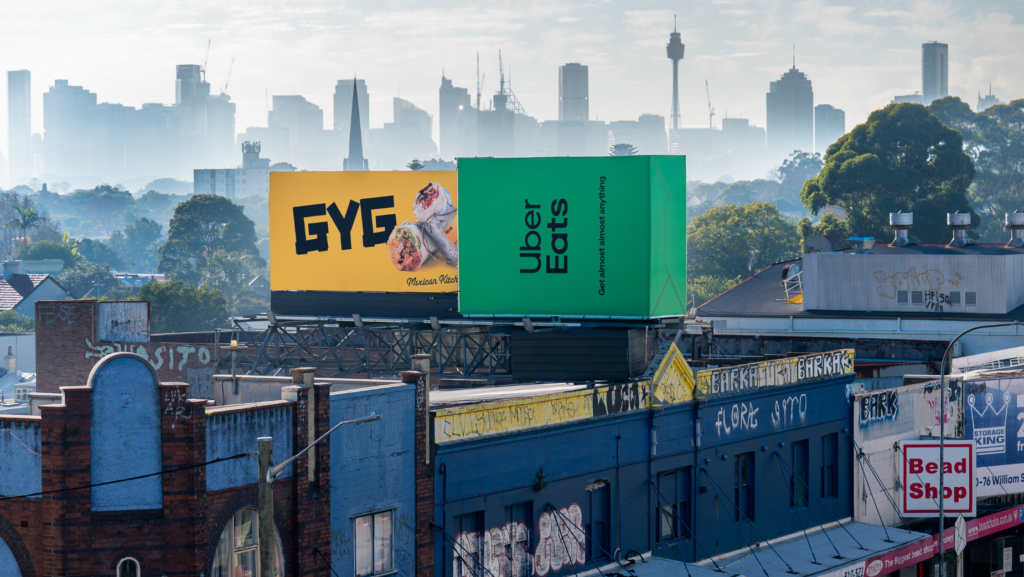
In June 2026, Uber Eats placed giant delivery bags around advertisements for other brands. A KFC billboard became a bag of KFC. A Petbarn poster became a Petbarn order. McDonald’s, 7-Eleven and Guzman y Gomez received the same treatment. Created by Special Australia with JCDecaux and EssenceMediacom, the outdoor campaign turned other companies’ ads into proof of what Uber Eats could deliver.
The media was already booked. The products were already on display. Uber Eats only needed to add the bag.
The Catalogue Was Already Outside
Uber Eats had spent years expanding beyond restaurant meals. The app now included groceries, convenience products, pet supplies and more. However, showing the full range in one advertisement would have created a crowded product list.
Special found a simpler demonstration on the street.
Many billboards across Sydney and Brisbane were already promoting things available through Uber Eats. A fast food poster showed a meal someone could order. A convenience store board showed products that could arrive at their door. Meanwhile, a pet retailer’s advertisement represented another part of the app’s growing catalogue.
Uber Eats treated those advertisements as ready-made product photography.
The brand did not need to place every item inside one campaign layout. Instead, it placed its familiar green delivery bag around the media that already showed them.
How the Bags Changed the Billboards
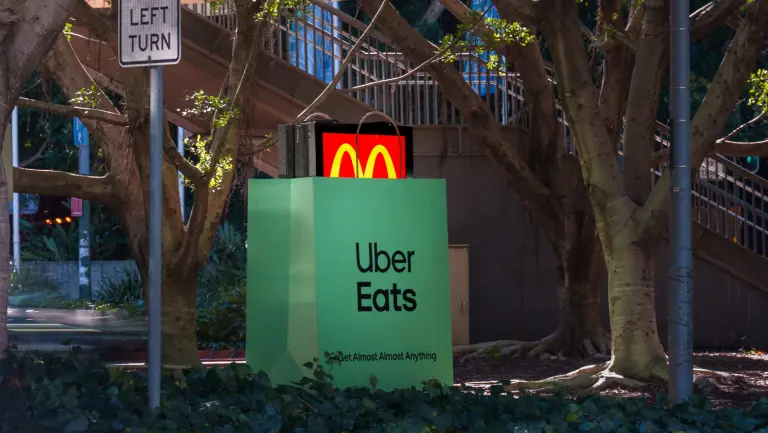
The campaign used special outdoor builds created with JCDecaux.
Oversized green structures wrapped around existing billboard frames, making each advertisement look as though it had been packed inside an Uber Eats bag. The original brand and product remained visible through the centre.
That construction carried the message without a long headline. Someone could recognise the company being advertised, notice the Uber Eats bag around it and understand that the product was available through the delivery platform.
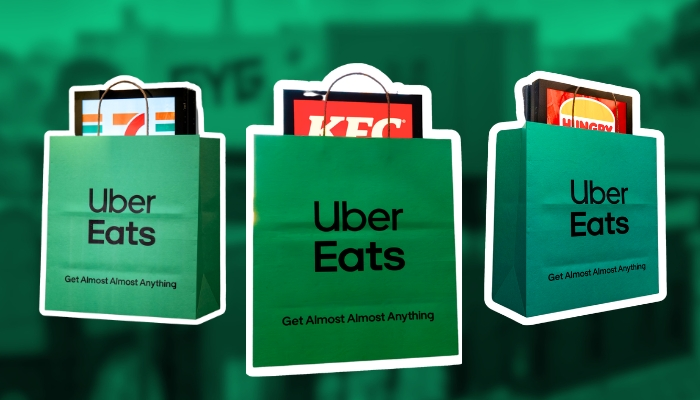
The bag also connected very different advertisers under one system. KFC and McDonald’s represented restaurant delivery. 7-Eleven showed convenience shopping. Petbarn pushed the idea into pet supplies. Each billboard communicated a different category while the green frame kept the Uber Eats promise consistent.
Furthermore, the campaign allowed every partner’s existing creative to keep doing its original job. The restaurant still promoted its food. The retailer still promoted its products. Uber Eats added another meaning around it.
The City Became the Product Menu
The builds ran in high-traffic parts of Sydney and Brisbane from 1 June to 30 June.
Those locations turned an ordinary journey through the city into a tour of the Uber Eats catalogue. Each billboard became another answer to the same question. What can the app deliver?
The campaign did not need every execution to sit beside the next one. Repetition across different roads and neighbourhoods made the range clearer. One person might pass a fast food bag in the morning and a pet supply bag later that week. Together, the encounters made the platform feel broader.
The idea also fitted the established “Get Almost, Almost Anything” platform. The repeated “almost” keeps the claim from becoming absolute. At the same time, the variety of bagged billboards makes that small limitation feel increasingly difficult to find.
Rather than asking people to remember a list of categories, Uber Eats let the city reveal them one at a time.
What Made It Different
The campaign treated other advertisements as useful space inside its own message.
That could easily have felt like a brand interruption. Instead, the bag created a relationship between the two companies. The product inside still belonged to KFC, McDonald’s, Petbarn or another advertiser. Uber Eats simply showed how it could reach the customer.
The physical build was also more convincing than placing an Uber Eats logo beside another poster. The giant bag changed the object itself. From the right distance, the billboard no longer looked like media carrying a product image. It looked like an order waiting to be delivered.
More importantly, the execution made a large catalogue feel simple. Uber Eats did not have to show thousands of products. It showed that the things people already wanted, recognised and saw advertised every day could probably arrive in the same green bag.
Other brands supplied the products. Their billboards supplied the pictures. Uber Eats packed the whole thing up.
Credits
Get Almost, Almost Anything, OOH Bags (2026) — Uber Eats Australia. Creative agency: Special Australia. Media agency: EssenceMediacom. Outdoor production and media: JCDecaux. Ran across high-traffic locations in Sydney and Brisbane from 1 June to 30 June 2026.
Related
More in Outdoor

Popular
Popular posts

More stories