Outdoor
Emotional Pricing: IKEA priced furniture by the moments it creates
 By Archit
·
·
5 min read
By Archit
·
·
5 min read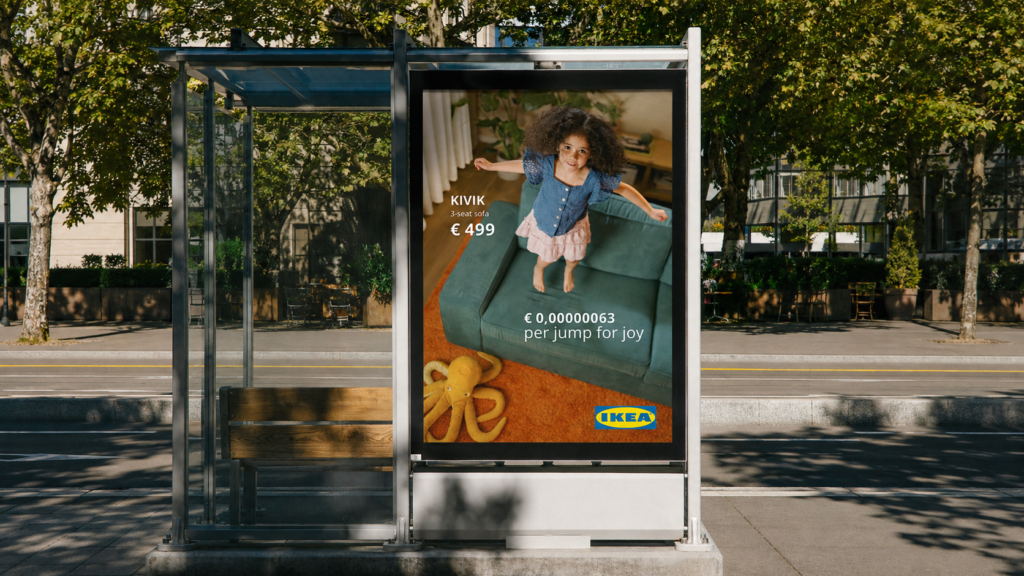
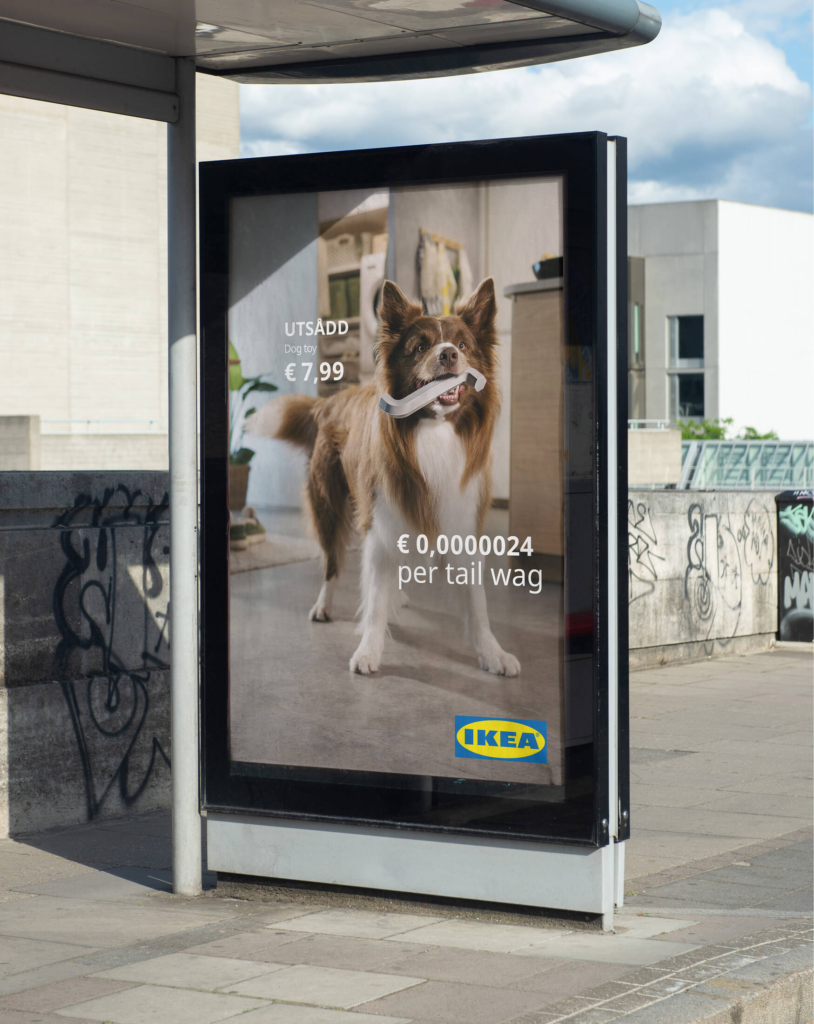
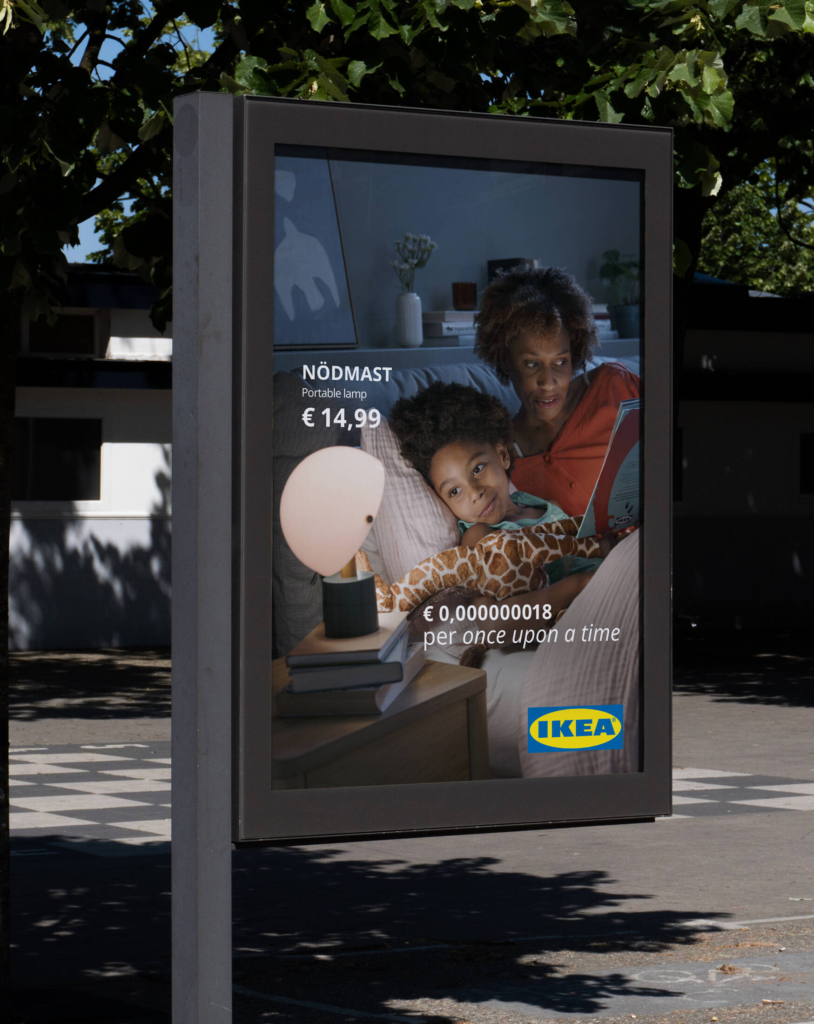
In August 2026, IKEA Belgium gave furniture a second kind of price. One execution cost €0.0000024 for every tail wag, while another charged €0.000000018 for every “once upon a time.” Ogilvy Social.Lab created Emotional Pricing as a four-part outdoor campaign about what affordable furniture gives back over time.
The products still had regular prices.
The campaign measured their value in moments instead.
The price tag counted something different
Furniture prices normally describe the cost of owning an object.
A chair costs a certain number of euros. A lamp has another figure. The calculation ends when someone reaches the checkout.
Emotional Pricing looked beyond that transaction.
The campaign imagined what might happen around each product after it entered a home. A dog could wag its tail beside it. A child could hear another bedtime story. Someone could jump with joy or feel another butterfly.
IKEA then attached tiny euro values to those repeated experiences.
The four executions introduced prices of €0.00000063 per jump for joy, €0.0000024 per tail wag, €0.000000018 per “once upon a time” and €0.00000000076 per butterfly.
These were not advertised as new ways to buy the furniture. Instead, they reframed the cost by spreading it across the emotional life surrounding the product.
A sofa was no longer only a sofa.
It was also every conversation, celebration and quiet evening that might happen on it.
More zeros made the price feel smaller
The campaign used a simple joke about retail advertising.
Price competition often encourages brands to reduce the number on the tag. IKEA added more zeros, but placed them after the decimal point.
As a result, the figures became almost impossibly small.
That gave the outdoor work an unusual visual rhythm. A viewer first saw something that resembled a price. Then the long row of zeros made them stop and work out what was being measured.
The wording completed the idea.
“Per tail wag” did not sound like financial language. Neither did “per butterfly.” However, placing those phrases beside euro symbols made ordinary emotions behave like units on a receipt.
The numbers also carried IKEA’s affordability message without depending on a discount.
The campaign did not say that a product was temporarily cheaper than it had been last week. It suggested that the object could feel inexpensive when considered across years of daily use.
That gave the price a longer life than a seasonal offer.
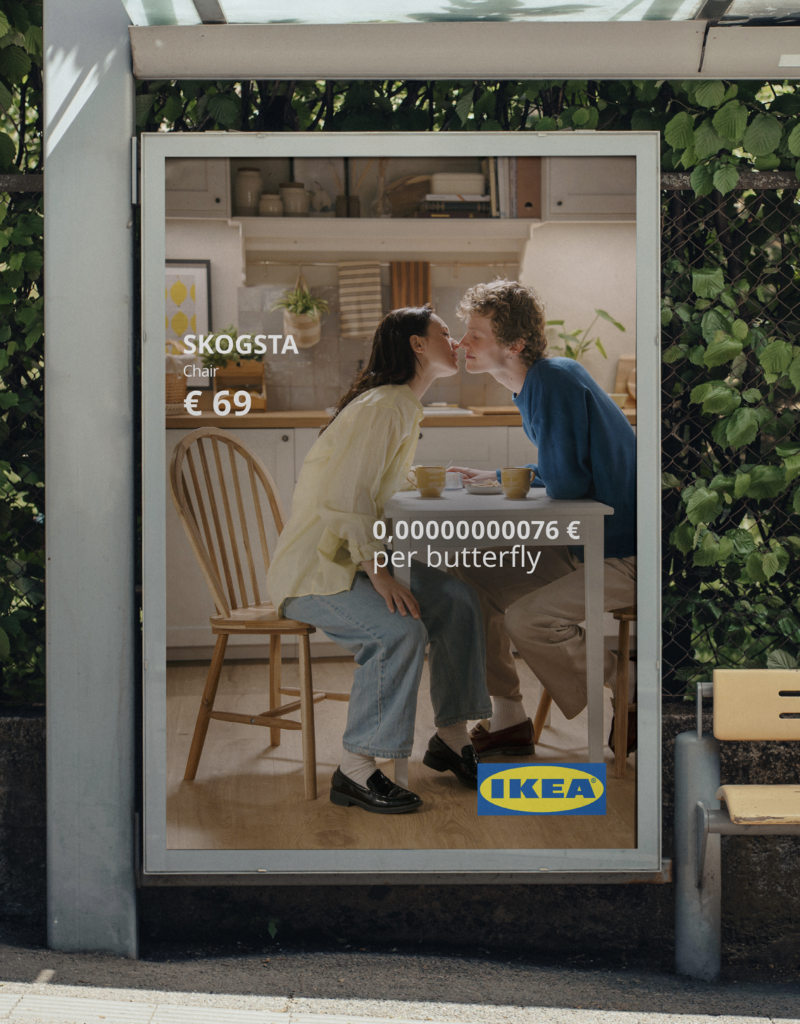
The photographs kept the idea inside the home
The campaign included four executions centred on a dog, lamp, couch and chair.
Each image connected a household object with the life taking place around it. The photography did not need to show a crowded showroom or explain the full product range.
Instead, one familiar scene carried each emotional calculation.
That restraint mattered because the decimals were already unusual. Adding more copy or several products could have made the posters difficult to understand at outdoor speed.
The campaign kept the structure consistent.
One image established the moment. One price introduced the surprise. One emotional unit changed how the viewer understood the object.
The work also fitted IKEA’s wider relationship with everyday life at home.
Furniture often stays in the background while more memorable things happen around it. People may forget the name of a chair, but remember who sat in it. They may stop noticing a lamp, while continuing to use the room it helps make comfortable.
Emotional Pricing gave that background role a number.
The calculations were creative rather than literal
The campaign record did not explain how the number of tail wags, stories or butterflies had been estimated.
Therefore, the prices should be understood as creative expressions rather than verified lifetime calculations.
That does not weaken the central idea.
The exact decimal is less important than the change in perspective it creates. IKEA asked people to consider how often an affordable object could support something meaningful after it had been purchased.
Still, the absence of a published calculation method keeps the campaign in the world of advertising rather than product economics.
No performance results, media locations or customer response figures were released with the initial campaign record.
The work currently stands on the clarity of its outdoor craft.
The Craft
Emotional Pricing made the familiar IKEA price tag tell a different story.
The campaign kept the euro symbol and decimal structure associated with cost. However, it replaced the expected unit with something personal.
That small copy change connected affordability with emotional value.
More importantly, the products remained necessary to the thought. A chair, couch or lamp may not create a feeling alone. Still, it helps create the place where that feeling can happen repeatedly.
IKEA priced the furniture once.
Then it priced everything that might happen around it.
Credits
Emotional Pricing (2026). IKEA, Belgium. Agency: Ogilvy Social.Lab. Creatives: Karel de Mulder and Tom Galle. Executive Creative Director: Jeremie Goldwasser. Account Director: Stephanie Torfs. Account Manager: Louise Laes. Production Manager: Ingeborg Van Hoof. Photographer: Dozen. Media: outdoor.
Related
More in Outdoor


Popular
Popular posts


More stories