Outdoor
Behind the Mac: Apple celebrated UK creators in their own cities
 By Archit
·
·
4 min read
By Archit
·
·
4 min read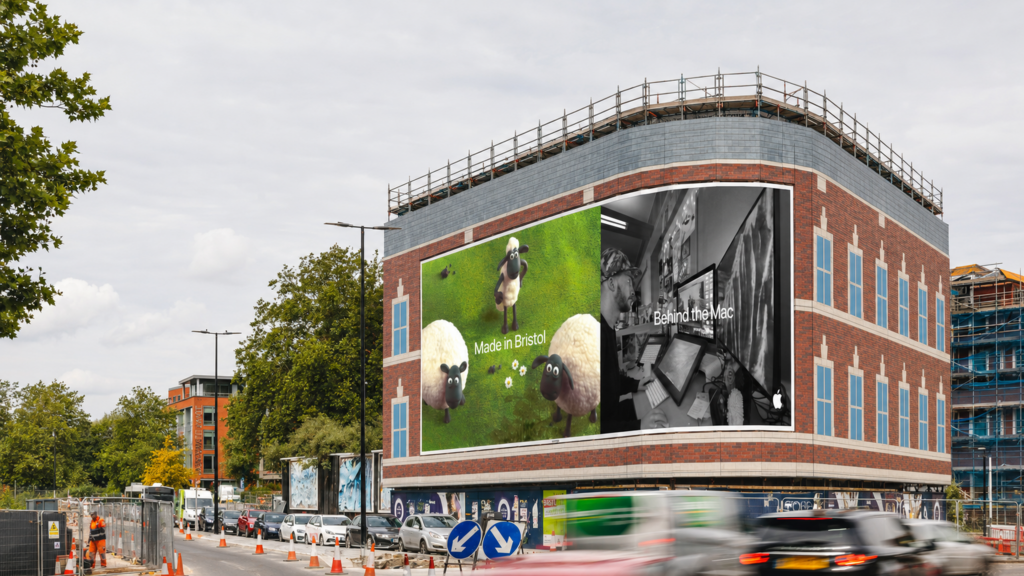
In July 2020, Apple built a national creative portrait from photographs taken in studios, bedrooms, workshops and cars. Behind the Mac: Made in the UK gathered more than 20 UK-based creators and showed the Mac as a quiet presence behind their work. TBWA\Media Arts Lab London created the campaign using found images, a 60-second film and location-specific outdoor placements.
The Creators Carried the Story
The campaign brought together people working across music, fashion, film, television, art, photography, illustration and game design.
The group included Michaela Coel, Dave, Grayson Perry, Edward Enninful, Maisie Williams, Labrinth, Joy Crookes, Samuel Ross, Feng Chen Wang and the team at Aardman. Established names appeared beside creators whose audiences were still growing.
Their surroundings mattered as much as their profiles. Coel appeared working from the front seat of a Ford Fiesta. Other images showed bedrooms, home studios, desks and workshops. These were places where ideas were being written, edited, drawn or produced.
The Mac appeared naturally inside those spaces. There were no demonstrations of processing power or technical features. Instead, the finished work provided the evidence of what the computer helped people make.
That kept the campaign focused on creativity while giving the product a clear role in every frame.
Found Images Gave the Work Its Texture
The film used black-and-white photographs gathered from the creators rather than placing everyone inside one new production.
That decision created a consistent visual style without removing the differences between them. A fashion designer’s workspace still felt different from a musician’s studio. Meanwhile, the black-and-white treatment allowed the images to sit together as one portrait of UK creativity.
The film had no voiceover. Labrinth’s track “Imagination” carried the message through its lyrics while the photographs moved quickly between people, places and examples of their work.
The campaign was already in development before the first UK lockdown. However, production had to adapt as teams began working from homes and spare rooms. Found material became central to finishing the work without turning it into a direct response to the pandemic.
That helped the film land at the right moment. It celebrated what people were making across the country during a year when creative work had become more difficult to produce and share.
The Posters Returned Each Story Home
Apple extended the film through large outdoor placements and geographically targeted social advertising.
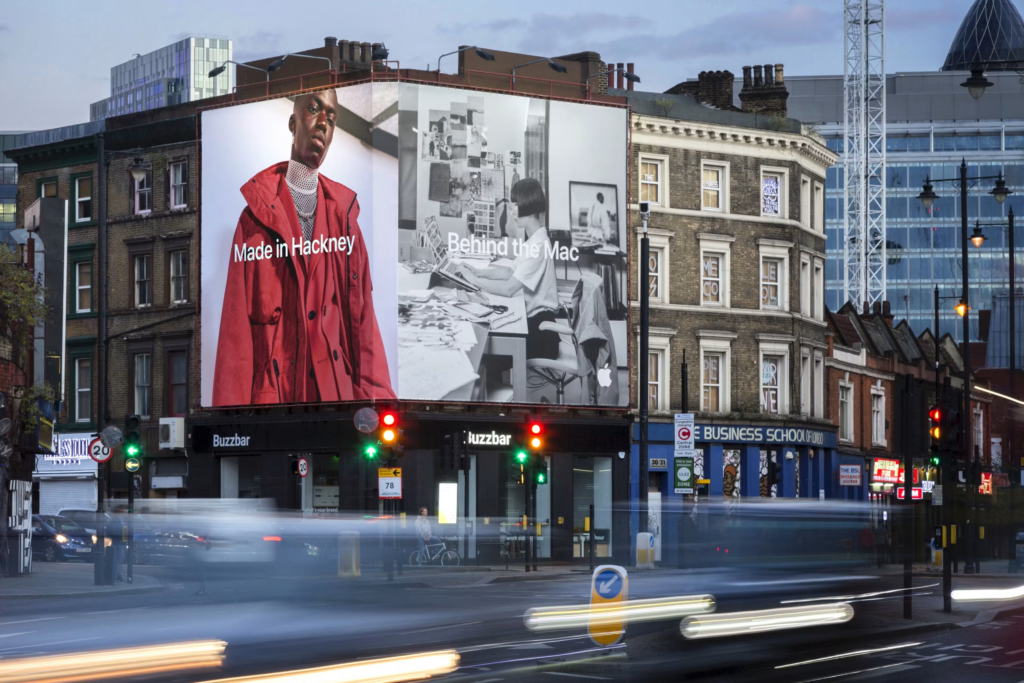
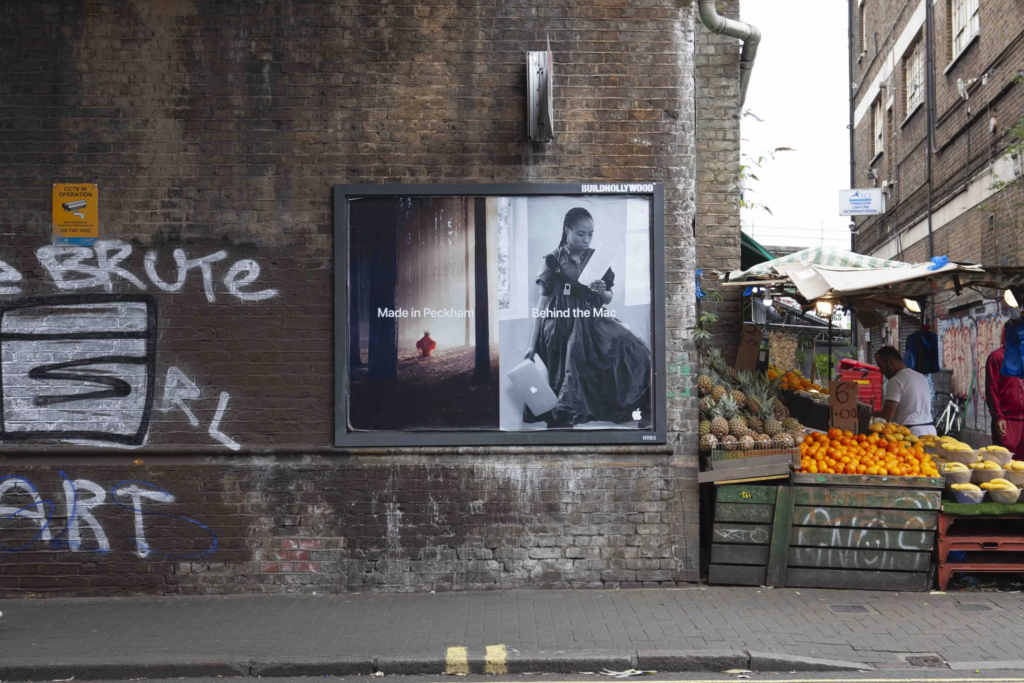
The locations were connected to the people featured in the work. Illustrator Gabriella Marcella’s work appeared in Glasgow’s Princes Square. Filmmaker Jenn Nkiru appeared along Rye Lane in Peckham, close to the community connected to her creative life.
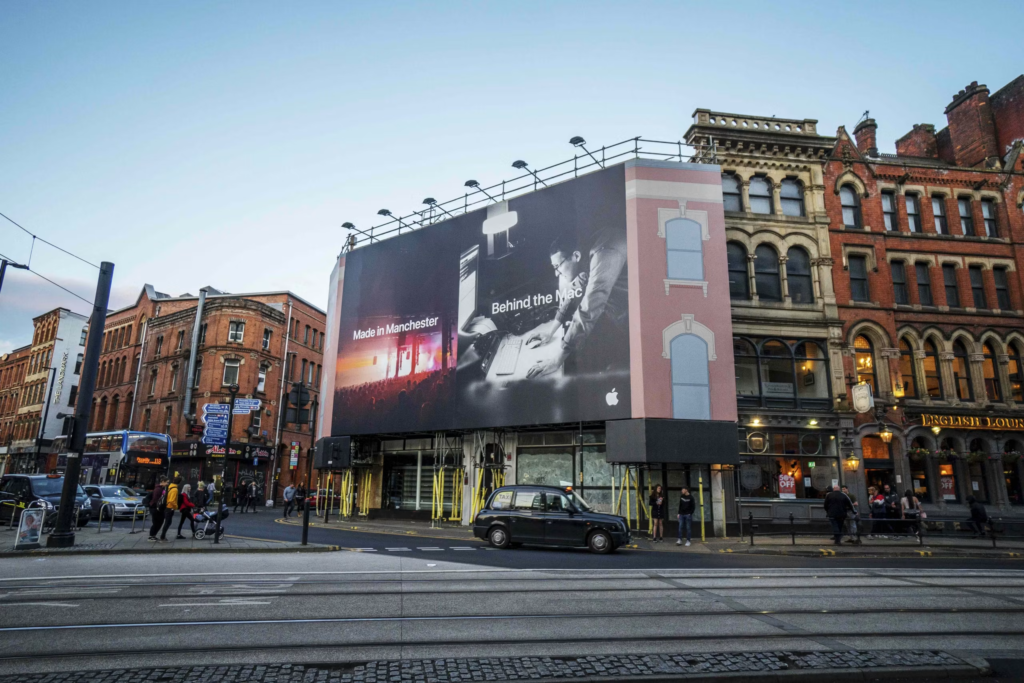
As a result, the campaign did more than assemble famous people on national billboards. It placed individual stories back into the towns and neighbourhoods where the work had developed.
That local approach also widened the picture of UK creativity. London remained part of the campaign, though the work reached cities and communities across the country.
The outdoor executions kept the same simple structure as the film. A creator, their workspace or their output filled the frame. The Mac remained visible somewhere inside the image. Apple needed little additional explanation.
The person and the work completed the advertisement.
The Craft
Behind the Mac: Made in the UK gave Apple a product campaign without separating the product from the people using it.
The found photographs made the work feel observed rather than staged. The black-and-white treatment connected very different creative fields. The song supplied emotion without a written speech about creativity. Finally, the local outdoor placements gave each person a physical place inside the wider campaign.
The title also worked literally. Viewers often saw the creator sitting behind the familiar Apple mark on an open laptop. However, the deeper idea concerned everything happening beyond that object.
A Mac might sit in the middle of the photograph, but the work on its screen always pointed towards something larger. A song, a garment, an illustration, a television series or an animated film.
Apple showed the computer by showing what came out of it.
Credits
Behind the Mac: Made in the UK (2020) — Apple, United Kingdom. Agency: TBWA\Media Arts Lab London. Executive Creative Director: Stephen Hancock. Creative Director: Jo Forel. Senior Creatives: Abdou Cisse, Akwasi Poku and Felix Heyes. Design Director: David Bennett. Senior Designer: Bethan Jones. Strategic Planning Director: James McDavid. Content Strategy Director: Alex Wrigley. Creative Strategist: Henry Degnin. Executive Producer: Ben Roberts. Assistant Producer: Rebecca Lee. Editing: Nomad. Editor: David Warren. Colourist: Felipe Szulc. Music: “Imagination” by Labrinth.
Related
More in Outdoor

Popular
Popular posts


More stories