Spotlight
RooBadge: Volkswagen turned its badge into a kangaroo warning system
 By Archit
·
·
5 min read
By Archit
·
·
5 min read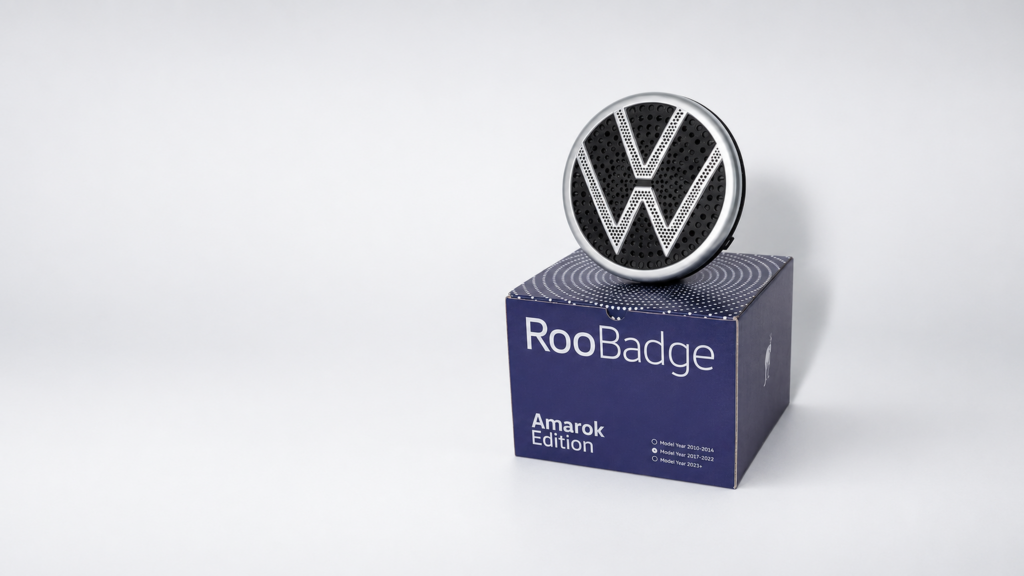
Volkswagen replaced its front badge with a species-aware sound system designed to warn kangaroos away from approaching vehicles. RooBadge uses location data, wildlife records and directional audio to choose a warning suited to the animals nearby. DDB Sydney developed the project with Volkswagen Australia, the University of Melbourne, WIRES and several technology and design partners.
The device was unveiled in March 2024 after several years of development. However, Volkswagen presented it as an ongoing scientific trial rather than a finished safety product.
A serious problem on Australian roads
Animal collisions are a constant risk for drivers travelling through regional Australia. Kangaroos are especially active around dawn and dusk, when visibility is lower and many people are driving to or from work.
A collision can injure the animal, damage the vehicle and put its occupants in danger. At the same time, swerving at speed can create an even more serious crash.
Small whistles designed to warn wildlife have been sold for years. However, there is limited proof that one fixed sound can work across different animals and conditions.
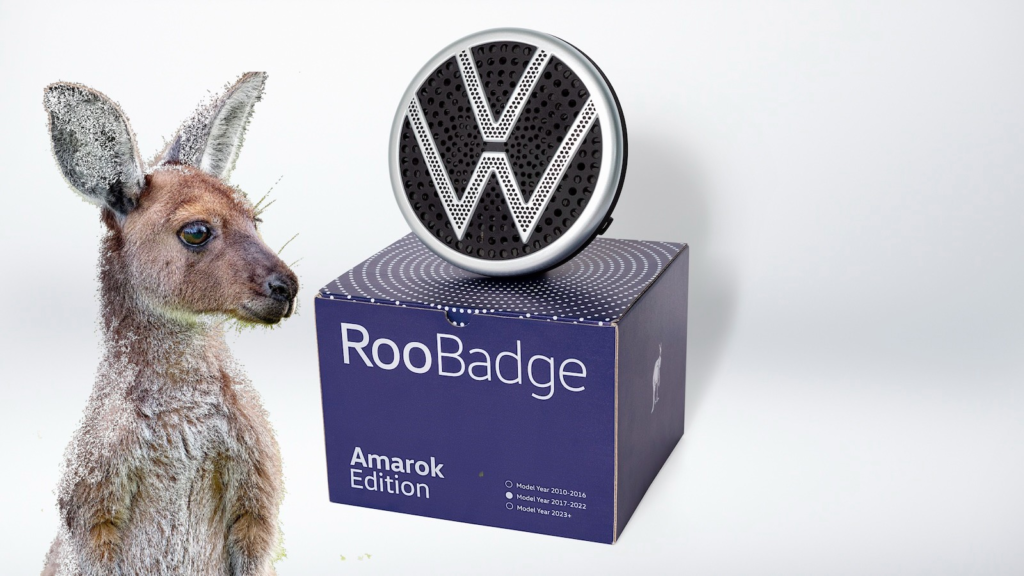
The problem becomes harder with kangaroos because Australia is home to several species. Each can live in a different region and respond differently to sound.
Volkswagen therefore began with a more specific question. Could a vehicle change its warning depending on where it was travelling and which kangaroo species lived there?
How RooBadge changes with its location
RooBadge replaces the circular Volkswagen badge at the front of the vehicle with a disc containing directional speakers.
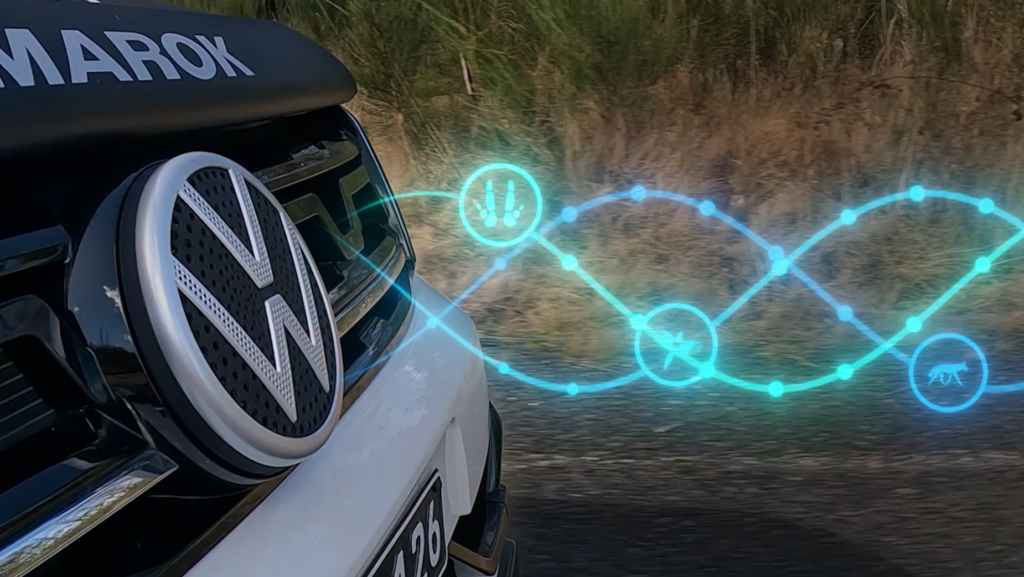
An accompanying app compares the vehicle’s GPS position with kangaroo distribution data. After identifying the species expected in that area, the system selects and combines sounds intended to alert it.
These sound profiles include natural warning signals such as dingo calls, bird alarm calls and the thumping sounds kangaroos use to warn each other. Artificial sounds are added to the mix as well.
The device then projects the resulting high-frequency audio forwards from the vehicle. Meanwhile, its directional design limits where that sound travels.
RooBadge does not need to operate throughout every journey. Volkswagen says the system uses location and vehicle data to recognise relevant conditions, including travel through known collision areas outside towns and cities.
As a result, the badge changes from a decorative mark into the visible part of a larger data system. The app understands the location. The software chooses the sound. The hardware sends it towards the road ahead.
Building the idea required real research
The early thought was easy to describe. Place a speaker inside the Volkswagen badge and use it to warn kangaroos.
Turning that thought into working hardware required several years of research, industrial design and field testing.
The University of Melbourne helped develop and study the sound profiles. Wildlife rescue organisation WIRES contributed knowledge about animal collisions and their consequences. Meanwhile, Nakatomi worked on the technology, and Vert Design developed the physical product.
The team also had to consider how the device would sit on a moving vehicle. It needed to survive outdoor conditions without losing the familiar shape and position of the Volkswagen badge.
More importantly, the sound could not be designed for people. The researchers needed to understand which signals might carry meaning for kangaroos while remaining outside the normal hearing range of the driver.
That scientific work gave the campaign its credibility. The case film could introduce the problem and explain the ambition. However, the real project lived in the repeated testing of hardware, software and animal behaviour.
The device is still being tested
RooBadge has progressed through several stages of testing, including work with stationary vehicles and controlled settings. Approval was later granted for trials involving moving vehicles and wild kangaroos.
Still, Volkswagen has not claimed that the device is ready for public use. RooBadge is not currently available to buy, and the company continues to collect field data and adjust its sound profiles.
That distinction matters. The project aims to become a scientifically proven vehicle-based kangaroo deterrent. It has not reached that goal yet.
Therefore, the awards should not be confused with evidence that the device prevents collisions. They recognise the design, thinking and potential behind the work.
Volkswagen is also exploring a version that could attach to vehicles made by other manufacturers. In the future, the same location-based system may be adapted for animals such as deer in other countries. However, those possibilities will depend on further research for each species and environment.
Where It Fits In
RooBadge won a Wood Pencil in Product Design in 2025. It also collected three Lions that year, including Silver in Brand Experience and Activation and Bronze awards in Audio and Radio and Design.
The recognition came from an unusual meeting of brand identity and practical engineering. Volkswagen did not place a safety message beside its badge. It asked whether the badge itself could help.
At the same time, the project stayed closely connected to the company’s commercial vehicles. These vehicles often travel through regional areas where wildlife collisions are common.
The result is stronger as a research project than as a claim of success. RooBadge has a clear purpose, a memorable physical form and a thoughtful system behind it. However, its value will ultimately depend on what happens during independent and real-world testing.
For now, the badge represents a serious attempt to make the front of a vehicle communicate with the wildlife ahead.
Credits
RooBadge (2024) — Volkswagen Commercial Vehicles, Australia. Agency: DDB Sydney. Concept: David Jackson and Noah Regan. Executive Creative Director: Matt Chandler. Creative Partners: Tim Woolford and Tommy Cehak. Creative: Chris Ott. Technology: Nakatomi. Research: University of Melbourne. Wildlife consultation: WIRES. Industrial design: Vert Design. Design: Interbrand Australia. Music and sound: Mosaic. Director of Photography: Simon Hammond. Awards: D&AD Wood Pencil, Silver Lion in Brand Experience and Activation, and Bronze Lions in Audio and Radio and Design.
Related
More in Spotlight

Popular
Popular posts


More stories