Some species should never exist, says Jüsto’s plastic-pollution campaign
 By Archit
·
·
3 min read
AI-assisted
Quick summary
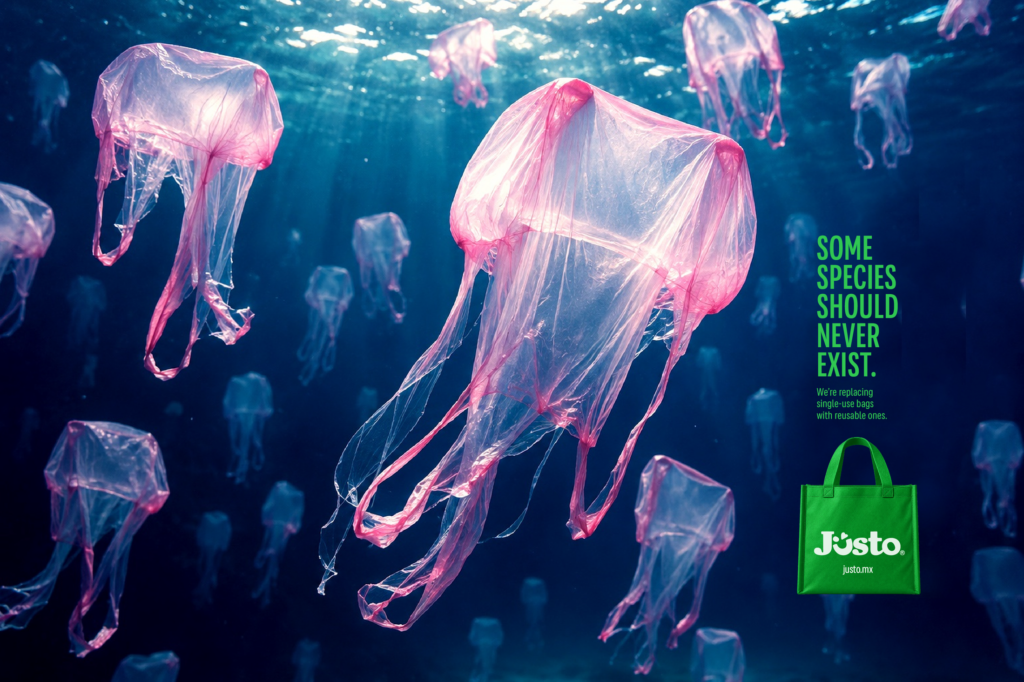
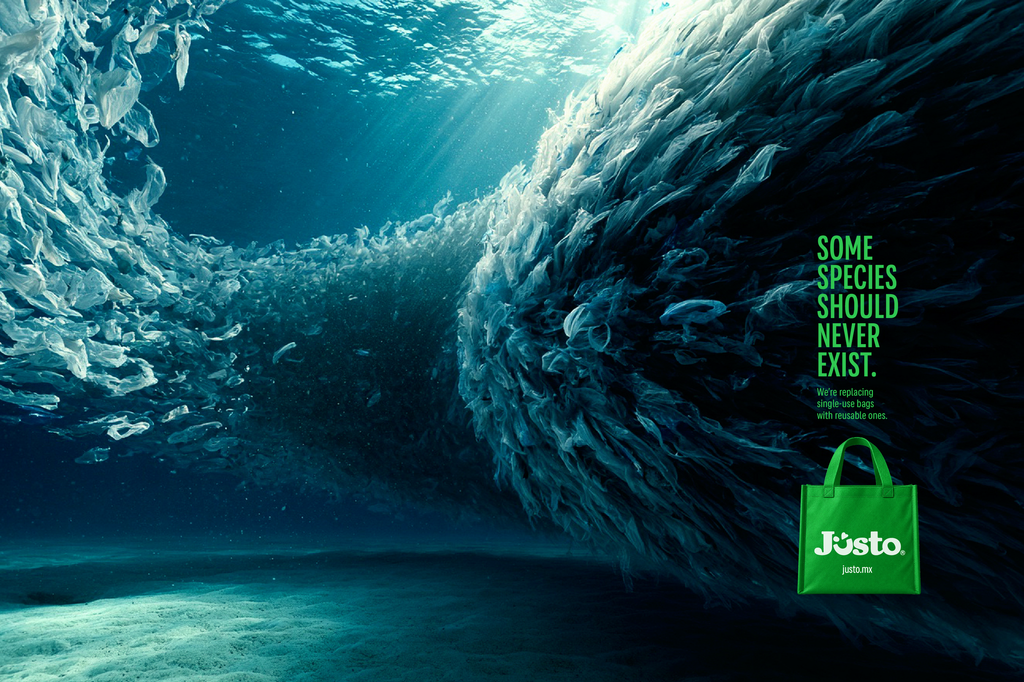
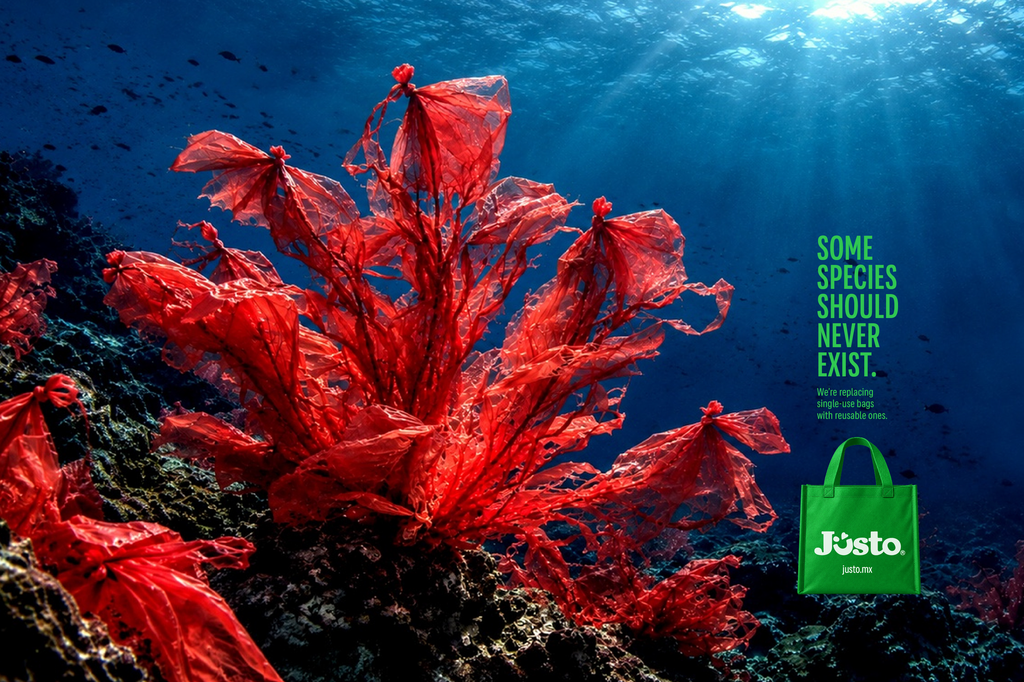
Mexican retailer Jüsto and agency The Prime launched the print and design campaign "Species" to introduce a shift from single-use plastic bags to reusable alternatives. Published in August 2026, the advertisements feature underwater photography of marine life such as jellyfish, fish, and coral reefs, which upon closer inspection are actually made of discarded plastic bags.
The provocative headline, "Some species should never exist," challenges viewers to reconsider everyday waste that infiltrates natural environments. By displaying the new green reusable shopping bag alongside the imagery, the campaign directly connects the environmental warning to a practical retail decision in customer service.
AI-generated from this article. For complete context and credits, read the full story.
“Some species should never exist” is an unusual line to put beside an underwater scene. It asks the reader to reconsider what they are looking at.
In Jüsto’s “Species” campaign, the apparent marine life was made from plastic bags. The images borrowed the appeal of underwater photography, then used that first impression to reveal something that did not belong in the ocean.
Created by The Prime in Mexico and published in August 2026, the print and design campaign connected that discovery to a change in the retailer’s own service. Jüsto was replacing single-use plastic bags with reusable ones.
The idea gave a practical packaging decision an environmental context. A bag used briefly for shopping could become part of a much longer story once discarded.
A shopping bag became an unwelcome inhabitant
The campaign imagined plastic bags as jellyfish, schools of fish and coral reefs. Each execution treated waste as if it had become another form of life underwater.
The jellyfish image made that resemblance especially immediate. The bag’s translucent body and trailing strips suggested a creature floating through the sea. Its familiar material remained visible, allowing the same object to read as both shopping waste and marine life.
That double reading carried the message. The image invited a moment of recognition before the headline questioned what the viewer had accepted as natural.
Calling these forms “species” gave the plastic an unsettling place in the scene. It suggested how easily pollution could become part of the picture people expected to see.
The headline changed the meaning of the image
The line “Some species should never exist” worked through its relationship with the visual. Read beside real wildlife, it would sound hostile to nature. Recognising the plastic resolved that tension.
The target was the invented creature formed by the bag. The copy asked readers to reject its presence in the water.
That made the familiar shopping bag central to the argument. Viewers could recognise an object from everyday life inside an environment where it should never have arrived.
The campaign therefore relied on a small act of looking again. Its message emerged from noticing the material, rather than needing a long explanation of the scene.
A reusable bag gave the message somewhere to go
Alongside the underwater image, Jüsto showed a green reusable shopping bag and explained its replacement of single-use bags.
That detail gave the retailer a specific role in the campaign. The environmental message was attached to a change in how it supplied customers with their groceries.
The two bags served different purposes within the ad. One supplied the disturbing imaginary creature. The other presented the alternative Jüsto wanted customers to associate with its service.
Keeping both inside the same execution connected the ocean scene to a decision made during an ordinary shop.
Credits
Brand: Jüsto. Advertising agency: The Prime, Mexico. Chief creative officer: Charly Arias. Creative director: Pablo Mesplede.
About the work
Campaign details
Related
More in Print

Popular
Popular posts

More stories