Editor's Pick
Asterisks replaced footballers’ names in Banco Pichincha’s password warning
 By Archit
·
·
3 min read
AI-assisted
Quick summary
During a May 2026 football match in Ecuador, Banco Pichincha replaced Barcelona SC players’ names with asterisks on their shirts and stadium screens to highlight cybersecurity risks. Created by Delta MullenLowe as part of the bank's "Password Goats" campaign, the activation drew on research showing that one in seven Ecuadorians used their own name as a password.
The initiative aimed to demonstrate that a public name makes a poor digital password because hackers can easily discover it. Unveiled during the bank's 120th anniversary year, the match-day stunt extended to broadcast graphics, linking the visual language of online password fields with the sporting event to warn viewers against using easily guessable personal information.
AI-generated from this article. For complete context and credits, read the full story.
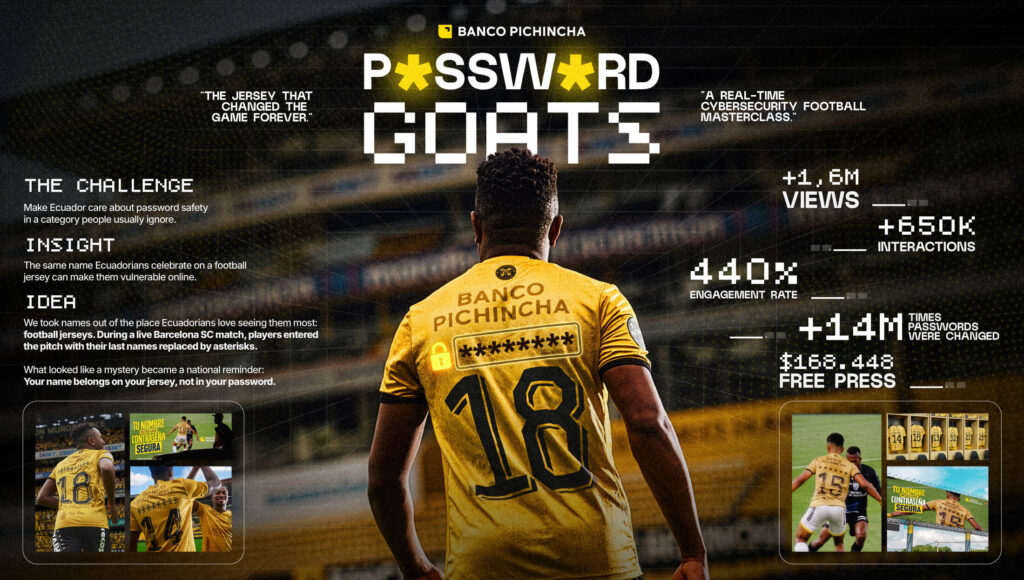
Rows of asterisks appeared where supporters expected to see players’ names. During Barcelona SC’s match against Independiente del Valle on May 9, 2026, the Barcelona players wore shirts that looked as though their identities had been hidden behind a password field.
The change was part of Banco Pichincha’s “Password Goats,” created by Delta MullenLowe. Known locally as “Cr*cks de las contraseñas,” the campaign used football to draw attention to the risk of choosing your own name as a digital password.
The bank’s message explained the missing names. “If your password is your name, hackers already know it.”
A football shirt borrowed the language of a password field
An asterisk is a familiar way to conceal characters entered into a password box. On the shirts, the same symbol obscured information normally intended to be read by everyone watching.
That change created the campaign’s central connection. A footballer’s name is public knowledge, and a person’s own name can be equally easy to discover. Using it as a password gives predictable information a job it is poorly suited to perform.
The shirts made that issue visible without showing an actual account or password. The creative borrowed the appearance of hidden text and placed it on something fans already recognised.
The missing names followed viewers through the match
The treatment extended to the presentation of team lineups on stadium screens. The campaign’s case study also described asterisks appearing in broadcast graphics.
Repeating the symbol across these surfaces connected the shirts with the information surrounding the game. The missing names became something viewers could notice during an event they had chosen to watch.
The reveal then explained why those names had been removed. What first looked unusual in a football setting became a reminder to keep easily discoverable personal information out of passwords.
A common password habit supplied the insight
The campaign cited a finding that one in seven Ecuadorians used their own name as a password. Banco Pichincha used that reported habit as the starting point for the activation.
The choice of football gave the bank a setting where names were already prominent. Shirts and lineups normally help identify the players, making them useful places to demonstrate the difference between public identity and private access.
The warning also formed part of the bank’s wider cybersecurity communication during its 120th anniversary year. That communication addressed risks to personal and banking information, including fraudulent emails and text messages.
Sponsorship gave the security message a public stage
Banco Pichincha used its involvement in Ecuadorian football to bring the warning into the match itself. The campaign connected a banking concern with a visible change to the sporting experience.
The asterisks carried the idea across the shirts, screens and campaign content. Their meaning came from an interface people encountered in everyday digital life, while their placement made that meaning feel unexpected.
“Password Goats” asked viewers to reconsider information they might find convenient to remember. The names removed from the football shirts illustrated why familiar personal details should also be kept out of passwords.
Credits
Brand: Banco Pichincha. Campaign: Password Goats, locally titled Cr*cks de las contraseñas. Agency: Delta MullenLowe. Chief Creative Officers: André Pedroso and Marco Tapia. Creative Director: Alexandra Vaca. Art Director: Sebastián Echeverría. Copywriters: Jorge Poveda, Robert Pirela and Ana Lucía del Hierro. Chief Strategy Officer: Eduardo Carvajalino. Production: Bang Motion & Films. Director: Julian Tapia. Executive Producer: Alberto Tapia. Influencer Marketing: Atis. Media: Right Angle Media. Market: Ecuador. Match activation: Barcelona SC vs Independiente del Valle, May 9, 2026.
About the work
Campaign details
- Brand
- Banco Pichincha
- Agency
- Delta MullenLowe
- Country
- Ecuador
- Year
- 2026
Related
More in Editor's Pick




Popular
Popular posts



More stories