
Case Studies
PetPace turned dogs’ health data into earthquake alerts for Lima
 By Archit
·
·
6 min read
AI-assisted
Quick summary
This case study details Animal Alerts, an experimental warning system developed in Lima, Peru, by PetPace and agency partners to turn dogs’ health data into potential earthquake alerts. Operating along the seismic Pacific Ring of Fire, the project equipped hundreds of volunteer dogs with smart collars that continuously monitored physiological metrics such as pulse, temperature and stress.
By analyzing simultaneous behavioral changes across a network of 538 participating animals rather than relying on isolated observations, the system sought correlations with seismic activity. When patterns matched, alerts were distributed across mobile devices, radio, websites and digital billboards. The pilot reported detecting 18 seismic events, reaching Lima's population and expanding PetPace's user base while serving as an additional data source alongside traditional monitoring.
AI-generated from this article. For complete context and credits, read the full story.

Dogs sometimes behave unusually before people feel an earthquake. PetPace used that observation as the basis for Animal Alerts, an experimental warning system developed in Lima, Peru.
The project equipped volunteer dogs with smart collars that continuously measured physiological and behavioural information. Data from multiple animals was analysed for patterns that could correspond with seismic activity.
When the system identified simultaneous changes across the network, it could distribute warnings through mobile devices, websites, digital billboards and radio.
Lima provided a critical testing location
Lima sits along the Pacific Ring of Fire, a region responsible for most of the world’s seismic activity. More than nine million people live in the Peruvian capital, where earthquakes are a constant risk.
Conventional monitoring equipment can detect seismic activity, but accurately predicting when an earthquake will begin remains difficult.
Scientists and communities have long reported unusual animal behaviour before some natural disasters. However, monitoring those responses consistently has been challenging because earlier research often depended on observation, invasive equipment or isolated reports.
Animal Alerts attempted to create a structured source of real-time data by using wearable technology already designed for pets.
Smart collars monitored the dogs continuously
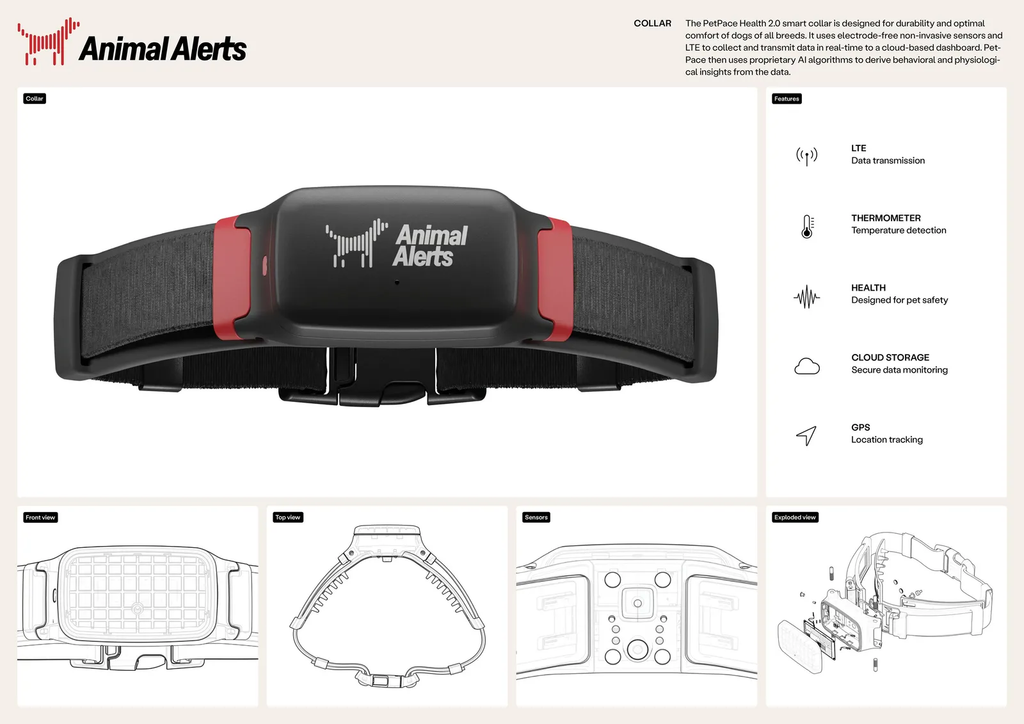
PetPace collars were placed on volunteer dogs living in different parts of Lima.
The devices measured indicators including temperature, pulse, heart-rate variability, activity and stress. Pet owners could also use the accompanying platform to monitor their animals’ health.
Instead of treating one nervous dog as evidence of an approaching earthquake, the system compared data from many animals. A simultaneous rise in stress or unusual behaviour across different locations could indicate a pattern worth investigating.
The information was then compared with recorded seismic events to identify possible correlations between canine behaviour and earthquakes.
This network-based approach reduced the reliance on individual observations. One dog may become anxious for many reasons, but similar changes among several animals could provide more meaningful data.
Alerts were connected to existing media channels
Collecting the information was only one part of the project. Animal Alerts also needed a method for communicating potential warnings quickly.
Media partnerships allowed alerts to appear through geo-targeted mobile messages, websites, radio broadcasts and digital billboards. The same channels normally used for advertising could therefore become part of a public-safety network.
Outdoor screens could reach pedestrians and drivers, while digital messages provided information directly to nearby residents.
The system demonstrated how media infrastructure can perform another function during an emergency. Rather than only carrying campaign messages, it could help distribute information when time matters.

Pet owners helped build the monitoring network
The project invited people across Lima to volunteer their dogs and participate in the research.
Pet nutrition partners and retail promotions helped recruit owners, while an online platform explained how the system worked and how residents could join.
Initial reports described a network of 170 participating dogs. As interest increased, the campaign reported that 538 volunteers had joined the programme.
Each new participant expanded the geographical coverage of the project and increased the quantity of health data available for comparison.
The approach gave dog owners two reasons to participate. The collars helped them understand their pets’ wellbeing while contributing information to a wider public-safety experiment.
The pilot reported 18 detected seismic events
According to the campaign’s reported results, Animal Alerts detected 18 seismic events during its early testing period.
The project also reported reaching or warning Lima’s population of nine million residents through its connected media network. Coverage of the initiative generated approximately 210 million media impressions.
PetPace said its user base increased thirtyfold as awareness of the company and its monitoring technology grew.
These results led to plans for expansion into other regions with high levels of seismic activity.
Animal Alerts remains an experimental system based on correlations in animal data. It does not establish that every change in a dog’s behaviour predicts an earthquake, and it does not replace official seismic monitoring. Its contribution is the creation of an additional data source that researchers and emergency networks can examine alongside established technology.
A pet-health product gained a public-safety role
PetPace developed its smart collar primarily to help veterinarians and owners monitor animal health. Animal Alerts applied the same technology to a different challenge.
The campaign showed how information collected for one purpose could become valuable in another context. Temperature, pulse and stress measurements remained useful for pet care while also contributing to research into earthquake-related animal behaviour.
This gave the brand a practical introduction to the South American market. People encountered PetPace not only as a commercial wearable but as technology being tested for a wider social benefit.
The project also reframed the relationship between people and their pets. Dogs were no longer presented only as animals that needed protection during disasters. Their health data could potentially help protect the communities around them.
Animal Alerts connected science, technology and media
The project brought together veterinarians, behavioural researchers, technologists, pet owners, media companies and risk-management specialists.
That collaboration allowed the campaign to move beyond a communication idea. It required physical collars, data analysis, volunteer recruitment and an alert-distribution system that could operate across multiple channels.
Animal Alerts received three Wood Pencils in 2025 across Health & Wellbeing, Impact and Digital Marketing.
Its larger value lies in the question it tested: whether real-time information from animals could add another layer to how earthquake-prone cities recognise possible danger.
By turning a network of pet collars into an experimental warning system, PetPace demonstrated how everyday animal-health technology could contribute to public preparedness.
Credits
Animal Alerts, 2024. Client PetPace. Created by Serviceplan Germany and L&C with Mediaplus Group. Design by Eat, Sleep + Design. Digital production by ASTRAL Kreativ. Production by Rebeca and Zeppelin Producciones SAC. Public relations by Peppercomm. Postproduction by Nativo Post Sac. Music and sound by Agosto Music & Sound Craft. Global Chief Creative Officer Alex Schill. German Chief Creative Officer Till Diestel. Chief Creative Officers Gian Carlo Lanfranco and Rolando Cordova. Executive Creative Directors Myles Lord, Lorenz Langgartner, Franz Röppischer and Greg Collins. Creative Directors Dennis Fritz, Bruno Franchino, Mariana Ichiyanagui and Juan Ahumada. Director Matias Gutierrez. Behavioural Ecologist Dr Rachel Grant. PetPace Chief Veterinary Officer and Co-Founder Asaf Dagan. PetPace President and General Manager Lior Abraham.
About the work
Campaign details
- Agency
- Serviceplan Group
- Year
- 2024
- Awards
- 2024 and 2025 Cannes Lions - Gold Lion and multiple Silver and Bronze Lions
Related
More in Case Studies




Popular
Popular posts




More stories