Outdoor
IKEA India turned its Swedish product names into familiar Indian movie lines across three cities
 By Archit
·
·
6 min read
By Archit
·
·
6 min readAI-assisted
Quick summary
IKEA India launched a 2024 outdoor campaign across Mumbai, Bengaluru, and Hyderabad by turning its distinctive Swedish product names into familiar local pop-culture punchlines. Created with agency Leo Burnett India, the billboards blend names like BILLY, MALM, MAMMUT, REKO, and TAGGAD into recognizable movie dialogues, songs, and regional expressions in Hindi, Kannada, and Telugu.
Instead of translating its global naming system, IKEA used film nostalgia as a creative shortcut to help consumers easily remember product names without traditional advertising tropes or urgency. While no specific sales or reach figures were released, the city-specific campaign successfully transforms potentially unfamiliar Swedish names into local brand assets by connecting them to regional cultural memories.
AI-generated from this article. For complete context and credits, read the full story.
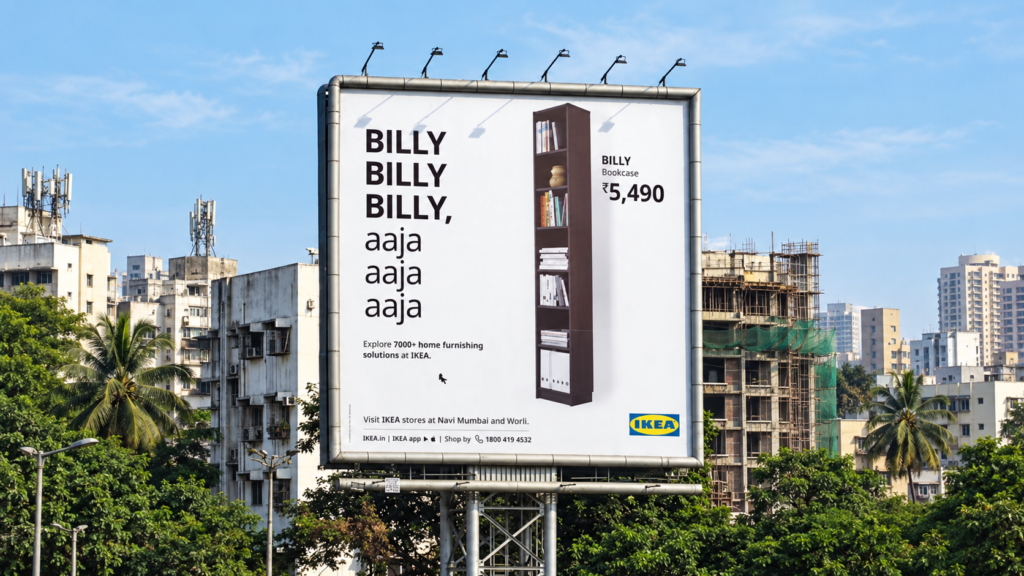
IKEA India transformed its distinctive product names into local pop-culture punchlines for an outdoor campaign across Mumbai, Bengaluru and Hyderabad.
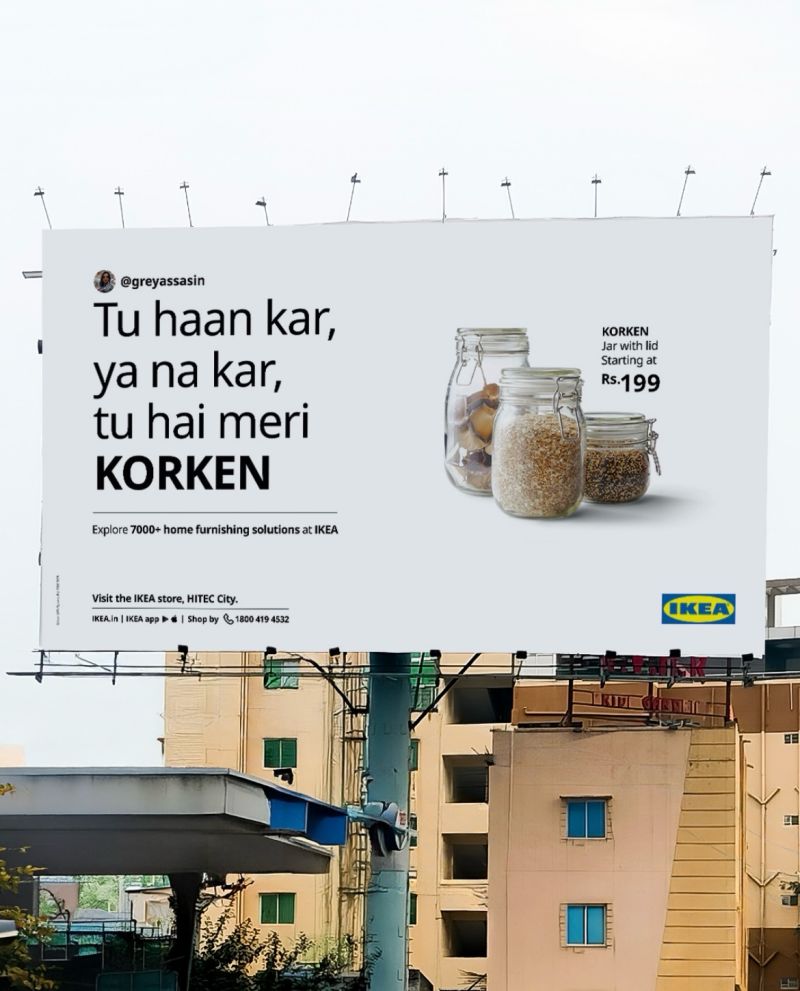
The 2024 campaign combined names such as BILLY, MALM, MAMMUT, REKO and TAGGAD with familiar movie dialogues, songs and regional expressions. Each billboard placed an IKEA product inside a line that many people would already recognise.
Instead of simplifying or translating its Swedish naming system, IKEA treated its unfamiliarity as a creative advantage. The same product names that can initially seem difficult to remember became the most important part of each joke.
Swedish names become Indian punchlines
IKEA products are known internationally by their Swedish names, but those words may not have an immediate meaning for Indian shoppers.
The campaign finds familiar sounds inside them.
In Mumbai, the BILLY bookcase appears in the line “BILLY, BILLY, BILLY, aaja, aaja, aaja,” turning the product name into a reference to the Hindi film song “Jimmy Jimmy Jimmy Aaja.”
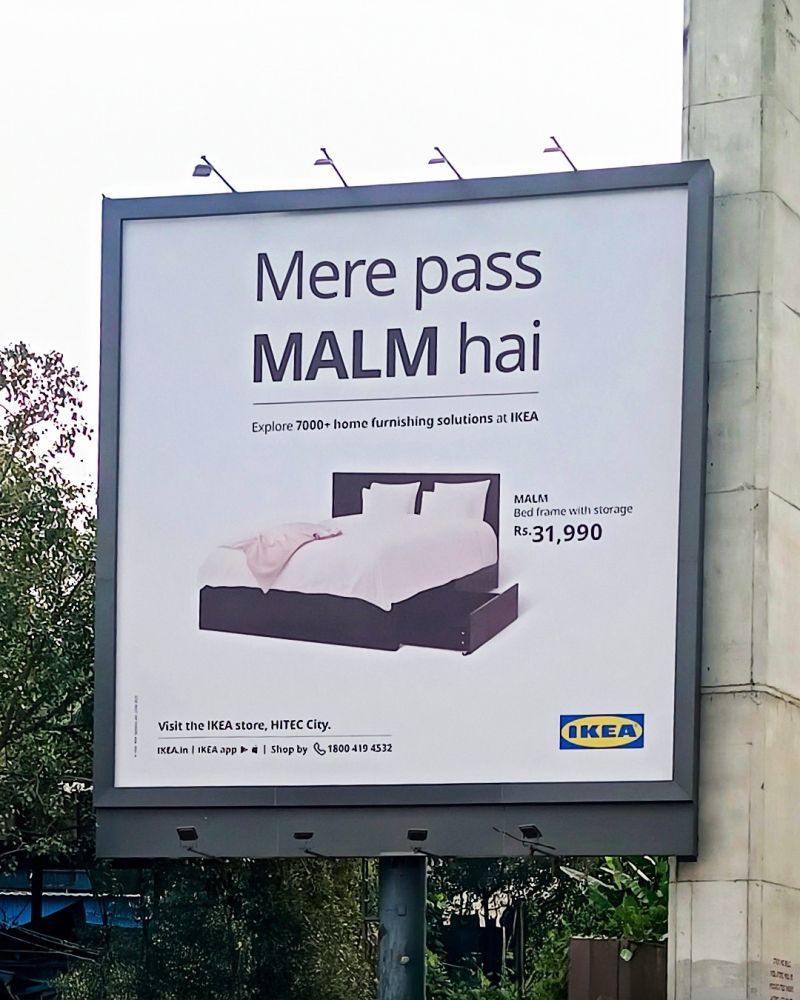
Another execution changes the famous “Mere paas maa hai” dialogue into “Mere paas MALM hai,” placing the MALM chest of drawers inside one of Hindi cinema’s most recognisable exchanges.
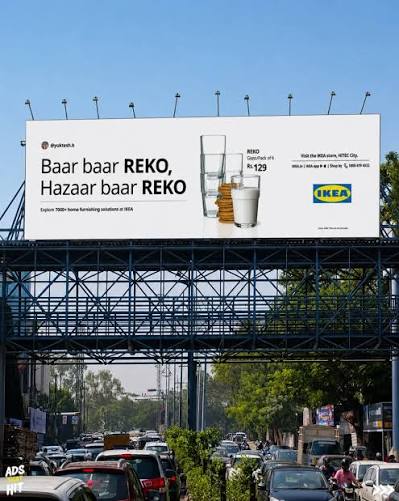
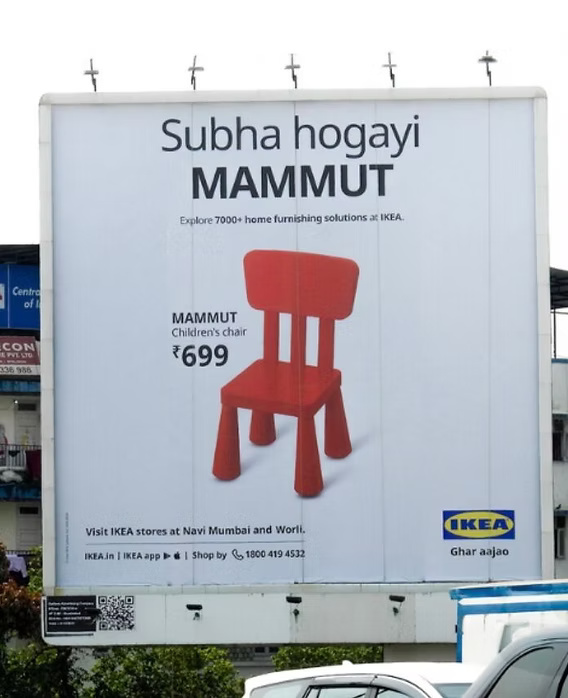
“Subah ho gayi mamu” becomes “Subah ho gayi MAMMUT,” while the familiar lyric “Baar baar dekho, hazaar baar dekho” is adapted around the REKO product name.
The jokes work because the new words sound close enough to the original lines for audiences to complete the references themselves.
Every city receives its own cultural version
The campaign does not rely entirely on Hindi cinema.
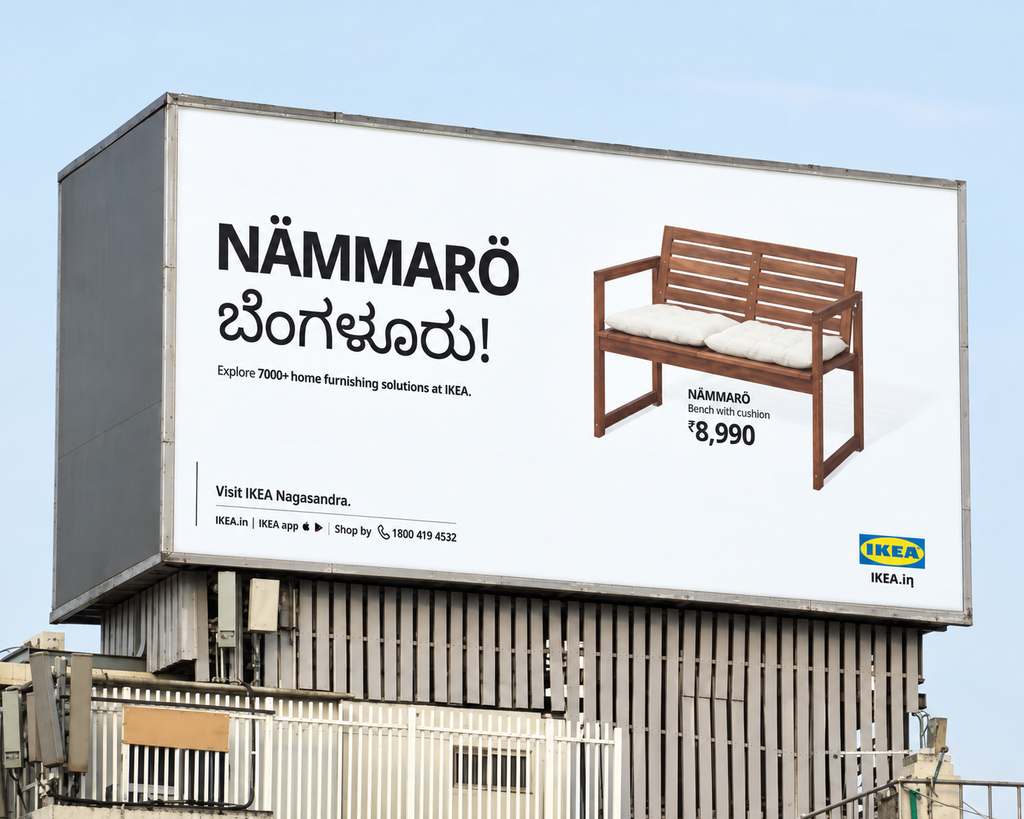
Its Bengaluru executions use Kannada language and entertainment references, while Hyderabad receives wordplay connected with Telugu speech and culture.
“Mungaru MALM e” combines the MALM range with “Mungaru Male,” the title of a popular Kannada romantic film. Another local execution plays with the phrase “Namma Bengaluru” through the NÄMMARÖ outdoor-furniture range.
In Hyderabad, the name of the TAGGAD clock is inserted into a locally recognisable expression, giving the Swedish word a Telugu rhythm.
This regional approach allows the campaign to feel specific to each market. A single national execution could have reached more people with the same message, but it would have lost the pleasure of recognising something connected with one’s own city and language.
The IKEA identity remains consistent while the cultural references change around it.
Product names carry the entire idea
Most furniture advertising focuses on appearance, functionality or price.
These billboards allow the product name to become the main creative device. The furniture is still clearly shown, but the copy gives people a reason to remember what it is called.
That is particularly useful for products such as BILLY and MALM, which have become long-running parts of IKEA’s global range. Teaching shoppers those names can make it easier for them to search for the products, discuss them or recognise them during a store visit.
The campaign achieves that familiarity without presenting the names as something consumers need to study.
A person who smiles at “Mere paas MALM hai” has already repeated and remembered the name MALM.
Nostalgia makes the billboards easy to process
Outdoor advertising has only a few seconds to attract attention.
The campaign uses film nostalgia as a shortcut. People already know the rhythm of the original songs and dialogues, so they do not need to read a lengthy setup before understanding the alteration.
Recognition produces the reaction.
The billboard presents a line that looks almost familiar, the viewer notices that an IKEA name has replaced an important word, and the original reference becomes clear.
The process also makes the audience an active participant. IKEA does not explain every film title or character. It trusts people to identify the source and complete the joke from memory.
Those who recognise the reference receive a small feeling of cultural familiarity, which is then transferred to the product.
Local humour brings a global brand closer to home
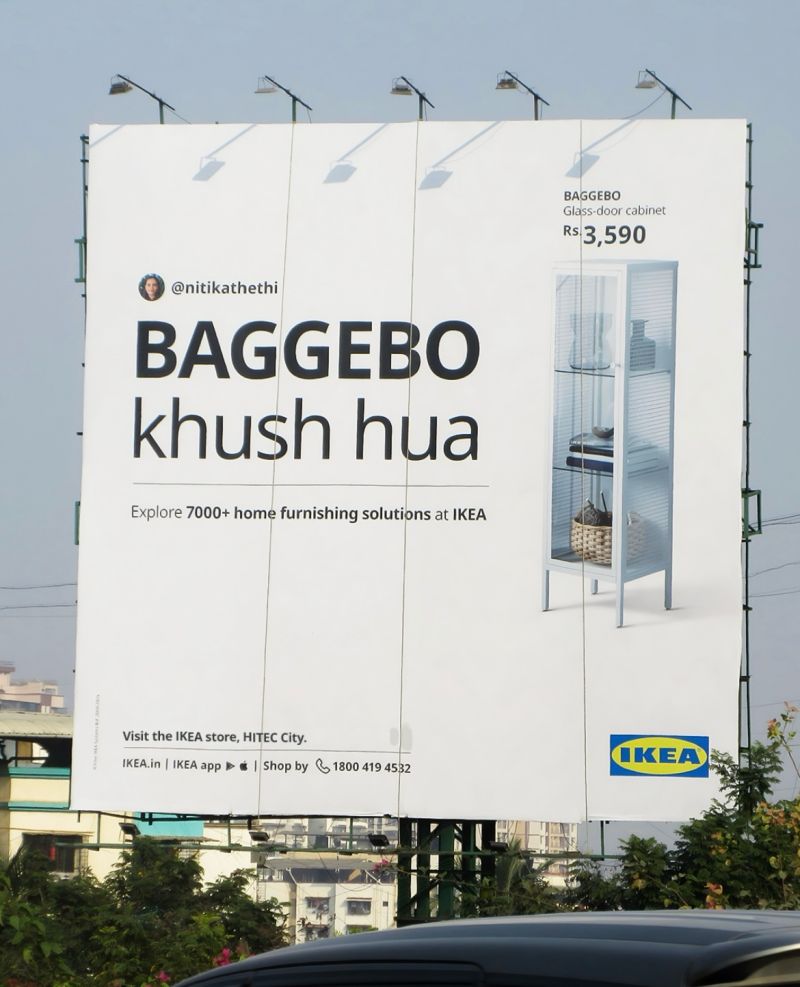
IKEA’s visual identity remains recognisably international throughout the campaign. The familiar blue and yellow colours, product photography and Swedish names are not removed.
Localisation happens through language and context.
According to Jayendra Gupta, IKEA India’s Country Integrated Media Manager, iconic movie lines and songs occupy a special place in people’s memories, just as IKEA’s product names have become distinctive around the world.
Bringing those elements together allows IKEA to participate in Indian popular culture without abandoning the naming system used across its global stores.
The approach reflects the challenge faced by any international retailer entering a culturally and linguistically diverse market. Recognition cannot be built through direct translation alone. Different cities respond to different memories, expressions and forms of humour.
By adapting the copy while keeping the products unchanged, IKEA makes its global range feel more locally familiar.
The campaign avoids the hard sell
The billboards do not depend on discounts, limited offers or detailed lists of features.
Their main purpose is to build recognition and affection around IKEA’s products. The furniture is introduced through humour rather than urgency.
This makes the campaign feel closer to entertainment than a conventional retail announcement. A commuter may not need a bookcase or chest of drawers at that moment, but the joke can still create a memory that becomes useful later.
Repeated exposure can strengthen the association between the altered dialogue and the product name. People may forget the full billboard while retaining the connection between MALM and a famous film line or BILLY and a familiar song.
IKEA did not announce campaign reach, increases in product searches, store visits or sales connected directly with the outdoor work. No major award results have been reported for the campaign.
Its clearest achievement is turning a potential barrier into a brand asset. Rather than hiding names that might sound unfamiliar, IKEA placed them inside words and rhythms that Indian audiences already knew.
Credits
The outdoor campaign was created for IKEA India with Leo Burnett India as the brand’s creative partner and Crayon Pictures involved in production. Jayendra Gupta served as IKEA India’s Country Integrated Media Manager and represented the brand’s thinking behind the city-specific use of popular movie dialogues, songs and regional language. Detailed individual creative and production credits were not publicly announced with the campaign.
About the work
Campaign details
- Brand
- IKEA
- Agency
- Leo Burnett
- Country
- India
- Year
- 2024
Related
More in Outdoor


Popular
Popular posts


More stories