Case Studies
Hope Tape: Korean police put missing children on 620,000 parcels
 By Archit
·
·
4 min read
By Archit
·
·
4 min readAI-assisted
Quick summary
The idea: Cheil Worldwide created Hope Tape for the Korean National Police Agency to help keep long-term missing children visible to the public.
The execution: The campaign printed photographs, age-progressed images, details, and a QR code onto 10,000 rolls of packaging tape, which were used on 620,000 parcels across South Korea between May and June 2020.
Why it matters: The campaign placed search notices directly onto an existing home delivery network during the COVID-19 pandemic, allowing warehouse workers, couriers, and recipients to view the details and report possible sightings.
AI-generated from this article. For complete context and credits, read the full story.
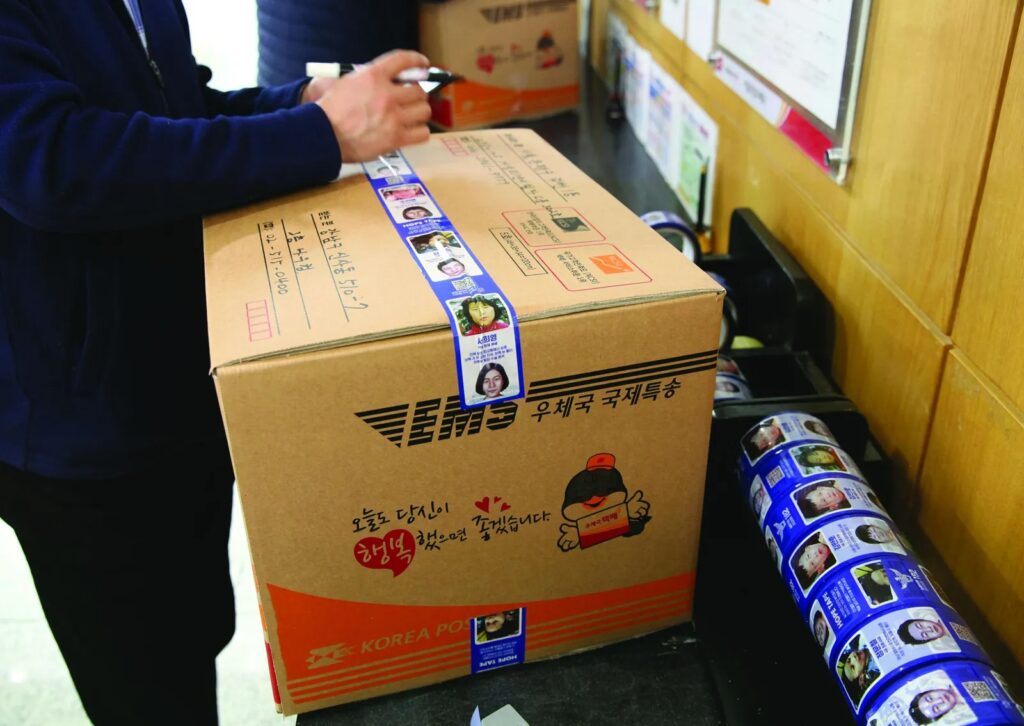
A strip of packaging tape carried the faces of children who had been missing for years.
Hope Tape printed photographs, age-progressed images and identifying information directly onto parcel tape. As each package travelled across South Korea, it delivered those details to another doorstep.
Created by Cheil Worldwide for the Korean National Police Agency, the 2020 campaign turned 620,000 parcels into notices for long-term missing children.
661 children were fading from public attention
At the time of the campaign, 661 children in South Korea had been missing for more than one year. Among them, 638 had been missing for over five years.
Families continued searching, but public attention became harder to maintain as the cases grew older. Posters and leaflets could only work when people stopped to look at them.
Meanwhile, home delivery was growing rapidly during the COVID-19 pandemic. Parcels were moving through warehouses, delivery vehicles, workplaces and homes every day.
Cheil Worldwide recognised that each box already needed tape. Therefore, the same tape could become a way to keep missing children visible.
The result was Hope Tape, a functional packaging material carrying information that could help someone recognise a child.
Every package became a search notice
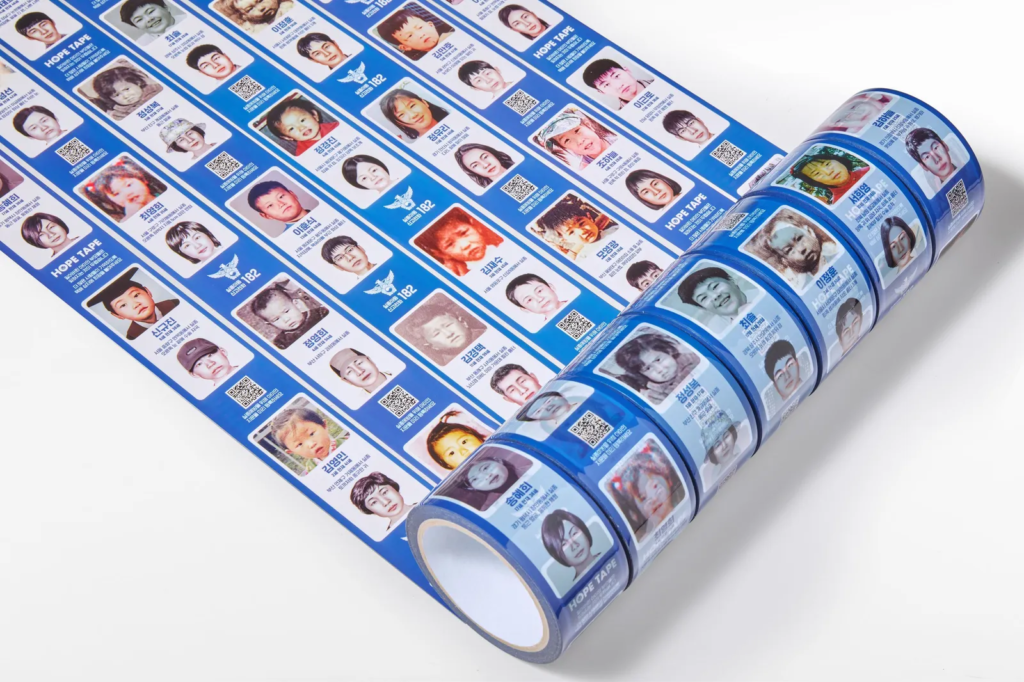
Hope Tape featured 28 long-term missing children.
Each section showed a photograph taken around the time of the child’s disappearance. Beside it appeared an age-progressed image created with technology used by the Korean National Police Agency.
The tape also included physical characteristics and the location where the child was last seen. This gave people more than an old photograph to examine.
A QR code connected recipients to the police’s Safe Dream app. From there, people could search for further information and report possible sightings. Parents could also preregister their children’s fingerprints for use if they were ever reported missing.
The tape repeated these details along its length. Consequently, the information remained visible even when different amounts were used to seal each package.
Hope Tape still performed its original purpose. It secured the box while adding a message that could travel through the entire delivery system.
620,000 parcels carried the message
The campaign launched on International Missing Children’s Day on 25 May 2020.
Around 10,000 rolls of Hope Tape were produced and supplied to Korea Post and Hanjin Transportation. Korea Post made the tape available through 22 major post offices in the Seoul area. Hanjin also applied it to parcels moving through its logistics network.
Between May and June, approximately 620,000 packages carrying the tape were delivered across South Korea.
A supporting film documented how the tape was produced, applied and distributed. The film appeared across the official websites and social channels of the organisations involved.
Cheil Worldwide also planned to make the design rights available to other companies and institutions. This allowed more organisations to participate without having to recreate the system.
The campaign later received a Bronze Pencil at The One Show 2021. It was also shortlisted at the 2020 Clio Awards and the 2021 D&AD Awards.
The medium was already moving
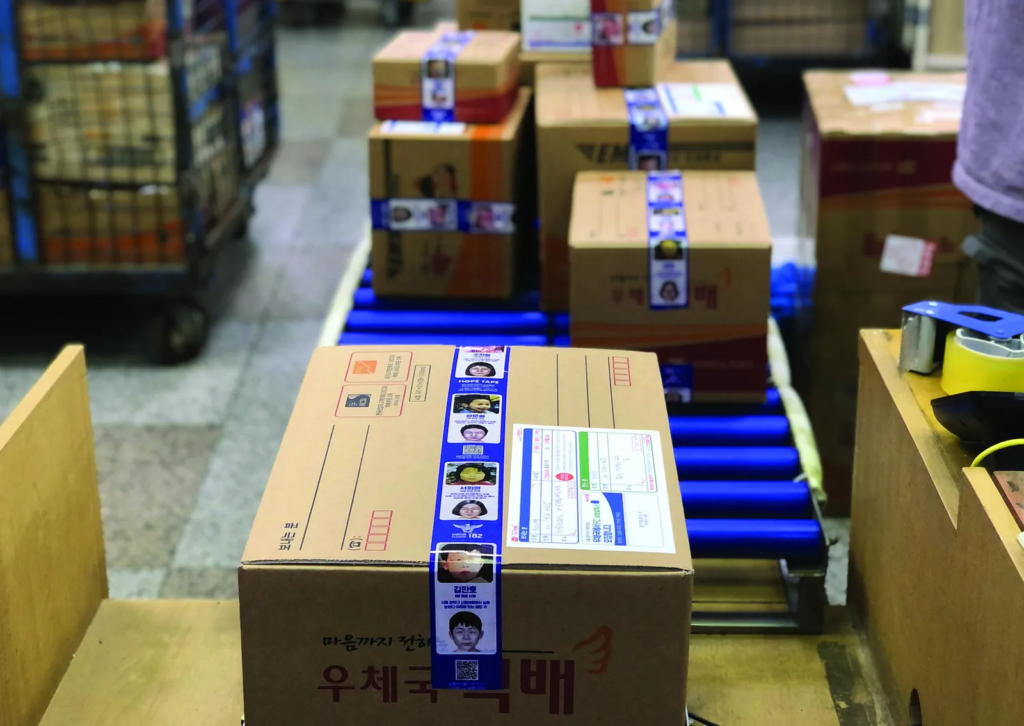
Hope Tape placed important information inside an existing daily process.
Delivery workers did not need to distribute a separate leaflet. Recipients did not need to visit a special location. The information arrived as part of something people were already expecting.
The box also passed through several pairs of hands before reaching its final destination. Warehouse employees, couriers, building staff and recipients could all see the tape.
Its design connected physical media with a direct action. Someone who recognised a face could scan the QR code and reach the police app immediately.
The campaign also understood that an old photograph may not show how a missing child looks years later. Age-progressed images helped close that gap, while physical details and last-seen locations added further context.
Hope Tape did not replace police investigations or the work of families. Instead, it gave those searches a national delivery network.
Every sealed package carried the possibility that the right information might reach the right person.
Credits
Hope Tape (2020). Client: Korean National Police Agency. Agency: Cheil Worldwide, Seoul. Creative Directors: Seongphil Hwang and Hyungkyun Oh. Copywriter: Sekyeong Park. Art Directors: Miyeon Shin and Yeowool Kwon. Design Firm: Bounce Creative. Designers: Wanmo Koo, Jeakyun Kim and Sungjin Lee. Director: Kwangwon Cho. Production Company: Visionholdings. Film Producers: Sooyoung Yoon and Dongjo An. Distribution Partners: Korea Post and Hanjin Transportation.
Related
More in Case Studies



Popular
Popular posts



More stories