
Case Studies
Heinz exposed restaurants refilling its bottles with cheaper ketchup
 By Archit
·
·
5 min read
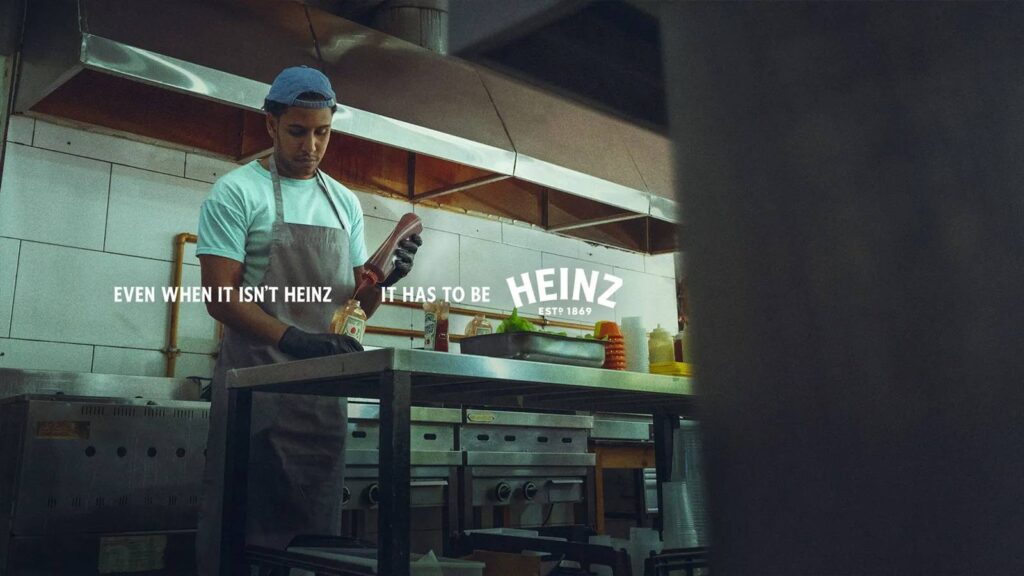
A Heinz bottle does not always contain Heinz ketchup.
The brand discovered that some restaurants were refilling its recognisable bottles with cheaper alternatives. Instead of treating the practice only as a misuse of its packaging, Heinz turned it into proof of how strongly people associate the bottle with quality.
Ketchup Fraud called out the behaviour and invited customers to help ensure that when a restaurant displayed Heinz, it served the real product.
A social post uncovered a real restaurant practice
The campaign began after Heinz noticed a Snapchat post showing a restaurant worker pouring generic ketchup into an empty Heinz bottle.
Further social listening revealed that the practice was not an isolated incident. Customers had shared similar experiences in which the familiar packaging promised Heinz, but the ketchup inside tasted different.
Rising costs had encouraged some restaurants to replace premium products with cheaper alternatives. However, they continued using Heinz bottles because customers recognised and trusted them.
The behaviour created a problem for the brand, but it also revealed something valuable. Even restaurants avoiding the cost of Heinz still wanted its identity on their tables.
The advertising caught restaurants in the act
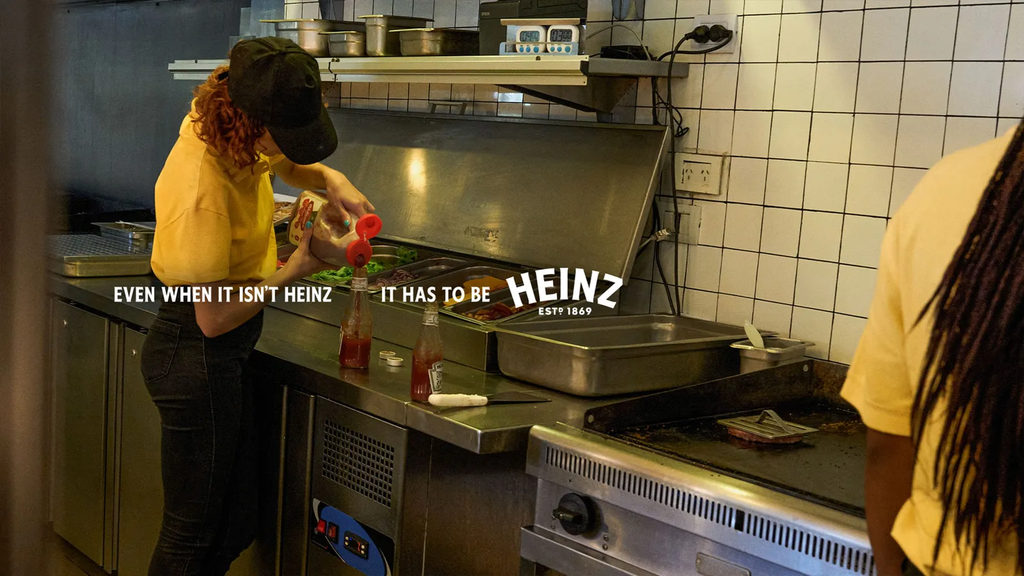
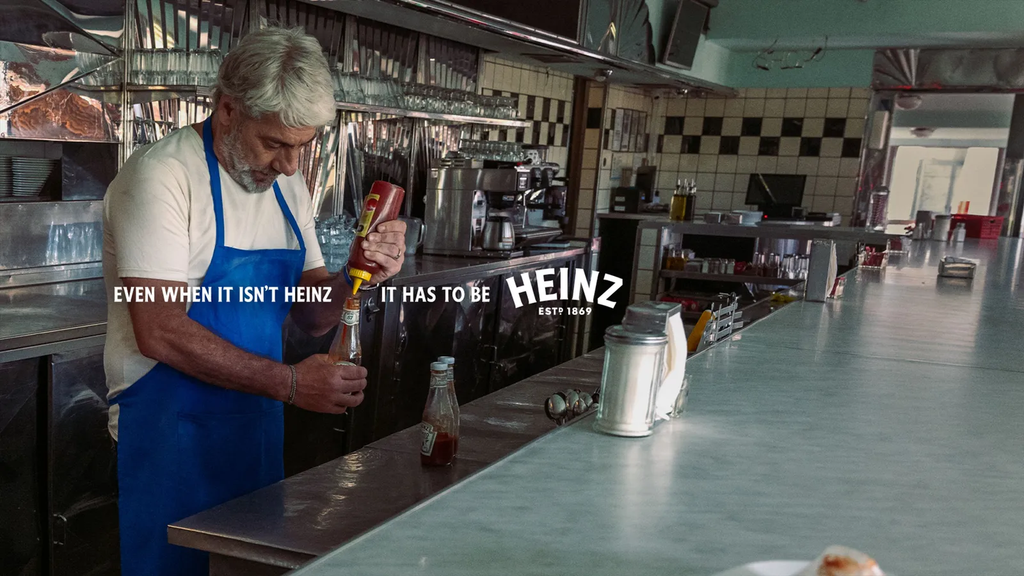
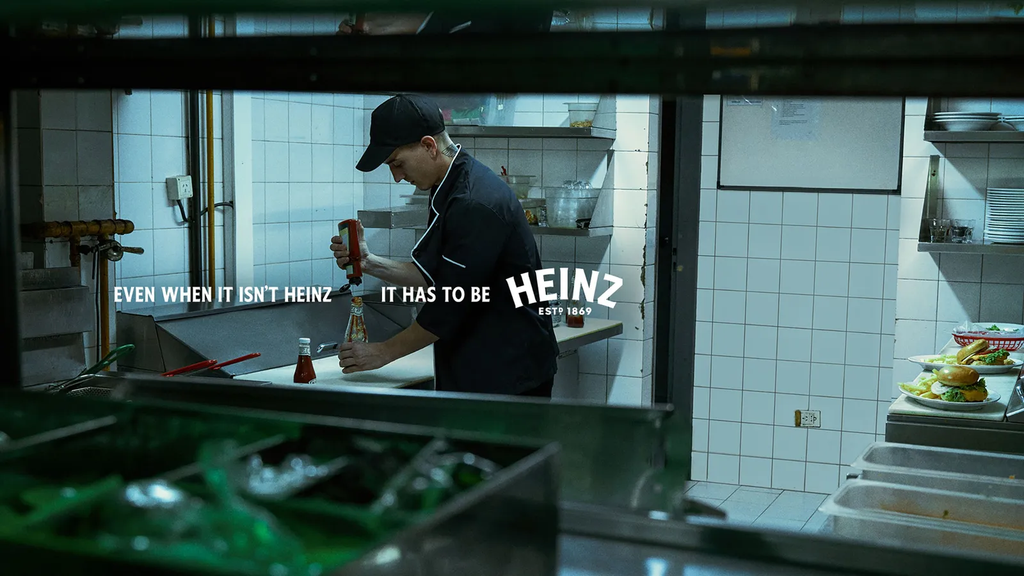
Created by Rethink, the campaign used documentary-style photographs of restaurant workers secretly transferring generic ketchup into Heinz bottles.
The images appeared as though the workers had been caught during the act. Chefs, servers and kitchen staff were shown squeezing unbranded containers into the brand’s recognisable packaging.
Each execution carried a twist on Heinz’s long-running platform:
“Even when it isn’t Heinz, it has to be Heinz.”
The line avoided responding with anger or legal language. Instead, Heinz treated the imitation as an unintended compliment. Competitors could produce another red sauce, but restaurants still believed customers expected to see the Heinz bottle.
The campaign appeared across digital outdoor screens in New York and Chicago, alongside print placements, social content and video. A full-page newspaper execution and magazine advertisements helped turn a restaurant shortcut into a public discussion.
Heinz asked customers to report ketchup fraud
Awareness was only the first part of the campaign. Heinz wanted customers to help identify restaurants that were serving substitute ketchup from its bottles.
People could tag suspected restaurants through social media or submit their details on a dedicated website. Restaurants were also allowed to report themselves anonymously if they wanted help switching to the genuine product.
Rather than publicly punishing the businesses, Heinz contacted them and offered the real ketchup. This turned the campaign into a business-to-business acquisition programme powered by consumers.
Fans became an informal network of investigators, while participating restaurants gained an opportunity to correct the problem without being permanently presented as offenders.
The most frequently reported restaurants were placed directly on Heinz’s radar, connecting online participation with a practical sales response.
The bottle became evidence of Heinz’s brand power
Ketchup Fraud worked because it made the misuse of Heinz packaging part of the brand argument.
The restaurants could have placed generic ketchup in unmarked dispensers. Choosing to reuse Heinz bottles suggested that the label carried value independently of the product inside.
For customers, the campaign defended an expectation: if a table displays Heinz, the ketchup should taste like Heinz. For restaurants, it demonstrated that switching to a cheaper substitute could be noticed by the people eating it.
The idea also allowed Heinz to discuss product quality without listing ingredients or making a direct comparison with competitors. The act of secretly replacing the ketchup provided the comparison.
Instead of simply saying that people preferred Heinz, the campaign showed businesses attempting to preserve its appearance after removing the product.
Fans helped turn advertising into new restaurant accounts
Ketchup Fraud generated more than 502 million impressions and hundreds of organic stories from people who had experienced similar substitutions.
The campaign produced 92% positive sentiment and exceeded Heinz’s social engagement benchmark by 128 times. It also secured 33 new restaurant accounts in under a month, representing more than $250,000 in gross sales volume.
Heinz reported an 8% sales increase and a 0.6-point gain in market share compared with the previous year, despite consumers and businesses moving away from higher-priced products during a period of inflation.
The results showed how a consumer observation could support both brand building and commercial growth. Public participation created attention, while the reporting system helped the sales team identify businesses that could become genuine Heinz customers.
By exposing what was hiding inside its own bottles, Heinz reinforced the meaning attached to the packaging outside them.
Credits
Ketchup Fraud, 2023. Client Kraft Heinz North America. Brand Heinz Ketchup. Creative agency Rethink Toronto. Chief Creative Officers Aaron Starkman, Mike Dubrick and Daniel Lobatón. Chief Strategy Officer Sean McDonald. Executive Creative Director Xavier Blais. Creative Directors Skye Deluz, Jacquelyn Parent and Fernando Hernandez. Writers Jacquelyn Parent, Nicolas Dubois and Xavier Blais. Art Directors Skye Deluz and Hayley Hinkley. Strategists Julian Morgan, Emma Bayfield, Clément Martin and Pascal Routhier. Producers Tricia Lapidario and Kate A. Spencer. Photography by Ale Burset. Production by Wolf Credo Production Co. Postproduction by R+D Post and Frame Distillery VFX. Audio by Grayson Music. Media by Starcom. Public relations by Zeno Group.
About the work
Campaign details
View original campaignRelated
More in Case Studies



Popular
Popular posts

More stories