Outdoor
Goal Posters: Carlsberg turned flyposters into football goals across UK cities
 By Archit
·
·
3 min read
By Archit
·
·
3 min read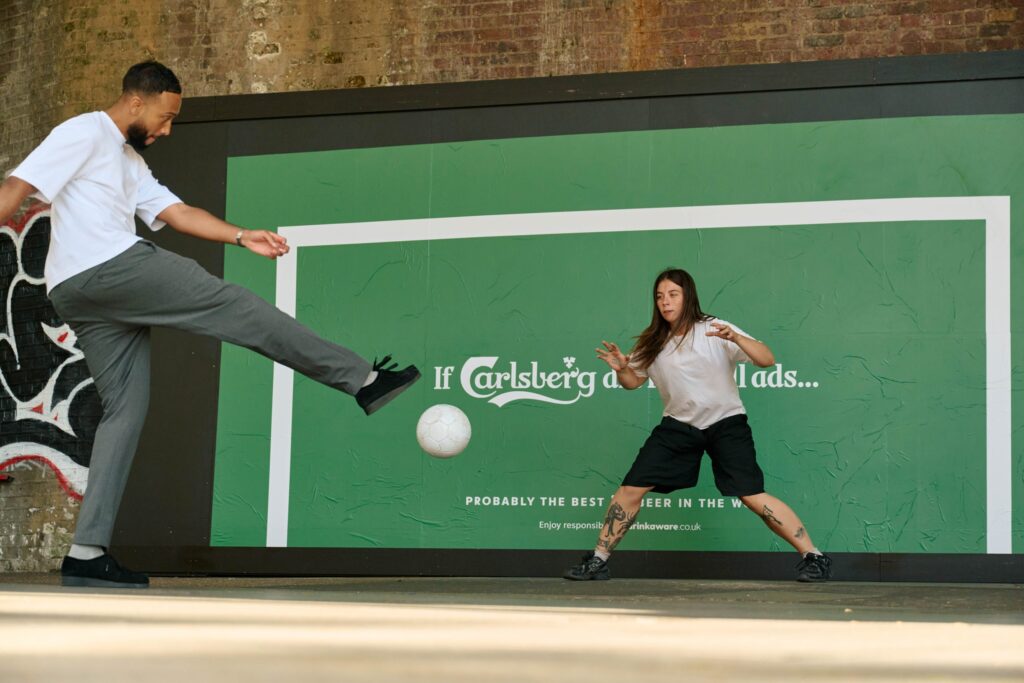
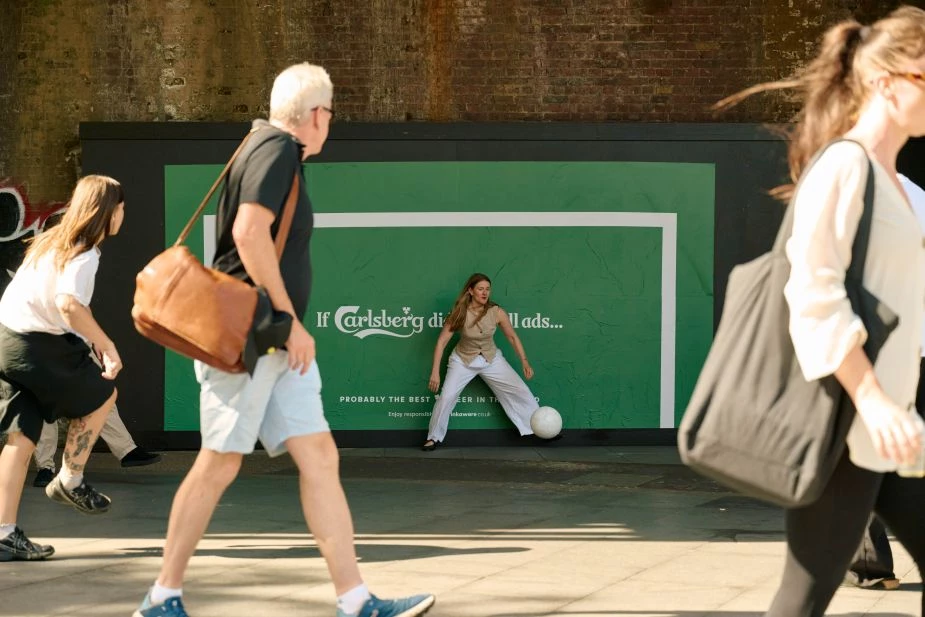
Carlsberg has turned city flyposters into football goals that anyone can use. The green Goal Posters sit at street level across London and Manchester, giving passers-by a target the moment someone puts a ball down. Created by Fold7, the work brings back the brand’s “If Carlsberg did…” line during the summer football season.
The posters do not ask people to admire football from behind a screen. Instead, they give them somewhere to play it.
The Goal Was Already on the Wall
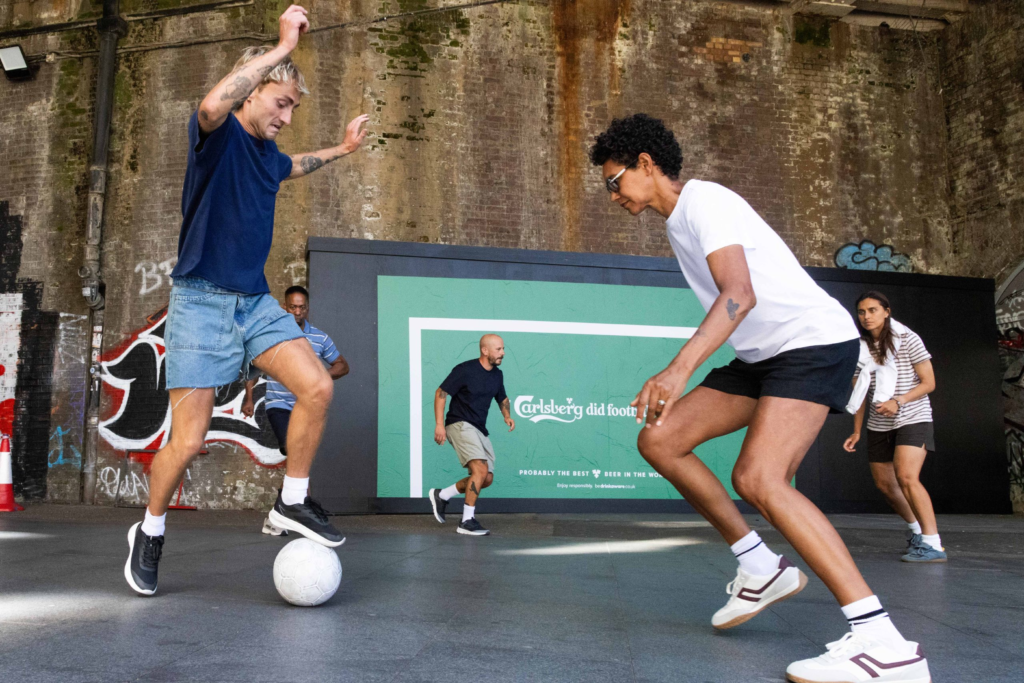
Each installation uses a simple white goal outline printed across Carlsberg green. It works as outdoor advertising from a distance. At street level, the same frame becomes a target for a quick match.
The first Goal Posters have appeared at Sutton Walk and Shoreditch Tunnels in London, and on Bridge Street in Manchester. These are ordinary urban spaces rather than formal football grounds. That is what gives the idea its purpose. The campaign places a goal where people already walk, meet and spend time.
A wall becomes useful the moment someone arrives with a ball.
From Watching to Playing
Carlsberg says its research found that one third of adults had not kicked a football in more than six months, even though three quarters planned to watch a match during the summer. The figures come from the brand’s campaign material, but they explain the behaviour Fold7 wanted to change.
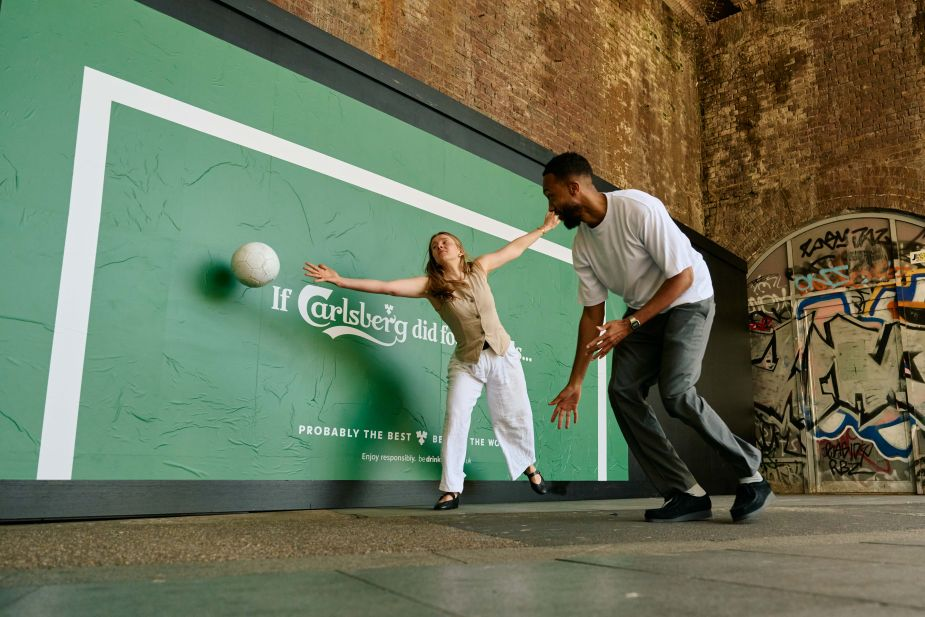
Goal Posters gives people a small reason to start again. The installation does not need a booking, a full team or a marked pitch. A few people can stop for five minutes, use the poster as a goal and continue with their day.
Meanwhile, content creators and campaign teams are hosting informal kickabouts at the locations. The accompanying film also treats the posters as starting points for spontaneous games rather than objects people simply pass.
The people using the poster become the campaign footage. More importantly, they prove the idea by playing.
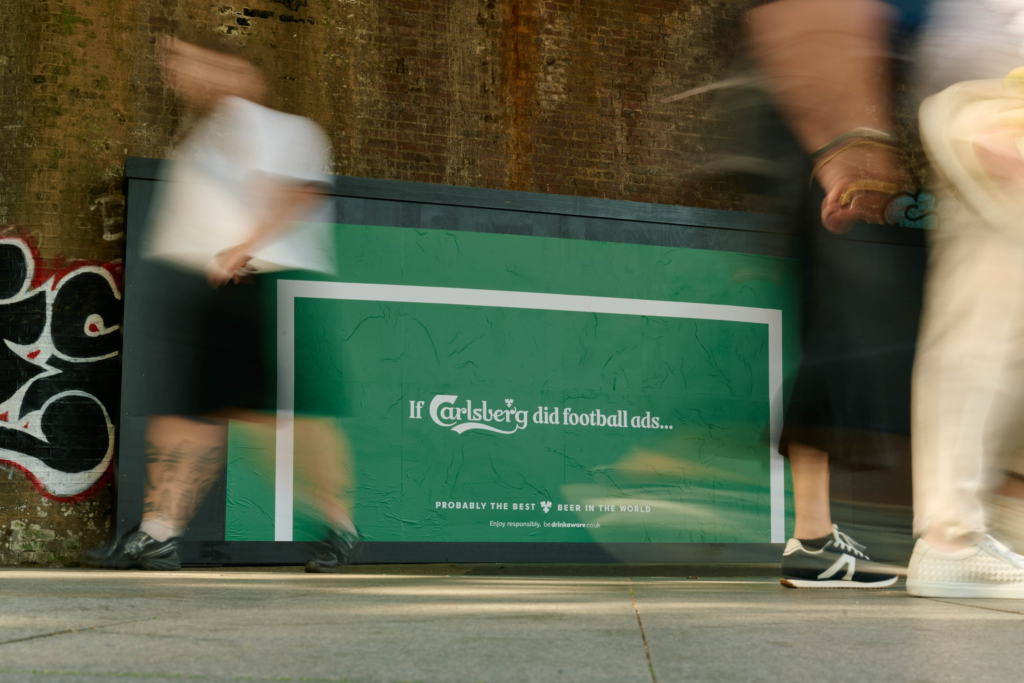
A Football Ad Without a Stadium
Goal Posters sits inside Carlsberg’s five-year partnership with UEFA National Team Football. However, the work arrives during the wider 2026 football summer without relying on a major player, match ticket or stadium experience.
That keeps the idea close to the way football begins for many people. A ball, a wall and whoever happens to be nearby.
The return of “If Carlsberg did…” also gives the campaign a familiar brand frame. This time, the line is not attached to an exaggerated version of a pub, holiday or football team. It becomes a practical question. If Carlsberg made an outdoor football ad, could the ad become part of the game?
Goal Posters answers by giving the media a second job.
What Comes Next
Carlsberg plans to release two more UK campaigns during the rest of the summer as part of the same football push. Goal Posters is therefore the opening part of a wider platform rather than a finished case study with final results.
That makes the first execution a clear statement of intent. Carlsberg is using its football partnership to create access instead of keeping the experience behind hospitality areas and organised events.
The campaign is still live. Still, the first idea has already made the brand line physical. It turned a place for advertising into a place to play.
Credits
Goal Posters (2026). Carlsberg, UK. Agency: Fold7. First installations at Sutton Walk and Shoreditch Tunnels in London, and Bridge Street in Manchester. Part of Carlsberg’s five-year partnership with UEFA National Team Football.
Related
More in Outdoor

Popular
Popular posts


More stories