Case Studies
Adoptable: Pedigree used AI to turn digital ads into shelter dog listings
 By Archit
·
·
5 min read
By Archit
·
·
5 min read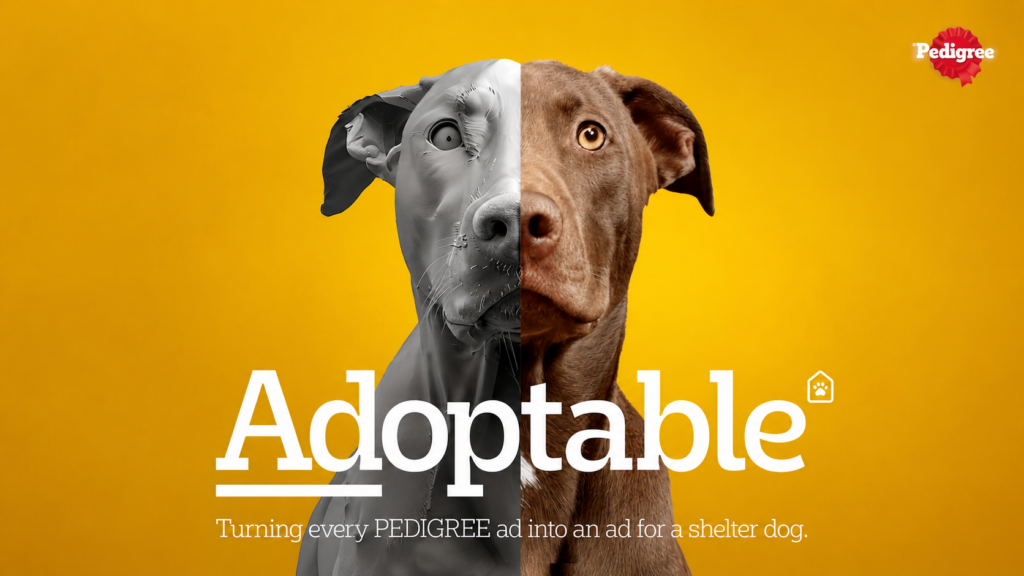
Pedigree’s ads already needed a dog. Adoptable made sure that dog was one waiting for a home nearby. Launched in New Zealand in May 2024, the system used AI and 3D tools to turn basic shelter photos into flexible, studio quality images that could appear across Pedigree’s digital advertising. Colenso BBDO created the campaign with Nexus Studios.
The Dog Was Already in the Ad
Pedigree has supported dog adoption for years, but its adoption campaigns still had to share the brand’s media budget with product advertising. Adoptable changed that equation. Pedigree turned the dog inside its regular product ads into the adoption message.
That shift is the smartest part of the idea. The brand placed its purpose inside a space that was already present in almost every piece of Pedigree communication. As a result, a food ad could still sell food while also showing a real dog available at a nearby shelter.
The campaign began with simple photos taken by shelter workers. These images were useful for listings, but they were not always suitable for a billboard, banner or polished product ad. Meanwhile, organising a professional photo shoot for every dog would have been slow and difficult to keep current. A dog could find a home before the finished campaign even went live.
How Adoptable Built a Digital Double
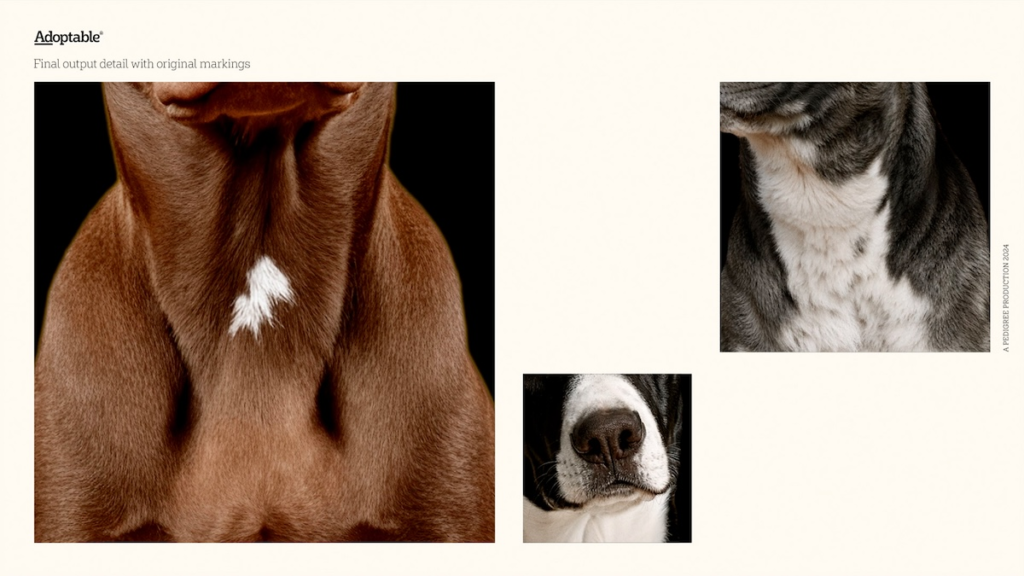
Nexus Studios built a system that combined machine learning with a controllable 3D rig. First, it studied the dog’s shape, colour, fur and markings from the original photo. It then created a photo realistic digital double that kept the animal’s individual features.
However, Nexus kept 3D control over the final image. Its team found that 3D tools were better at keeping the body and pose consistent, while diffusion models were better at details such as fur. The solution was to connect the two. The rig gave the team control, and the AI helped the finished dog look real.
The early tests focused on Chihuahuas because even one breed contains a wide range of head shapes, ears, ages, body types, colours and fur lengths. Meanwhile, the team built adjustable shapes and materials that could cover those differences. It also trained small custom AI models for individual dogs so their digital versions stayed close to the original animal.
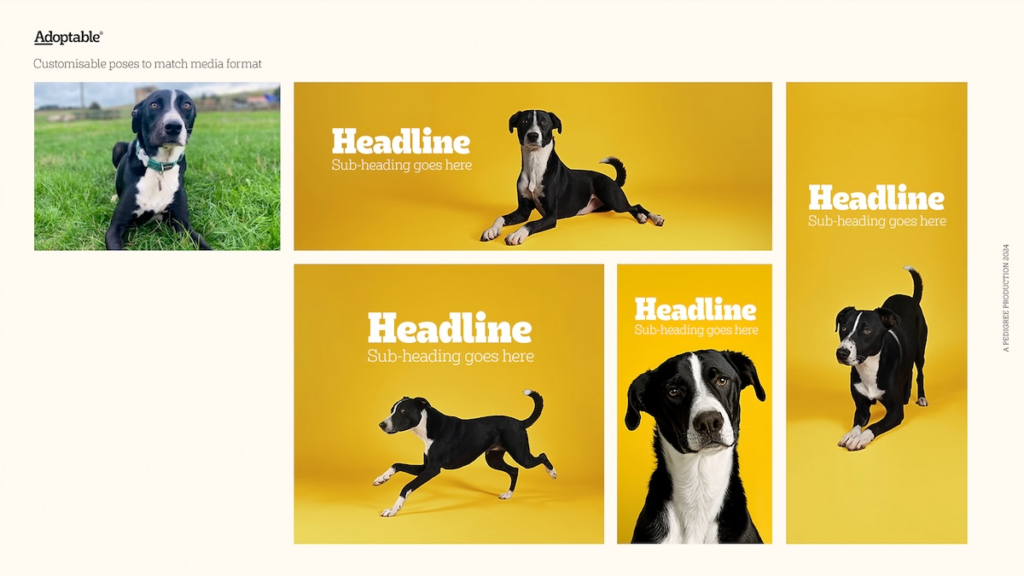
Once the dog had been created, it could sit, run, lie down or look towards the camera without another photo shoot. More importantly, the same dog could be resized and repositioned for a wide billboard, a narrow mobile ad or a square social post.
From a Local Shelter to a Local Screen
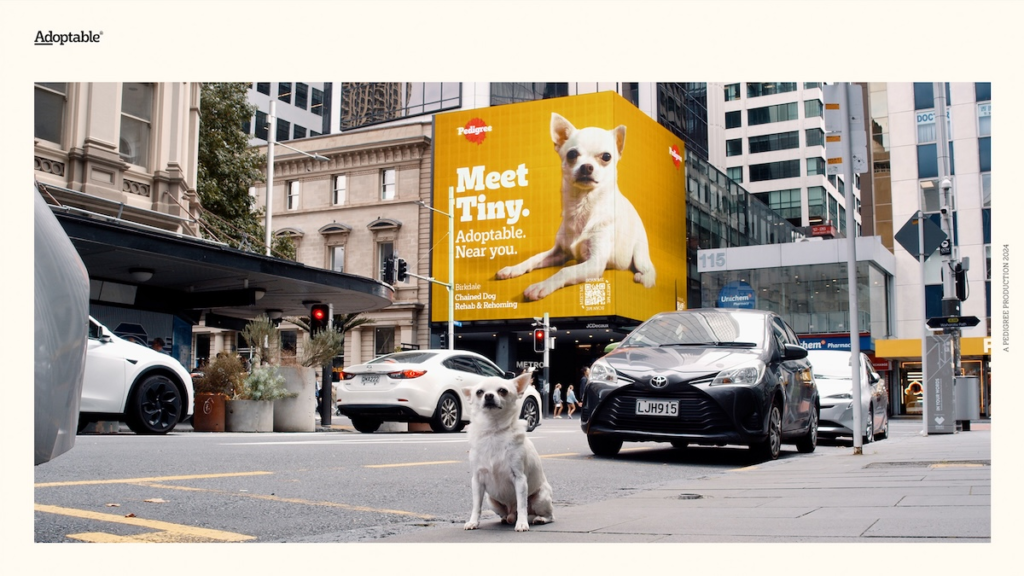
Adoptable was designed to show people dogs they could realistically adopt. Geographic targeting changed the animal based on the viewer’s location. The media system also used information such as household size, proximity to parks, interests and time of day to decide which dog and message to show.
Each ad led to a personal page where someone could learn more about the featured dog. Meanwhile, the system stayed connected to shelter information. Once a dog was adopted, it was removed from media rotation so the next available animal could take its place.
That live connection matters. A regular campaign can keep running the same image for weeks. Adoptable behaved more like an active shelter listing. The dog in the ad remained a specific animal, in a specific place, still waiting for someone.
The Results
According to the campaign’s reported results, half of the featured dogs were adopted within the first two weeks. Traffic and profile views for those dogs increased six times, while visitors spent 4.5 times longer on their profile pages. People arriving through an Adoptable ad were also reported to be 12 percent more likely to adopt.
The idea quickly became an awards success as well. Adoptable won the Outdoor Grand Prix at Cannes Lions in 2024. It later received a Graphite Pencil and two Wood Pencils at D&AD 2025, along with a Silver Pencil at The One Show 2025.
Still, the strongest result is the way the system changed the job of Pedigree’s media. The same media dollar could now promote a product and help a nearby shelter dog find a home.
The Bigger Point
The technology gets the headlines. The more important decision was what Pedigree chose to automate. It used AI to give real shelter animals the level of photography and media reach normally reserved for commercial ad stars.
There is also a useful restraint in the system. The digital double could change pose, but it still represented a real dog. The ad could reach more people, but it still led back to a real shelter profile. Once that dog found a home, the media moved on.
That is why Adoptable feels bigger than a one-off adoption campaign. It changed the default dog inside Pedigree advertising from a model into someone who needed to be seen.
Credits
Adoptable (2024). Pedigree and Mars New Zealand. Agency: Colenso BBDO, Auckland. Production and technology: Nexus Studios, London. Media: EssenceMediacom and Hyper Media. PR: GRC Partners and Porter Novelli. Chief Creative Officer: Simon Vicars. Group Creative Directors: Duncan Bone, Hadleigh Sinclair and Kimberley Ragan. Creative Director: Haylie Craig. Copywriter: Isabel Snellen. Art Director: Tim Thach. Chief Strategy Officer: Rob Campbell. Technical Director at Nexus Studios: Vegard Myklebust. Awards: Outdoor Grand Prix at Cannes Lions 2024. Graphite and two Wood Pencils at D&AD 2025. Silver Pencil at The One Show 2025.
Related
More in Case Studies

Popular
Popular posts


More stories