Spotlight
Domino’s Garlic & Herb Ice Cream turned its dip into a summer scoop
 By Archit
·
·
5 min read
By Archit
·
·
5 min read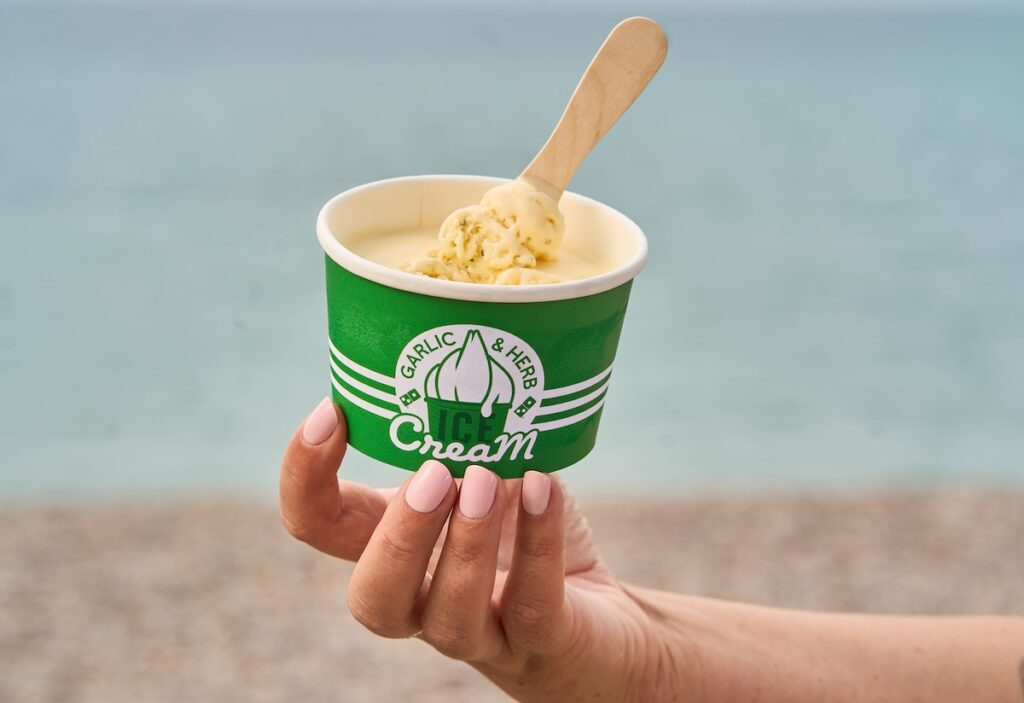
In late July 2026, Domino’s transformed its Garlic & Herb dip into an ice cream. The savoury sauce was hand-stirred into dairy from Devon, then served to people on Brighton seafront. Domino’s UK released the limited edition product as a summer experiment, although no creative agency was publicly credited.
The pizza stayed off the menu. Its most recognisable side product became the main flavour.
The dip had become a product of its own
Garlic & Herb dip usually arrives beside a Domino’s pizza.
It gives people somewhere to place the crust and adds another flavour to the meal. However, the dip had developed enough recognition to work without the pizza beside it.
Domino’s used that familiarity as the starting point for the ice cream.
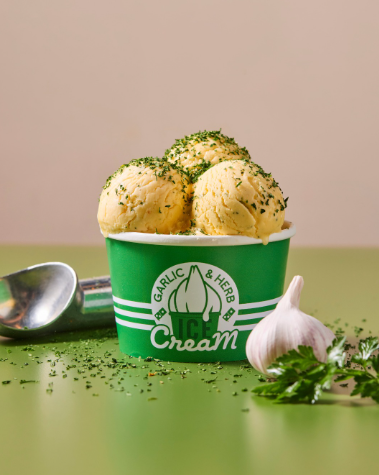
The brand did not create a mild garlic-inspired dessert and hide the connection inside the name. Its Garlic & Herb dip was mixed directly into the dairy base.
Customers could also request another drizzle of the sauce on top of the cone.
That detail pushed the product beyond a simple flavour experiment. The topping made it look closer to a normal ice cream while making the idea considerably stranger.
The combination asked people to reconsider the boundary between a dip and a dessert.
Brighton became the tasting room
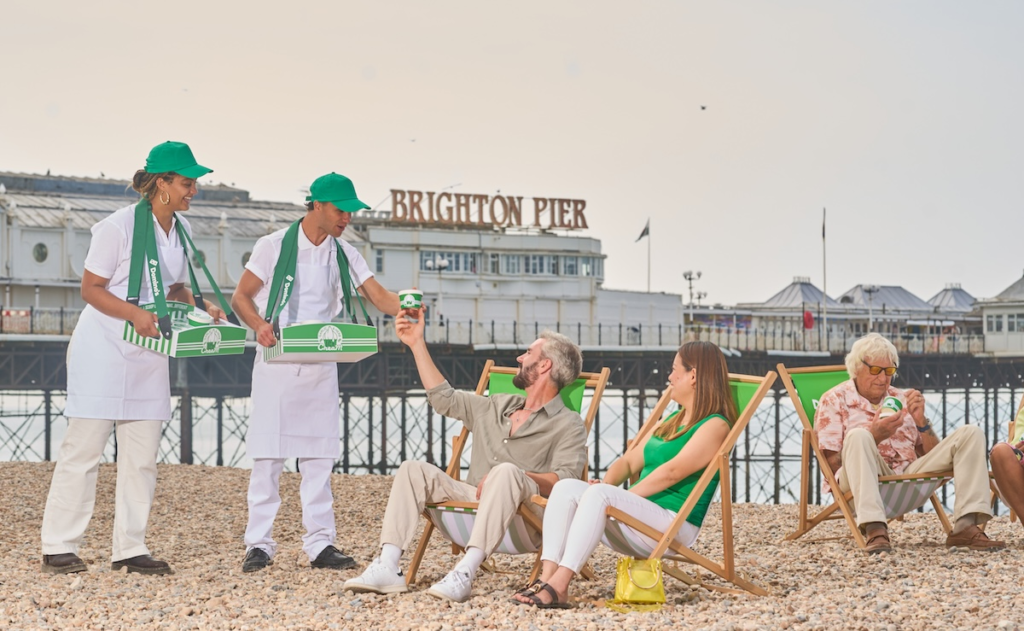
Domino’s introduced the ice cream beside the sea in Brighton.
The location gave the launch a familiar summer setting. People were already walking along the seafront, buying cold food and eating outside.
However, the flavour was far from familiar.
Beachgoers were invited to exchange the usual sweet scoop for something combining dairy, herbs and garlic. Their reactions then became part of the campaign.
Some participants approached it with curiosity. Others questioned whether the product was real. Online responses showed the same divide, with several people comparing the announcement to an April Fools’ joke.
That disagreement was useful to Domino’s.
A normal ice cream flavour would have needed strong photography, distribution or a large advertising campaign to attract attention. Garlic & Herb ice cream created its own question before anyone had tasted it.
Would it actually work?
The only complete answer required a spoon.
The product was designed to travel online
The ice cream was not introduced as a permanent addition to Domino’s national menu.
Instead, the Brighton tasting created photographs, reactions and short pieces of content that could travel far beyond the people present.
The product’s appearance supported that journey. It arrived in branded blue tubs and cups that made the Domino’s connection clear. Meanwhile, the pale ice cream and green herb pieces gave viewers enough detail to understand that the flavour was genuine.
People did not need to watch a long film before reacting. A photograph of the tub and its name carried most of the idea.
Domino’s also opened an online competition offering tubs to people who wanted to try the flavour at home.
That gave the wider audience a possible route from disbelief to experience. Still, availability remained deliberately limited, which helped preserve the sense that the product was an event rather than a standard dessert launch.
No sales or distribution results have been released. Therefore, the work is better understood as a product-led publicity idea than a full commercial rollout.
The dip kept leaving the pizza box
Garlic & Herb ice cream continued a pattern in Domino’s UK marketing.
The brand had previously adapted the same dip into a chocolate Easter egg. It had also created a fragrance inspired by its Pepperoni Passion pizza.
These products took familiar parts of the Domino’s order and moved them into categories where they seemed out of place.
The method works because the original item remains recognisable.
A garlic ice cream from an unknown company might only appear unpleasant. A garlic and herb ice cream from Domino’s carries a clear connection to something customers already know.
The brand can therefore create surprise without inventing an entirely new subject.
Each strange product also encourages people to discuss their relationship with the original food. Fans can defend the dip, suggest other uses or argue that it should remain beside the pizza.
The novelty item becomes a way to keep the everyday menu product in conversation.
What Made It Different
Domino’s Garlic & Herb Ice Cream turned a condiment into the whole experience.
The product was not valuable because the world needed another savoury ice cream. It was valuable because people understood the contradiction immediately.
Ice cream suggested sweetness and summer. Garlic & Herb dip suggested pizza night. Combining them produced a question people wanted to answer, even when they expected not to enjoy the result.
The Brighton tasting then gave that question real reactions. Meanwhile, the competition allowed a small number of people to test it beyond the launch site.
Domino’s did not ask customers to dip their pizza into ice cream.
It asked whether they would eat the dip by the scoop.
Credits
Domino’s Garlic & Herb Ice Cream (2026) — Domino’s UK, United Kingdom. Product: limited edition Garlic & Herb ice cream made with dairy sourced from Devon and Domino’s Garlic & Herb dip. Activation: Brighton seafront tasting and online competition. Creative agency, production company and individual creative credits were not publicly listed.
Related
More in Spotlight


Popular
Popular posts




More stories