Outdoor
Ambev turned its beer trucks into warnings against drink-driving
 By Archit
·
·
3 min read
By Archit
·
·
3 min read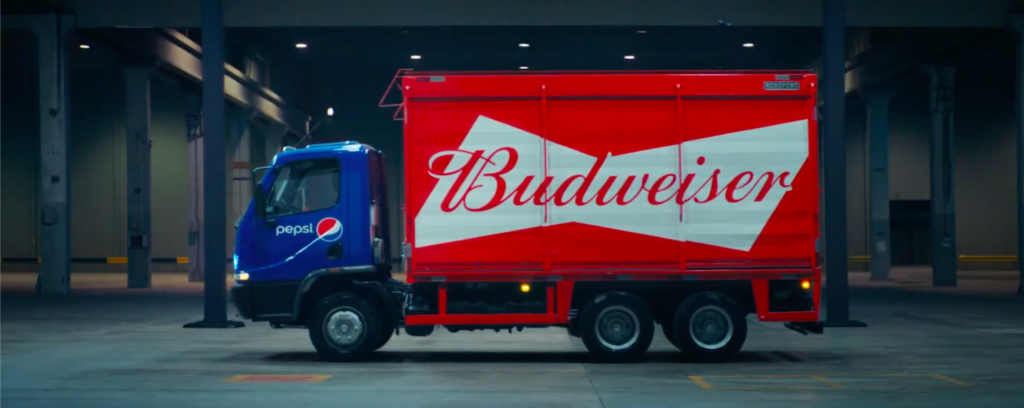
Ambev’s delivery trucks usually carry some of the world’s most recognisable beer brands across Brazil. For Responsible Billboards, the company used those same vehicles to deliver a different message: alcohol and driving must remain separate.
Created by Africa, the campaign changed the branding around each truck’s cab to feature non-alcoholic beverages. The message printed alongside it read: “Where there is a driver, there can’t be alcohol.”
Beer branding stopped before reaching the driver
The campaign’s idea was communicated through the physical structure of the trucks.
Beer brands could still appear across the cargo section, where the products were being transported. However, the area surrounding the person driving the vehicle displayed only non-alcoholic brands.
This created a clear visual boundary. Beer could be carried by the truck, but it did not belong beside the driver.
The execution made the road-safety message understandable without requiring a long explanation. Drivers and passengers seeing the vehicles on Brazilian roads could recognise the contrast between the two sections immediately.
An existing fleet became a nationwide media network
The campaign did not require Ambev to purchase a new collection of billboards. It used vehicles that were already travelling across the country every day.
Ambev described its distribution operation as Brazil’s largest circulating truck fleet. That scale allowed the message to travel across cities, motorways and delivery routes while the vehicles continued performing their usual work.
Each truck became a moving outdoor placement capable of reaching people in the environment where the message was most relevant.
Instead of asking audiences to think about drink-driving while watching television or scrolling online, Responsible Billboards placed the warning directly on the road.
The campaign responded to alcohol-related road deaths
The campaign’s case study stated that more than 5,000 people died on Brazilian roads each year and that alcohol was involved in 65% of those deaths.
Responsible Billboards addressed the issue with a direct statement rather than a graphic depiction of crashes or their consequences.
The campaign focused on the basic decision that comes before an alcohol-related collision. If someone is responsible for driving, alcohol cannot be part of the journey.
Placing the message on beer-delivery trucks also gave it additional weight. The warning came from a company whose own products made responsible consumption an important issue.
Ambev used its wider beverage portfolio to make the point
Ambev distributes both alcoholic and non-alcoholic beverages in Brazil. The campaign used that portfolio to separate what could be transported from what could be associated with the driver.
Soft-drink branding appeared around the cab, while beer branding remained on the cargo section. The arrangement turned ordinary product logos into part of the road-safety message.
This avoided presenting responsible drinking as a small disclaimer added beneath a beer advertisement. The entire vehicle became a physical demonstration of the principle.
Responsibility travelled with every delivery
Responsible Billboards showed how a company’s operational assets can also function as media.
The trucks already had national reach, spent hours on public roads and attracted attention through their size and branding. The campaign redirected those qualities towards a message connected to the company’s responsibilities.
By placing non-alcoholic drinks beside the driver and beer behind them, Ambev turned a familiar delivery vehicle into a simple statement about separation.
Where there was a driver, the alcohol stayed out of the cab.
Credits
Responsible Billboards, 2020, Brazil. Client AB InBev and Ambev. Agency Africa. Chief Creative Officer Sergio Gordilho. Copywriter Pedro Bullos. Art Director Erico Braga. Designer Yllo Pedra. Directed by Pedro de La Fuente. Production by Corazón Filmes.
About the work
Campaign details
Related
More in Outdoor

Popular
Popular posts



More stories