A Google search box covered women’s mouths in UN Women’s 2013 campaign
 By Archit
·
·
3 min read
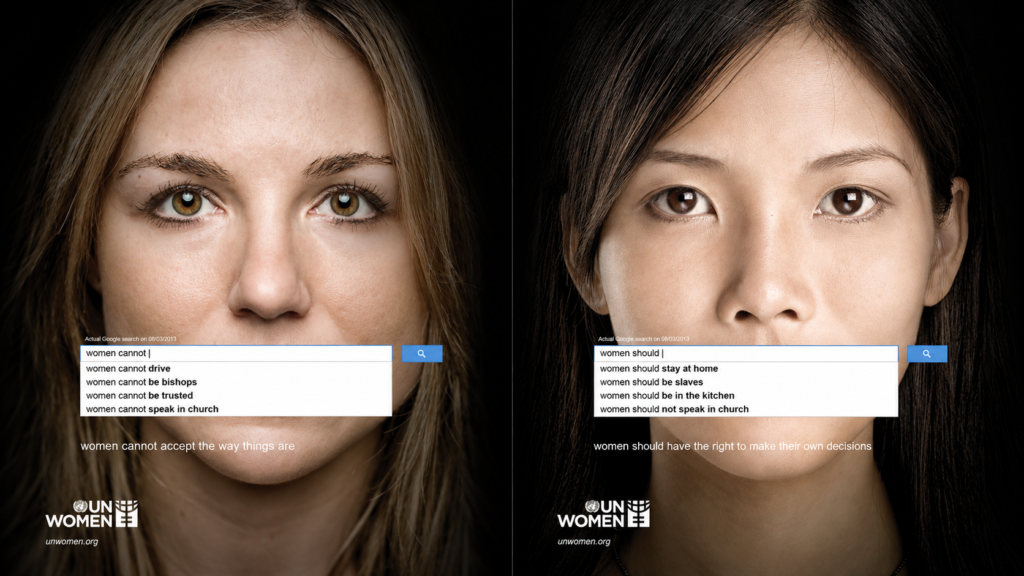
“Women should stay at home” appeared inside a Google autocomplete box placed across a woman’s mouth. Below it, UN Women supplied a different ending to the same thought, arguing for women’s right to make their own decisions.
That arrangement defined The Autocomplete Truth, a 2013 campaign created by Memac Ogilvy & Mather Dubai. The ads used genuine autocomplete suggestions to expose sexist language, placing the familiar search interface over close-up portraits of women.
The print series appeared in October 2013. Its creative drew on searches dated March 9 that year, capturing suggestions that ranged from restrictive stereotypes to the denial of basic rights.
Unfinished searches exposed discriminatory suggestions
The campaign began with short prompts about what women should do, should not do, could not do or needed to do. Google’s autocomplete function supplied the endings.
One suggestion said “women shouldn’t vote.” Others proposed restricting women’s work, keeping them in the kitchen or controlling their behaviour. Presented together, the phrases showed how quickly an ordinary search could lead to language that limited women’s freedom.
The ads identified the material as actual Google searches and included the search date. That detail grounded the campaign in a documented moment rather than treating the copy as an invented collection of insults.
The suggestions were evidence of discriminatory language surfacing through the search interface. They were not a survey of everyone’s beliefs, and the campaign’s dated examples should be understood in that context.
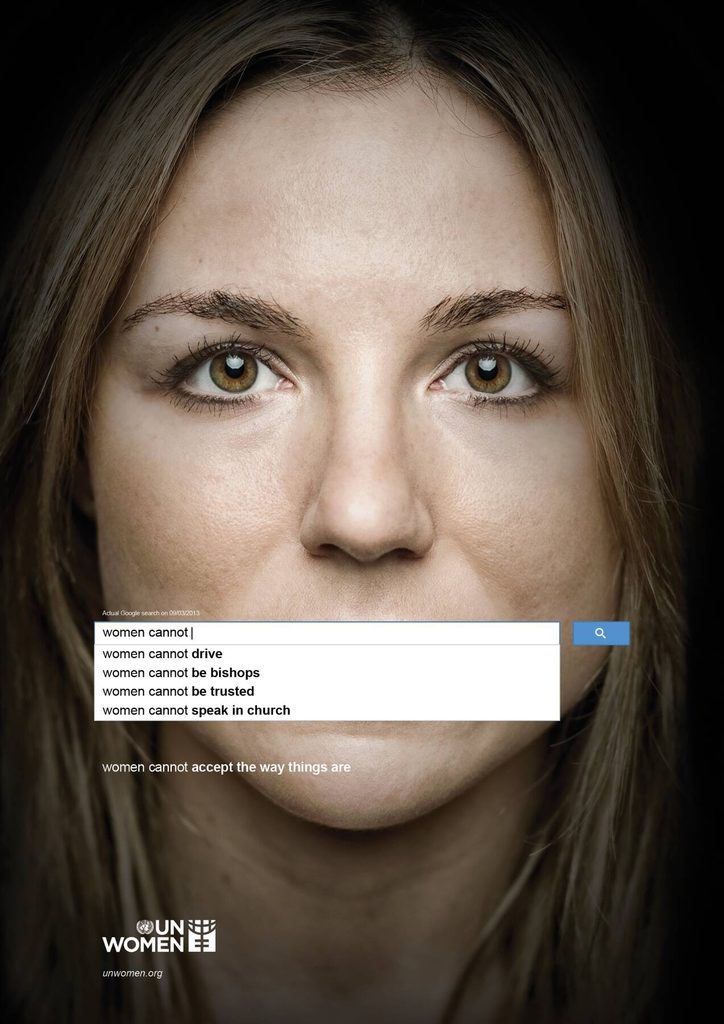
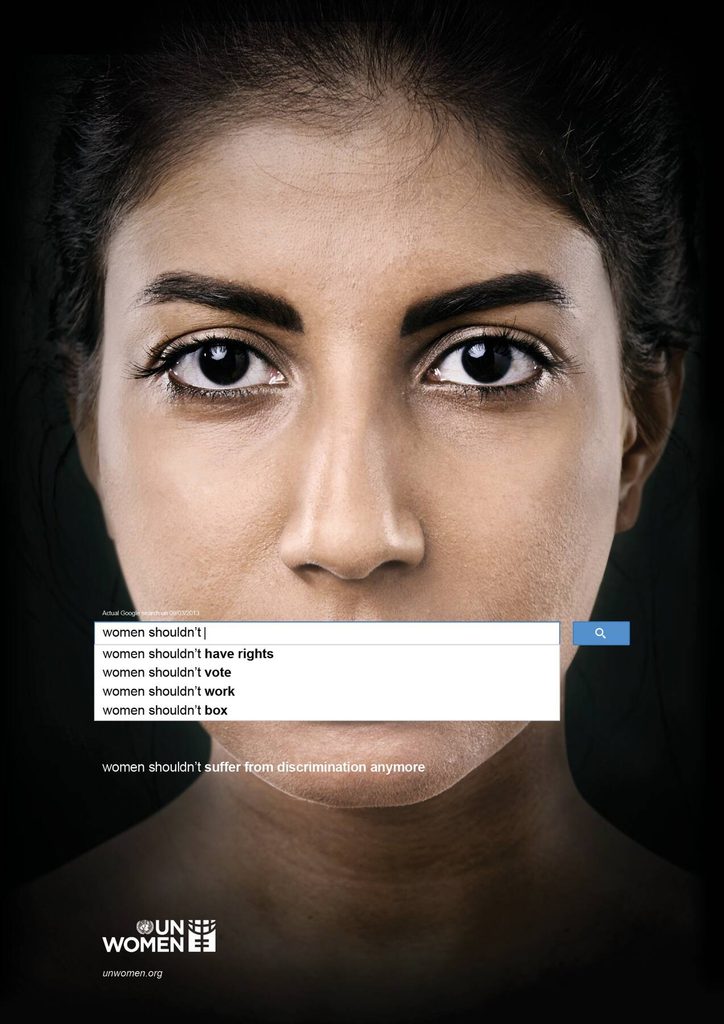
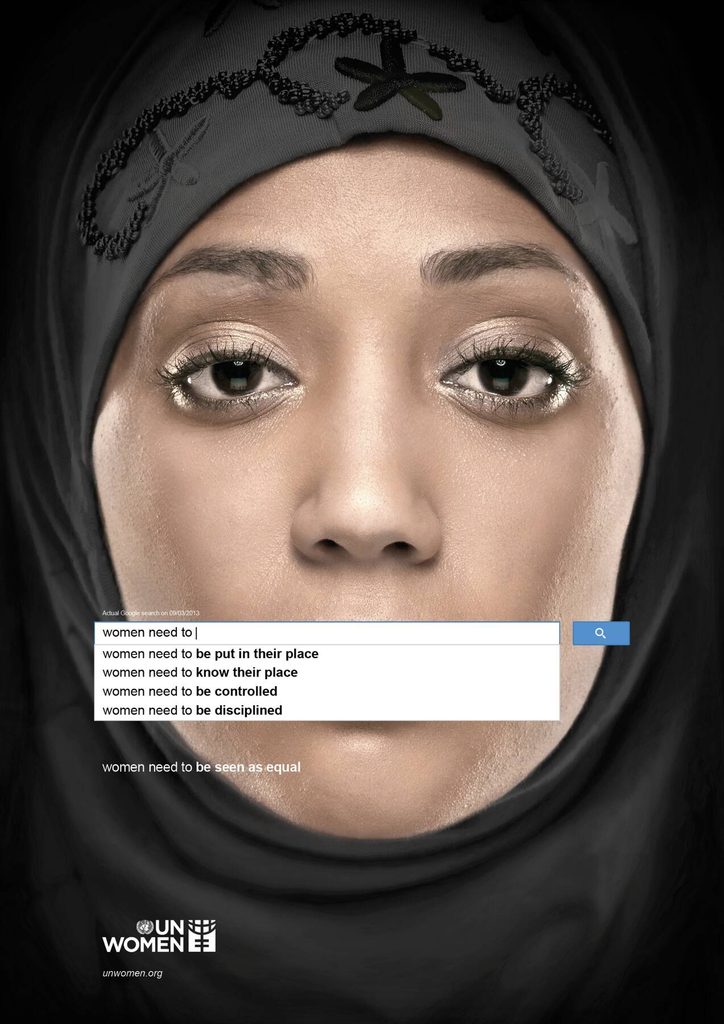
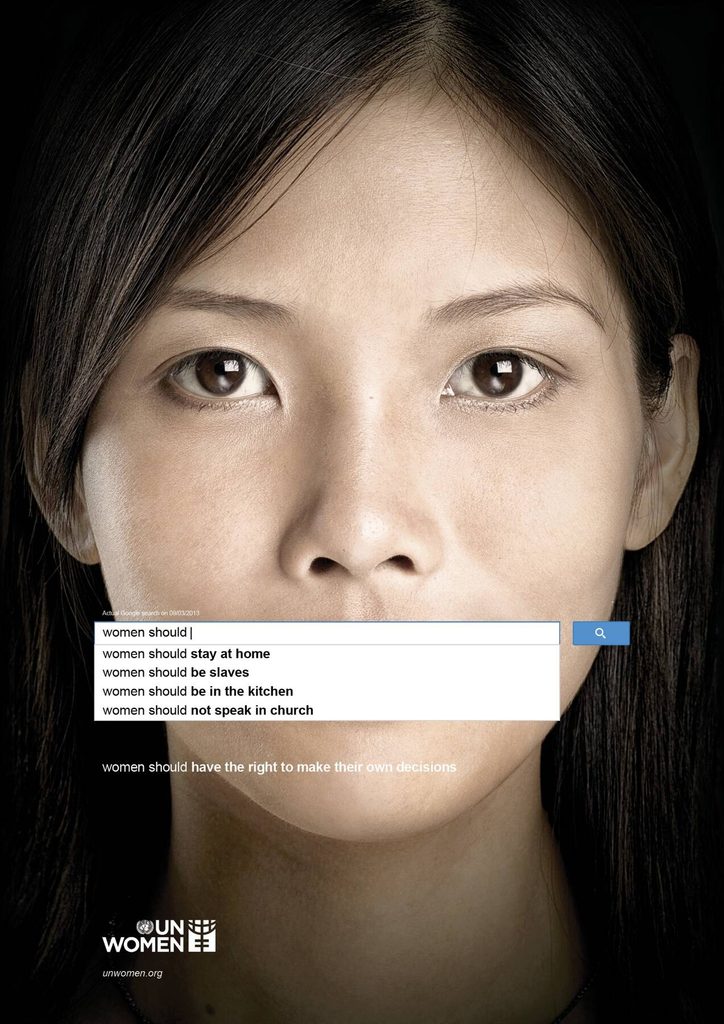
The search box became a visual gag
The placement of the text carried as much meaning as the words. Each portrait showed a woman facing the viewer, with the autocomplete panel obscuring her mouth.
The interface appeared to silence the person beneath it. Statements prescribing women’s lives occupied the space where their own voices would normally come from.
The four executions used women from different cultural backgrounds while keeping the same visual structure. The repeated layout connected the separate search prompts to a shared issue, prejudice that spoke about women while denying them a say.
UN Women wrote a different ending beneath the searches
The campaign did more than display the harmful suggestions. Each ad added an equality-focused statement below the search panel.
One read, “women should have the right to make their own decisions.” Other executions challenged discrimination and the acceptance of existing inequalities.
These lines reused the structure of the search prompts to change their direction. After the autocomplete results imposed restrictions, UN Women’s response asserted agency and rights.
The conversation continued through #womenshould
The campaign invited discussion through the hashtag #womenshould, carrying the unfinished sentence into social media.
That gave audiences a way to respond to the language in the posters. The same prompt that had produced discriminatory suggestions became an invitation to discuss equality.
The print idea brought the issue into a familiar daily interaction. A search box, normally used to help someone find information, became the object that covered a woman’s mouth and showed why the conversation about her rights remained necessary.
Credits
Client: UN Women. Campaign: The Autocomplete Truth. Agency: Memac Ogilvy & Mather Dubai, UAE. Creative Director: Ramzi Moutran. Associate Creative Director: Sascha Kuntze. Art Directors: Christopher Hunt, Sabia Fatayri and Leonardo Borges. Copywriter: Kareem Shuhaibar. Retoucher: Ricardo Moreira. Print campaign: October 2013. Searches used in the creative: March 9, 2013.
About the work
Campaign details
- Agencies
- MatherMemac Ogilvy
- Country
- United Arab Emirates
- Year
- 2013
Related
More in Print

Popular
Popular posts

More stories