Outdoor
The Laundry Pile: Jacob buried Montreal’s summer under dirty clothes
 By Archit
·
·
5 min read
By Archit
·
·
5 min read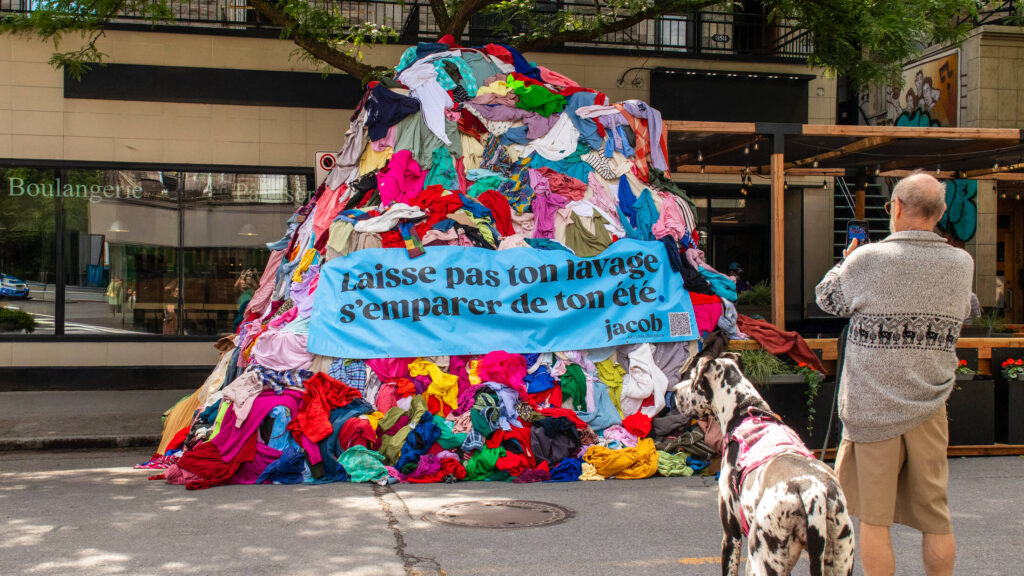
In July 2026, a 13-foot pile of dirty clothing appeared on a busy café-bar patio in Montreal. Smaller piles were found near parks, swimming pools and a public market. VML Canada created The Laundry Pile for local laundry and dry-cleaning service Jacob.
The campaign made unfinished laundry impossible to leave at home.
Laundry stood between people and summer
Montreal’s outdoor spaces become especially valuable during summer.
Patios fill with people. Parks become meeting places. Public pools offer relief from the heat. Meanwhile, markets and neighbourhood streets attract residents who want to spend time outside.
Laundry belongs somewhere else.
However, the household chore can follow people mentally even after they leave home. A full basket waits to be washed. Clean clothing needs to be folded. Another load begins before the first one has been put away.
Jacob turned that mental pressure into something people could see.
The campaign placed enormous clothing piles inside locations associated with summer enjoyment. As a result, the chore no longer waited quietly in a bedroom or laundry room. It blocked the places where people wanted to relax.
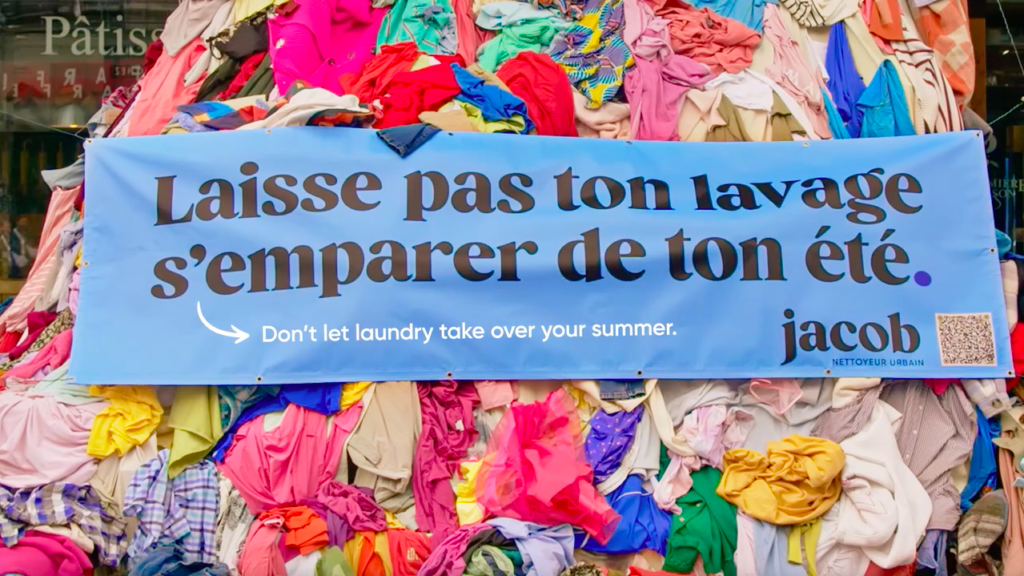
The accompanying line made the idea clear.
“Don’t let laundry take over your summer.”
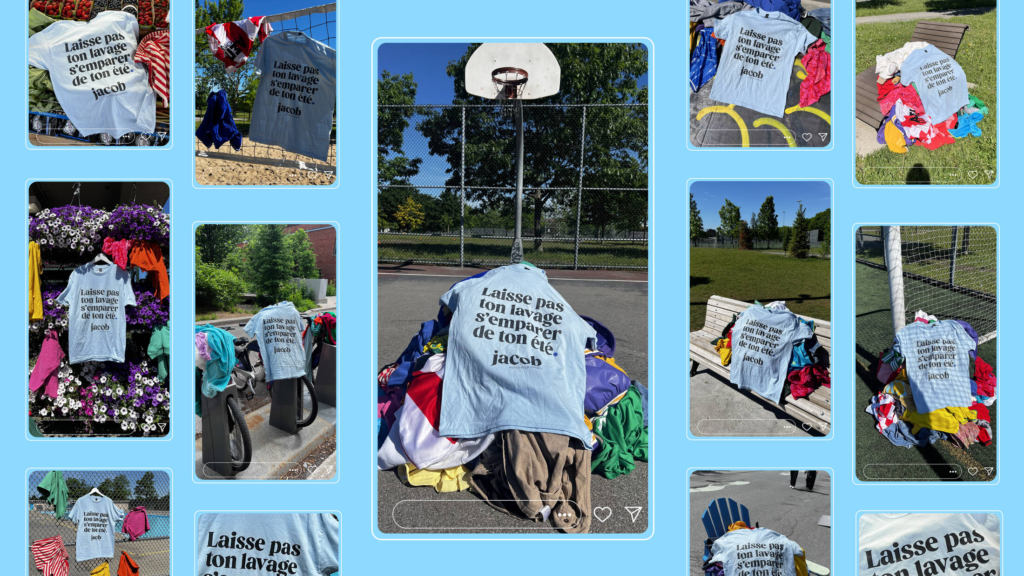
A 13-foot pile took over the patio
The main installation appeared on the patio of Le Boudoir café-bar on Mont-Royal Avenue.
A mountain of clothing rose 13 feet above the space. Shirts, trousers, towels and other items appeared to have been dropped in one huge, unfinished load.
The pile looked deliberately out of place.
People visiting the patio expected tables, drinks and conversations. Instead, they encountered the exaggerated version of a chore they already knew.
Its size gave the campaign the visibility of a billboard. Still, the installation behaved differently from a flat poster.
The clothing occupied real space. It appeared to interrupt the patio and stand between visitors and their plans. Furthermore, people could walk around it, photograph it and view the individual garments inside the pile.
Smaller versions extended the campaign across Montreal.
Laundry appeared near local parks, public swimming pools and the Jean-Talon Market. Each location created the same interruption in a different part of city life.
The campaign did not need to invent several messages for those spaces. The growing pile carried the thought wherever it appeared.
The service offered a way around the pile
Jacob provides home pickup for laundry, dry cleaning and clothing alterations in Montreal.
For its laundry service, the company collects clothing, washes and folds it, then returns the completed order. The campaign also highlighted a 24-hour turnaround.
That service completed the outdoor idea.
The installations showed the problem at an impossible scale. Jacob then offered to remove it from the customer’s routine.
Someone did not need to spend part of a sunny day sorting, washing, drying and folding clothing. Instead, the company could collect the load from home and return it ready to store.
This connection kept the work close to the service being advertised.
The giant pile was playful, but it did not exist only to create photographs. It represented the exact task Jacob wanted people to hand over.
At the same time, the locations helped define the benefit.
Jacob was not simply selling cleaner clothing. It was offering the hours people could spend at a patio, market, pool or park while someone else handled the washing.
The campaign therefore placed the service outcome around the installation.
Summer continued on the other side of the pile.
The city became the media plan
The Laundry Pile used Montreal itself to complete the message.
A pile beside a washing machine would have looked ordinary. The same pile on a popular patio became an interruption.
That choice allowed the surroundings to do part of the communication. Every park bench, market stall and swimming pool reminded people what they might miss while dealing with chores.
The installations also created material for Jacob’s social channels. Meanwhile, residents began photographing and sharing the piles they encountered around the city.
The physical stunt could therefore reach people who never visited the original locations.
However, the work remained strongest on the street. Its scale could be understood immediately, and its inconvenience could be felt by anyone trying to use the space around it.
No reach, booking or sales results were released with the campaign’s initial coverage. Therefore, its commercial effect cannot yet be measured.
The Craft
The Laundry Pile gave physical form to a familiar mental burden.
People often describe unfinished chores as something hanging over them. VML Canada made the expression literal by allowing laundry to rise above public spaces.
The campaign also used exaggeration carefully.
A small basket would have appeared normal. A 13-foot mountain became unreasonable enough to attract attention, while remaining connected to something people regularly experienced at home.
More importantly, the service remained the natural answer.
Jacob did not need to explain every stage of washing and folding. The enormous pile showed the work waiting to be done. The city around it showed what people could do instead.
Laundry had taken over the summer.
Jacob offered to take over the laundry.
Credits
The Laundry Pile (2026). Jacob Nettoyeur Urbain, Canada. Agency: VML Canada. Chief Creative Officer: Graham Lang. Executive Creative Director: Mélissa Charland. Art Directors: Constance Prodhomme and Fabrice Bouty. Copywriters: Émile Parenteau and Michaella Antony. Copy Editor: Julie Goulet. Motion Designer: Gregory Fleurantin. Executive Producer: Rose Gauthier-Robitaille. Production: Bien Joué. Producers: Sébastien Iannuzzi and François Robidoux. Director: Gabriel Bergeron. Production Art Director: Marie-Florence Gagnon. Director of Photography: Antoine Turcotte. Editing: Gabriel Babin. Media: experiential outdoor and social.
Related
More in Outdoor


Popular
Popular posts

More stories