
Outdoor
Corona turned 1,200 kilograms of plastic into a wave of waste
 By Archit
·
·
4 min read
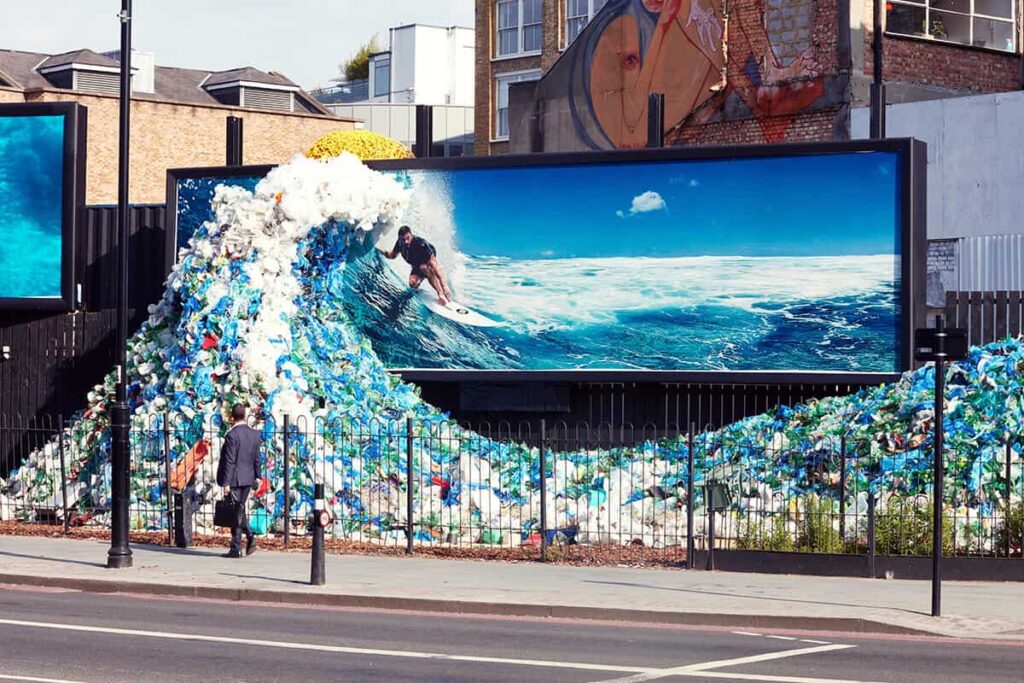
A surfer usually looks most at home riding through clear blue water. Corona replaced that familiar image with something far less inviting: a breaking wave built from plastic bottles, bags and other discarded objects.
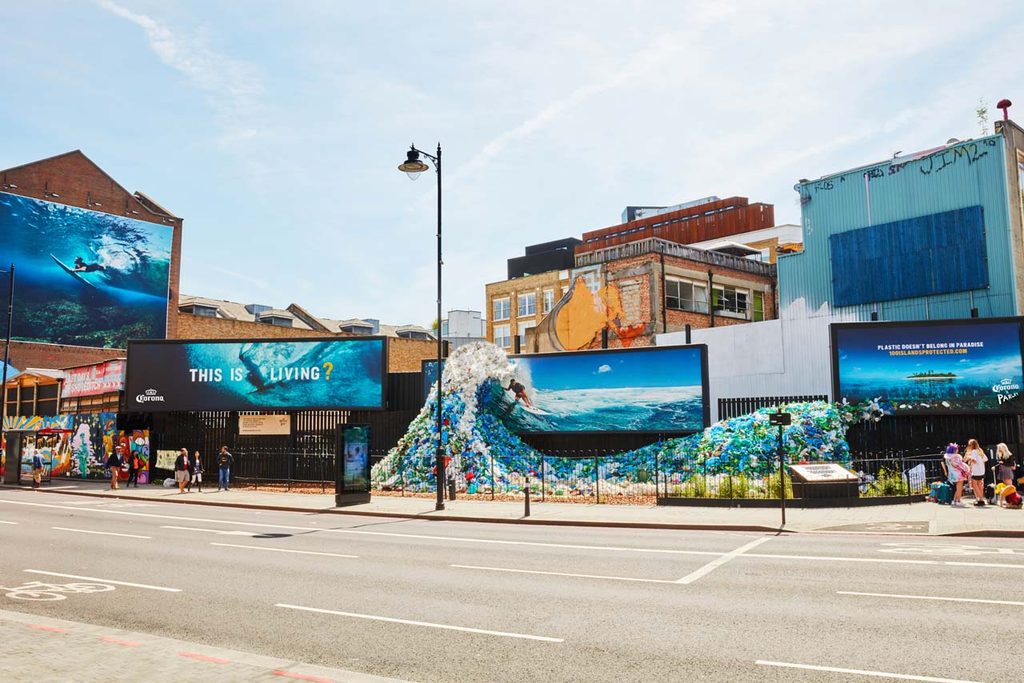
Created for World Oceans Day in 2018, Wave of Waste placed a large sculpture beside an image of actor and surfer Chris Hemsworth at London’s Old Street. The installation visualised how much plastic pollution could be found along just two miles of UK coastline.
A billboard became a three-dimensional plastic wave
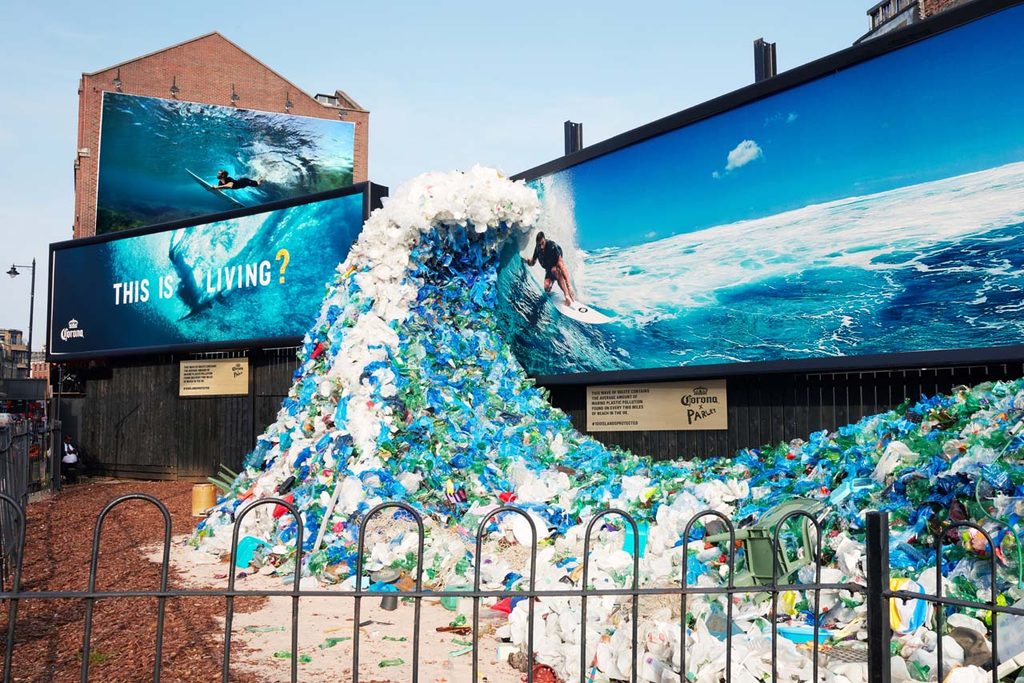
The installation measured approximately 10 metres wide and five metres high. More than 10,000 pieces of discarded plastic were arranged to resemble a wave rising above Hemsworth as he appeared to surf beneath it.
Instead of describing marine pollution through statistics alone, Corona turned the waste into something commuters could see at street level. Familiar objects such as bottles, bags and food packaging made the scale of the problem easier to recognise.
The complete structure weighed 1,200 kilograms. According to the campaign, this represented the average quantity of marine plastic pollution found across every two miles of beach in the UK.
A line beside the sculpture explained the comparison, allowing the physical installation to function as both an advertisement and a visual measurement of pollution.
Plastic collected in the UK formed the artwork
The waste used to construct the wave came from UK recycling sources and beach-cleaning activities. Some of it was collected from Holywell beach with support from the Marine Conservation Society.
Before construction, the discarded items were washed, sorted and prepared for inclusion in the sculpture. Artist Andy Billett led the creation of the wave, which required more than 1,000 hours of work.
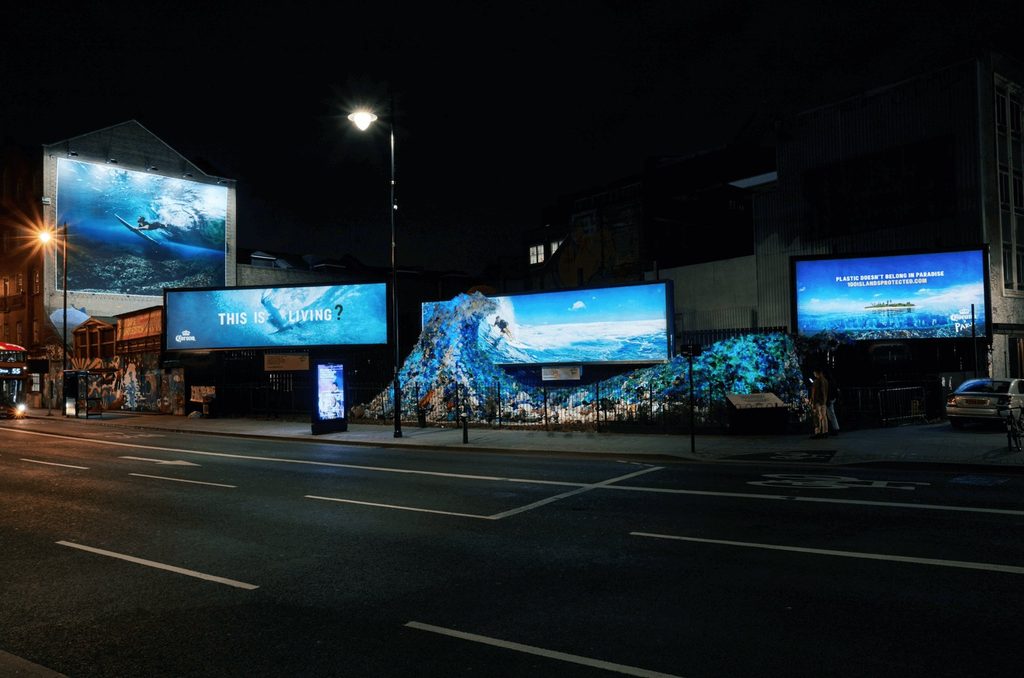
The objects were selected and positioned to reproduce the shape and colours of moving water. Lighting installed inside the structure added a sense of motion, helping the static plastic resemble a wave about to break.
After the installation was removed, the materials were sorted for recycling.
The public could add waste to the sculpture
Wave of Waste was not presented as a finished artwork that people could only observe. Between 6 and 8 June, members of the public were invited to bring their own plastic waste to the Old Street site.
The donated items were added to the installation in the lead-up to World Oceans Day. Each contribution made the wave larger while demonstrating how individual pieces of everyday packaging accumulate into a much greater environmental problem.
This participatory element connected personal consumption with marine pollution. A bottle or wrapper may appear insignificant when discarded on its own, but the completed structure showed what happens when thousands of similar objects collect together.
Chris Hemsworth appeared beneath a different kind of wave
Hemsworth was involved in Corona’s partnership with environmental organisation Parley for the Oceans. His presence gave the installation the appearance of a conventional surfing advertisement when viewed from a distance.
Closer inspection revealed that the wave surrounding him was not water but rubbish.
The execution also challenged Corona’s established association with beaches and its “This Is Living” platform. The accompanying question, “This Is Living?”, turned the brand’s familiar lifestyle message into a criticism of the conditions being created by plastic pollution.
By placing an aspirational image beside physical waste, the campaign disrupted the idealised beach scenes commonly used to advertise beer and travel.
The idea travelled beyond London
Related Wave of Waste installations appeared in cities including Melbourne, Lima, Santiago, Bogotá and Santo Domingo. Each execution used the same basic contrast between surfing culture, beach imagery and the plastic threatening marine environments.
The London installation remained in place for approximately two weeks. Its location at Old Street gave the campaign visibility among commuters, pedestrians and passing traffic while the public participation generated additional attention around World Oceans Day.
The production team reported that the activation achieved an estimated media reach of 1.6 billion.
Wave of Waste made an environmental statistic physically unavoidable. By placing real discarded plastic where an ocean wave should have been, Corona showed that marine pollution was no longer separate from the beach lifestyle represented by the brand.
Credits
Wave of Waste, 2018. Brand Corona. Creative agency Wieden+Kennedy Amsterdam. Environmental partner Parley for the Oceans. Featuring Chris Hemsworth. Sculpture artist Andy Billett. Design, build, engineering, installation and production by Sketch Events. Lighting design by Ithaca. Plastic sourced through UK beach cleans and recycling partners, including material collected from Holywell beach with the Marine Conservation Society.
About the work
Campaign details
- Brand
- Corona
- Agency
- Wieden+Kennedy
- Country
- United Kingdom
- Year
- 2018
Related
More in Outdoor



Popular
Popular posts



More stories