Case Studies
Vaseline built a skin-condition database that shows people of colour
 By Archit
·
·
5 min read

Searching for a rash, mark or other skin concern online should help people understand what they are seeing. For many people of colour, however, the images returned by search engines do not resemble their skin.
Vaseline addressed that representation gap with See My Skin, a digital platform created specifically to show how hundreds of skin conditions appear across Black and Brown skin tones.
Developed with healthcare partners HUED and VisualDx, the platform combines medically reviewed images, educational resources and access to dermatologists who understand the needs of melanin-rich skin.
Online searches rarely showed conditions on darker skin
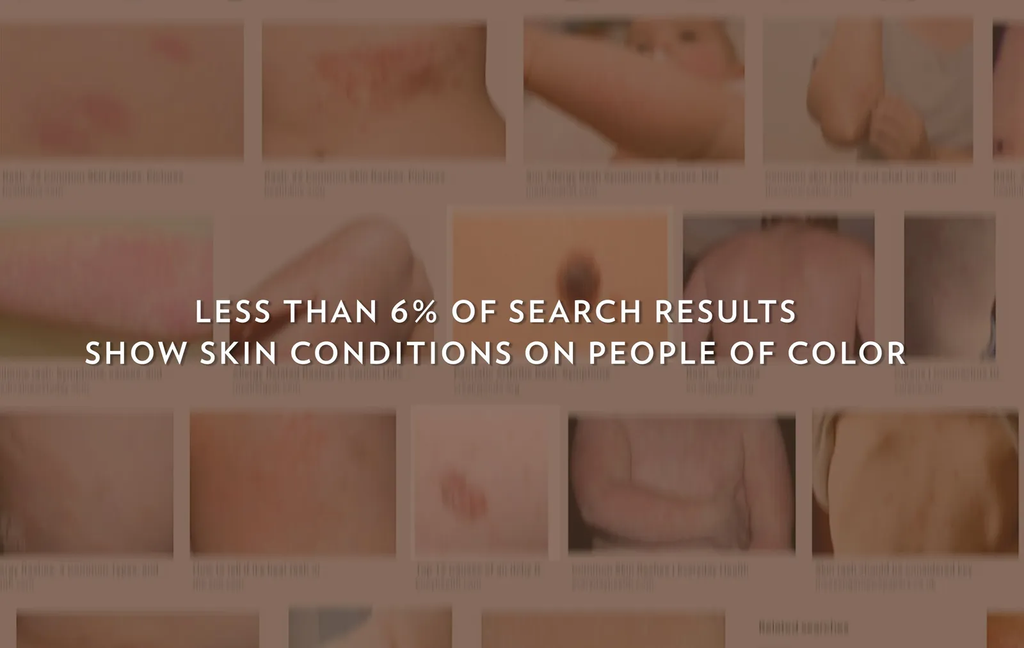
Research cited by the campaign found that fewer than 6% of image-based search results showed skin conditions on people of colour.
This meant that someone searching for symptoms could encounter pages of examples presented almost exclusively on lighter skin. Conditions may look different depending on skin tone, making unrepresentative results less useful for recognising potential health concerns.
The issue extended beyond internet searches. Medical textbooks, image libraries and educational materials have also historically provided fewer examples involving darker skin.
See My Skin treated that absence as a healthcare-equity problem. If people cannot see their symptoms represented, they may find it harder to identify a concern, explain it to a medical professional or understand when specialist care is needed.
Thousands of medically reviewed images formed the database
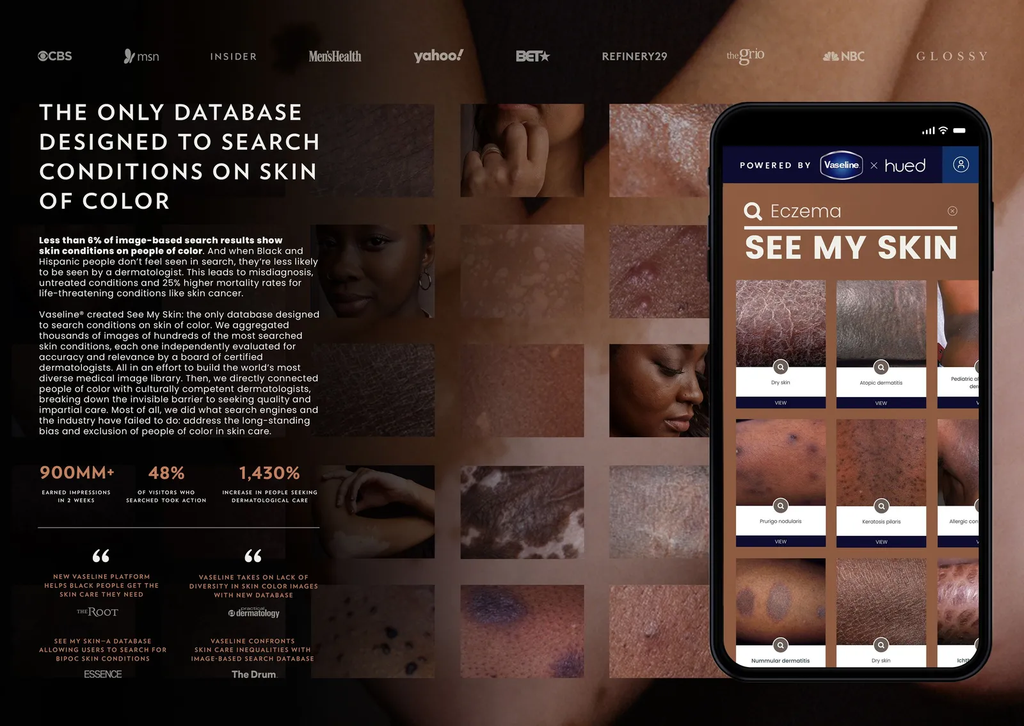
Vaseline worked with dermatologists, medical librarians, software engineers and imaging specialists to collect thousands of images showing hundreds of conditions on Black and Brown skin.
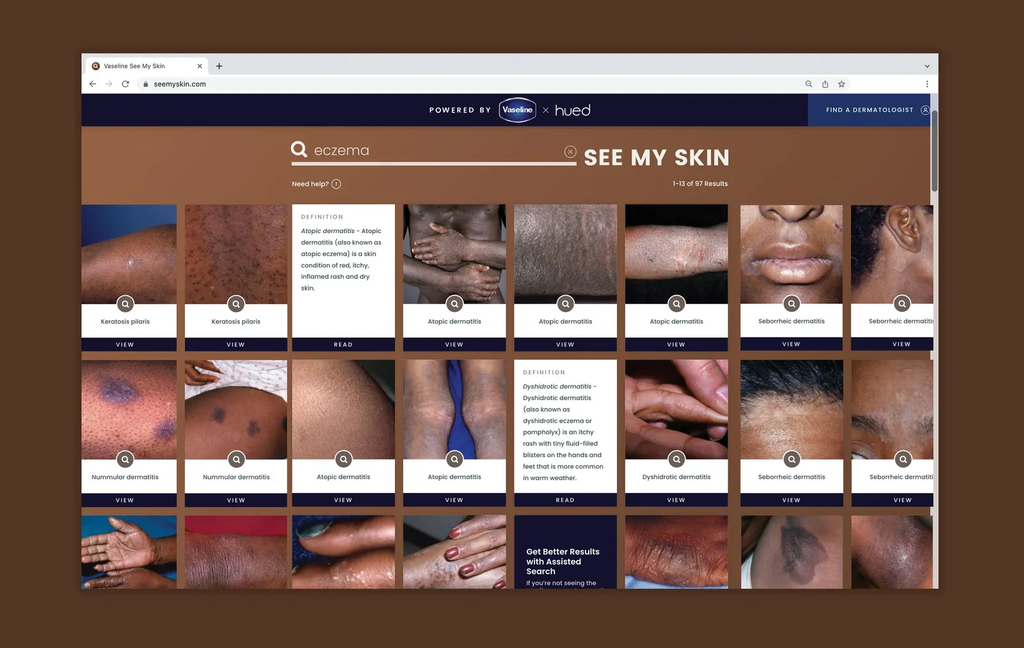
The platform allows users to search for a condition and view relevant examples across different skin tones. Information accompanying the images explains how to monitor the condition, when to seek professional help and how to prepare for a dermatology appointment.
VisualDx supplied medical imagery and diagnostic technology to support the search experience. Every piece of content was independently evaluated for accuracy and relevance by Vaseline’s Dermatology Review Board.
The board included dermatologists Dr Mona Gohara, Dr Uchenna Okereke and Dr Caroline Robinson.
See My Skin was designed as an educational resource rather than a replacement for professional diagnosis. Its purpose was to give users more representative information and help them take the next step towards appropriate care.
Users could connect with dermatologists through HUED
The platform did more than improve the images presented in a search.
Through HUED, users could find healthcare professionals experienced in treating patients from Black, Latinx and Indigenous communities. The digital health company connects patients with providers who understand their cultural and physical healthcare needs.
This feature addressed another barrier facing people of colour. Even after recognising a possible condition, finding a dermatologist with relevant experience can be difficult.
See My Skin connected the information stage with access to care. A user could research a concern, learn what questions to ask and then look for a qualified professional.
Community members could also submit images of medically diagnosed conditions, allowing the library to become more representative over time.
Limited-edition packaging directed people to the platform
Vaseline extended the digital service onto the packaging of its Original Healing Jelly.
Limited-edition packs featured new artwork and a QR code that directed customers to See My Skin and other equitable skincare resources. This placed the platform on a familiar product already used in many households.
Paid search, social media, campaign films and earned media supported the launch. The campaign also worked within the search environment where the original problem existed, helping users discover more inclusive results when looking for information about their skin.
Instead of only pointing out bias in existing algorithms, Vaseline created an alternative resource designed around the people those systems had overlooked.
The campaign encouraged more people to seek care
See My Skin launched in the United States in April 2022 as part of Vaseline’s Equitable Skincare for All programme.
Within its first two weeks, the platform received more than 6,000 visits. Campaign results reported a 1,430% increase in people seeking dermatological care and 8.5 million equitable skincare experiences for patients and professionals.
The wider initiative aimed to create 15 million more equitable skincare experiences by 2025 through community resources, access to care and education for medical professionals.
See My Skin showed how representation can affect more than whether someone feels included in advertising. In healthcare, seeing a condition accurately represented can influence whether a person recognises a problem and decides to consult a specialist.
By replacing missing search results with medically reviewed images and direct access to dermatologists, Vaseline turned a visibility gap into a practical healthcare tool.
Credits
See My Skin, 2022. Client Unilever. Brand Vaseline. Lead creative, advertising and design agency Edelman New York. Healthcare and technology partners HUED and VisualDx. Global Chief Creative Officer Judy John. US Chief Creative Officer Jordan Atlas. Executive Creative Directors Matt Zavala and Megan Skelly. Associate Creative Directors Cassandra Shuber, Daniela Marino, Schuyler Higgins, Shareina Chandler and Sonja Johnson. Copywriter Morgan Peterson. Production by Girl Culture Films. Postproduction by Big Sync LTD, Carousel/KYLE NYC and Sonic Union. Media by Mindshare. Brand Director for US Skincare Kevin Tolson and Vaseline Brand Manager Cecily Pirozzoli.
About the work
Campaign details
- Brand
- Vaseline
- Agency
- Edelman
- Country
- United States
- Year
- 2022
- Awards
- 2023 Cannes Lions - Gold Lion
Related
More in Case Studies


Popular
Popular posts



More stories