Outdoor
Vice City’s fictional brands are buying attention on Miami’s real streets
 By Archit
·
·
3 min read
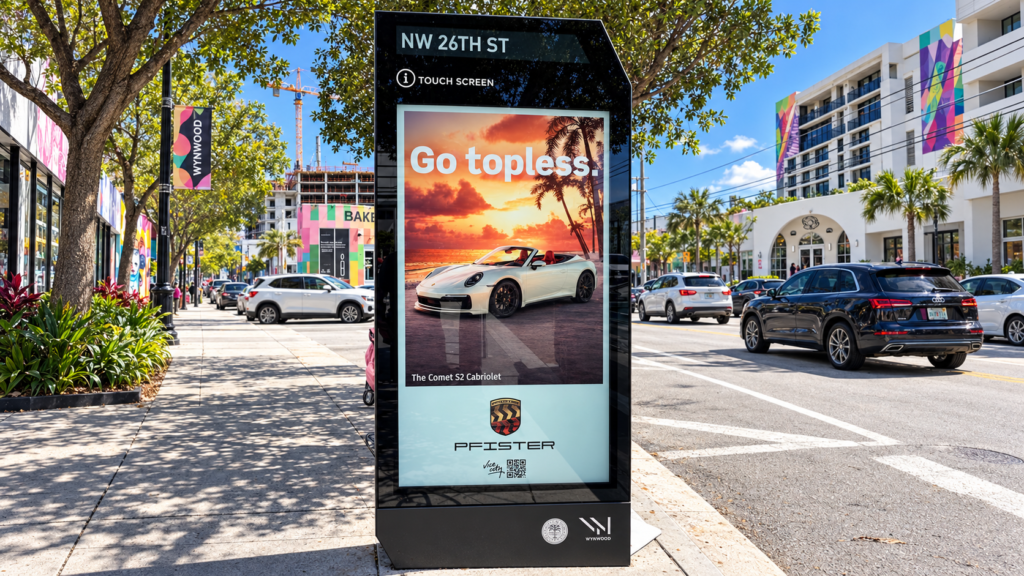
“Go topless” reads an advertisement for a convertible on a digital kiosk in Miami. The format looks familiar. The car brand gives the game away.
It is Pfister, a fictional manufacturer from the Grand Theft Auto universe.
Spotted in Wynwood in October 2026, the display forms part of a series of ads presenting Vice City’s businesses as though they belong among Miami’s real advertisers. Other executions promote jewellery, watches, entertainment and fitness.
The approach gives GTA VI’s Miami-inspired setting a presence in the city that helped inspire it. People encounter the fictional world through its advertising, with ordinary street furniture becoming the place where the two cities meet.
The fictional companies carry the humour
The Pfister execution uses the phrase “Go topless” to sell the appeal of a roof-down drive. The double meaning fits the series’ familiar approach to commercial language.
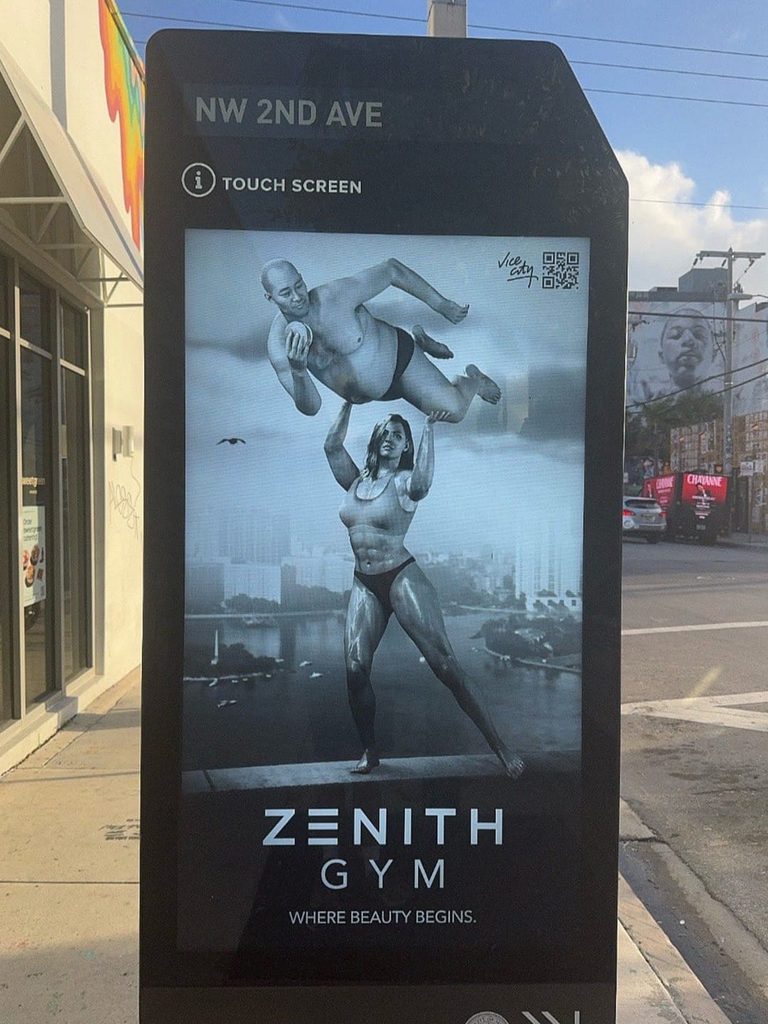
Other documented executions include Kowalski jewellery and Kronos watches. Zenith Gym appears with the line “Where beauty begins”, using a sculptural fitness image to introduce another part of the fictional city’s lifestyle.
Each advertisement introduces a different part of the fictional city’s consumer culture. Together, they suggest a place with its own status symbols, services and ambitions.
That makes the brands useful promotional material. A viewer can pick up the tone of Vice City through the way its businesses speak, before seeing a mission or following a character.
The car ad, for example, works first as a plausible lifestyle advertisement. Recognition of Pfister then changes what the viewer understands it to be promoting.
Television and sport add to the fictional city
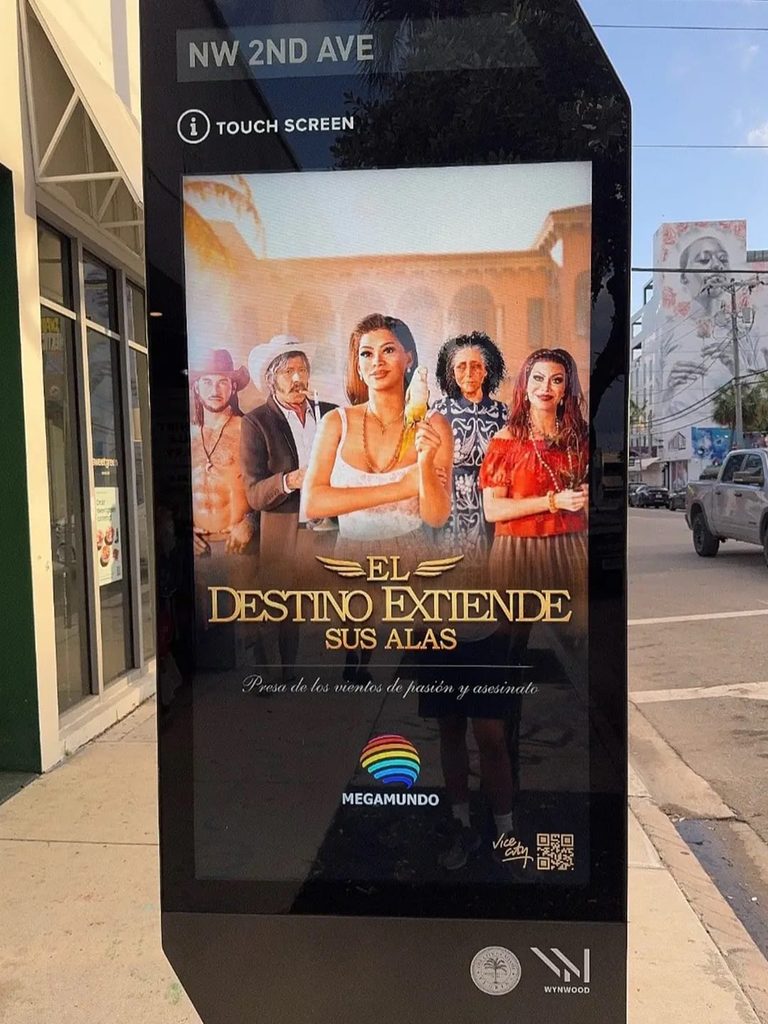
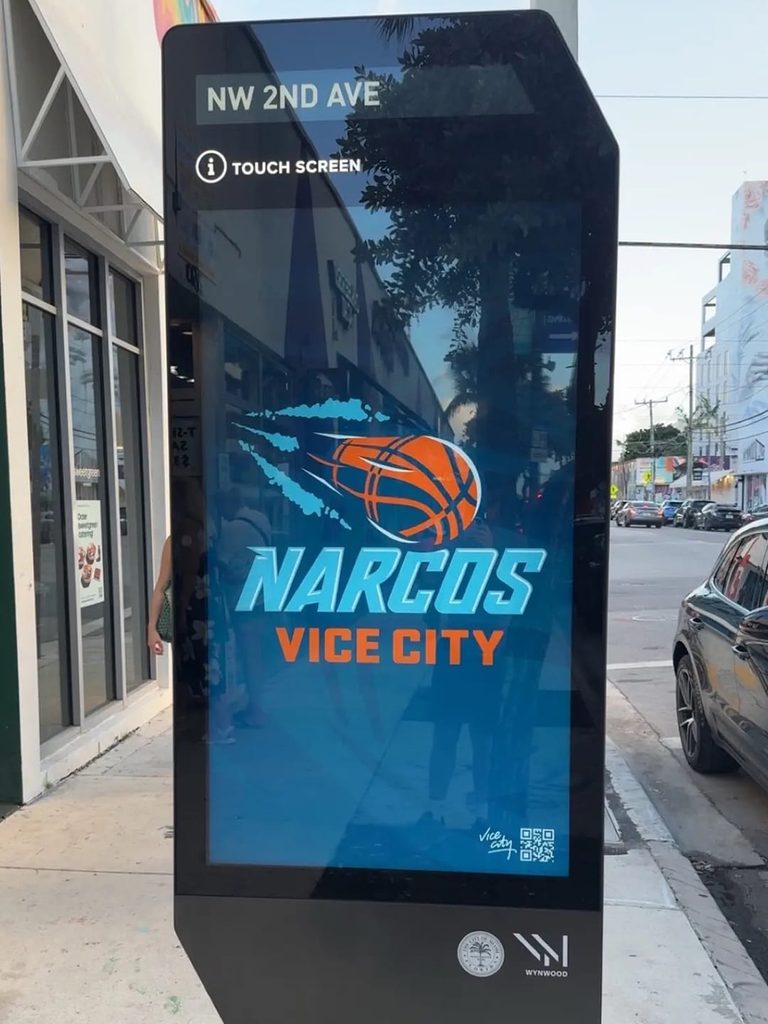
The additional displays introduce Megamundo, with an advertisement for a Spanish-language drama, and the Vice City Narcos, with a basketball graphic and team identity.
These executions suggest more than things to buy. They give Vice City programmes to watch and teams to follow, making its everyday culture part of the promotion.
The photographed screens also carry small Vice City marks and QR codes. The main image introduces a fictional advertiser, while these smaller details connect it with the wider game-related activity. The screenshots do not establish where the codes lead.
The kiosk format makes the fiction feel local
The choice of medium gives the idea much of its effect. These are digital street displays of the kind people already expect to carry advertising.
Local footage documented the fictional executions rotating alongside real ads on a Wynwood kiosk. That shared space makes Vice City’s companies appear temporarily part of Miami’s commercial landscape.
The city supplies the context, while the fictional names introduce the discovery. Fans can recognise a reference immediately; other passers-by can encounter an apparently ordinary ad and look more closely.
The images also travel easily beyond the street. A photograph of a fictional brand on a real kiosk preserves the central joke without needing a long explanation.
Miami becomes a place to discover Vice City
The kiosk sightings sit within a broader wave of GTA-related activity in Miami, including the “Welcome to Vice City” sign at the Kaseya Center.
The street ads give that wider presence a smaller, more everyday form. They bring the game into the visual clutter people pass while moving through the city.
Their creative value lies in how much of the fictional world they let the audience discover. Businesses that might normally fill a game’s background become the main attraction in a real advertising space.
Miami’s streets provide the setting. Vice City’s brands provide the personality.
Credits
Game: Grand Theft Auto VI. Developer and publisher: Rockstar Games. Placement: Digital street kiosks in Wynwood, Miami. Local sightings documented by Joel Franco.
About the work
Campaign details
- Brand
- Rockstar Games
- Country
- United States
- Year
- 2026
Related
More in Outdoor


Popular
Popular posts

More stories