Outdoor
Tumblehair: K18 rolled a 10-foot hairball through New York City
 By Archit
·
·
5 min read
By Archit
·
·
5 min readAI-assisted
Quick summary
The idea: To launch its FutureIQ Biomimetic Hair Longevity Serum, K18 and Uncommon Creative Studio created Tumblehair, a 10-foot ball of human and synthetic hair representing the 167 billion hairs New Yorkers collectively shed daily. The absurd narrative object addressed premature hair ageing with humour rather than conventional beauty advertising.
The execution: The unbranded, car-sized hairball rolled through Manhattan neighbourhoods before finishing outside a Sephora in the Meatpacking District. There, the K18 Hair Longevity Lab offered scalp analyses and product demonstrations. The campaign also distributed mini hairball PR mailers to influencers alongside supporting social and outdoor ads.
Why it matters: The activation made the invisible, sensitive problem of hair shedding tangible and impossible to ignore. By withholding immediate branding, it prioritized curiosity and organic social sharing over traditional product messaging.
AI-generated from this article. For complete context and credits, read the full story.
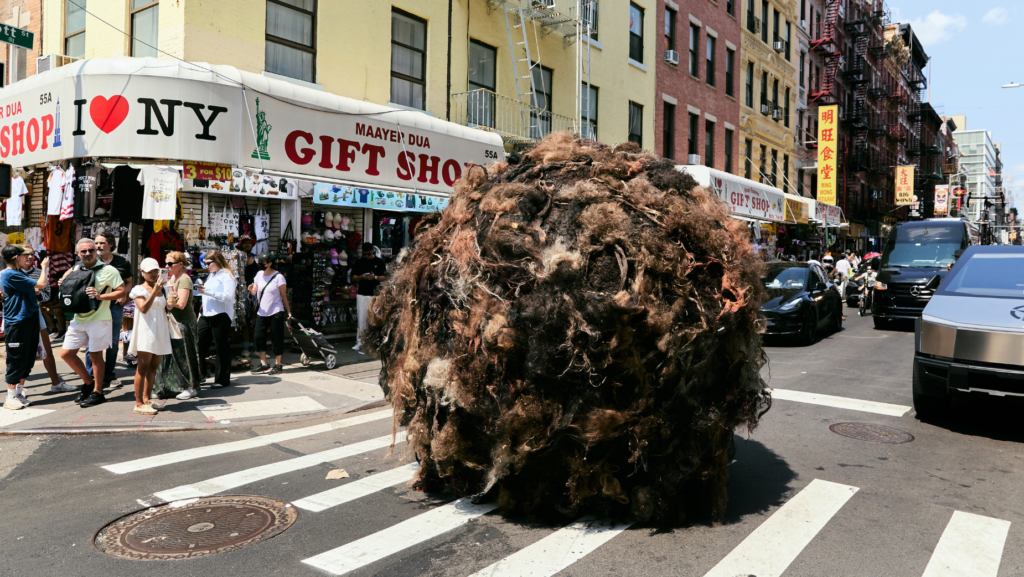
New Yorkers saw something unusual rolling through Manhattan.
It looked like a 10-foot ball of hair.
It was not an AI-generated video or a prop from a film. It was “Tumblehair,” a physical installation created by K18 and Uncommon Creative Studio to launch the brand’s FutureIQ Biomimetic Hair Longevity Serum.
Made from a mixture of human and synthetic hair, the giant ball represented the 167 billion hairs K18 estimates New Yorkers collectively lose through shedding every day.
Instead of explaining premature hair ageing with another conventional beauty advertisement, K18 made the problem large enough to roll through the city.
A Product Claim Became a Physical Object
K18 says its FutureIQ serum can help users retain up to 19,000 more hairs after 90 days of consistent use.
That figure became the starting point for Uncommon creative directors Lauren Cooper and Cara Johnson.
The agency wanted to make the scale of everyday shedding tangible without treating hair loss in a serious or sombre way. It turned the statistic into an oversized version of something people normally find in a shower drain or hairbrush.
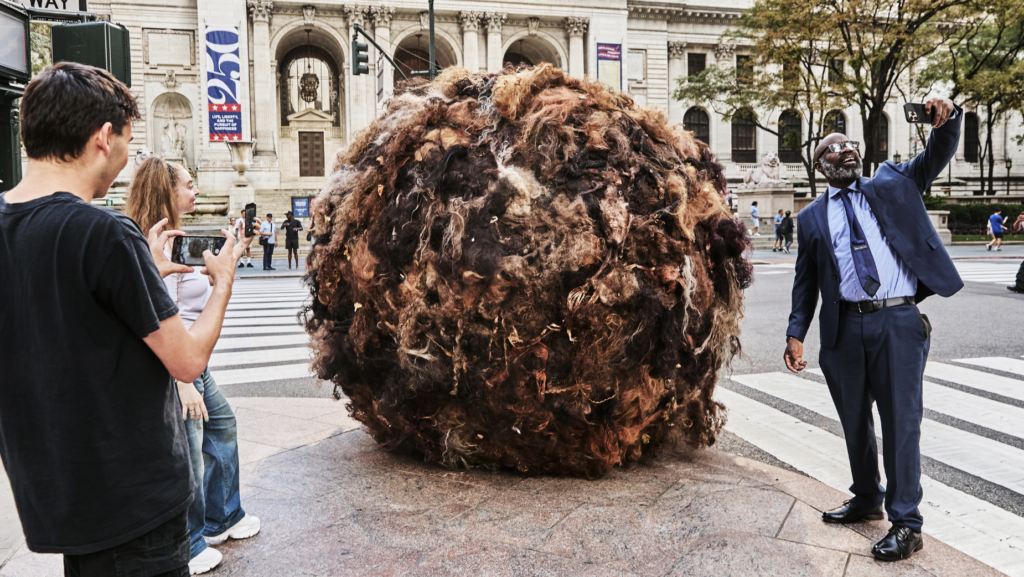
The result was Tumblehair: a car-sized ball designed to make an invisible biological process impossible to ignore.
Its appearance was deliberately absurd, but the joke was not aimed at people experiencing hair loss. The absurdity belonged to the object itself, allowing K18 to approach a sensitive subject through curiosity and humour.
Tumblehair Rolled Through Manhattan
The installation travelled through several recognisable New York neighbourhoods, including Midtown, the West Village, Chinatown and the Seaport.
People encountered it moving through streets and pedestrian crossings without an immediate explanation.
Tumblehair did not carry prominent K18 branding. That decision allowed the object to create curiosity before revealing the advertiser behind it.
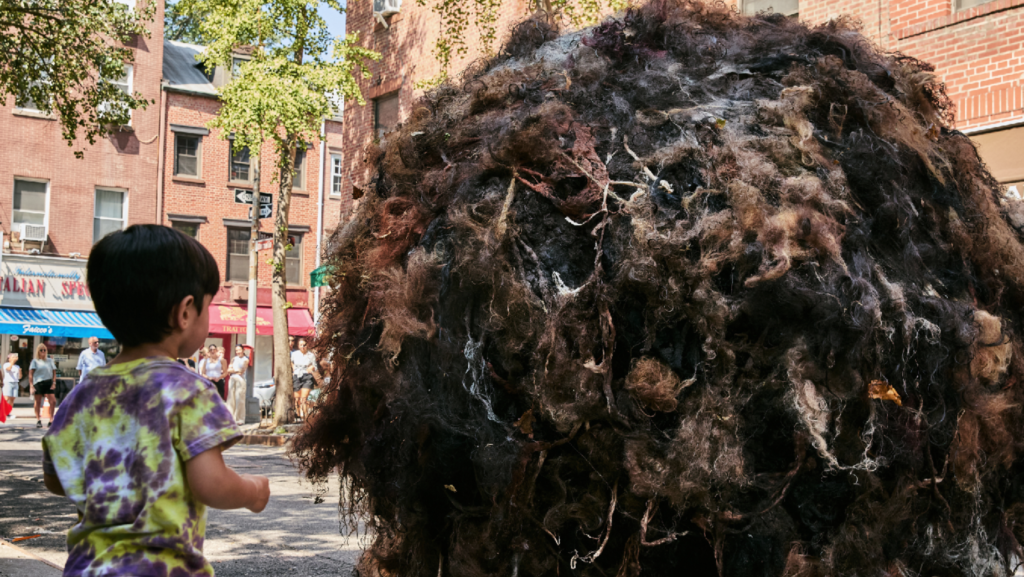
Passers-by stopped, photographed the hairball and shared videos online. Some viewers initially assumed the footage had been generated using artificial intelligence.
The lack of visible branding made the first question more important than the product message:
What is a giant hairball doing in New York?
Only after attracting attention did the campaign connect the installation with K18, premature hair ageing and the launch of FutureIQ.

Uncommon Created a “Narrative Object”
Uncommon describes physical ideas such as Tumblehair as “narrative objects.”
These are objects capable of communicating a story through one striking image. They are designed to work in the physical world while also travelling through photographs, videos, news coverage and social posts.
Tumblehair could be understood without a long explanation. A giant mass of loose hair immediately suggested shedding, while its scale communicated the size of the problem.
The execution also used the city as part of the visual. A strange object rolling through Manhattan was more likely to earn attention than the same object displayed inside a controlled beauty activation.
Instead of asking people to visit an advertisement, K18 sent the advertisement towards them.
The Mystery Eventually Led to Sephora
Tumblehair completed its journey on August 12 outside Sephora in New York’s Meatpacking District.
The final stop became the K18 Hair Longevity Lab, a public activation where visitors could receive scalp analyses, speak with the brand’s education team and see demonstrations of the FutureIQ range.
This gave the campaign a clear progression.
The unexplained hairball first generated attention across the city. Its final appearance then connected that curiosity to the product and gave consumers an opportunity to learn more about hair longevity.
K18’s official event took place at 38 Gansevoort Street from 11 a.m. to 7 p.m.
Mini Hairballs Replaced Influencer Gift Boxes
The campaign extended beyond the streets through influencer mailers.
Instead of sending FutureIQ in a conventional beauty PR package, Uncommon created miniature versions of Tumblehair. The smaller hairballs turned the product delivery into an unusual unboxing experience and maintained the same visual idea across the campaign.
Once K18 revealed its involvement, social and outdoor advertising provided further explanation about the installation, hair shedding and FutureIQ.
The campaign therefore moved through three stages: mystery, discovery and product education.
Building the Hairball Required More Than Hair
Creating a 10-foot object that could safely roll through New York required research, engineering, fabrication and repeated testing.
Uncommon worked with Pro Mobile Marketing and Uncommon Makers to construct and operate the installation.
The production team had to make the ball look uncontrolled and disturbing while ensuring its movement through busy public spaces remained carefully managed.
The agency also reportedly hired an Etsy witch to cast a spell for good weather before Tumblehair’s debut.
It was not the campaign’s most technically important production decision, but it matched the strangeness of the final idea.
Results Have Not Yet Been Published
K18 launched Tumblehair in August 2026, and formal campaign results were not available at the time of writing.
The brand and agency had not released verified figures for social views, earned-media reach, event attendance, product sales or brand awareness.
Photographs and videos of the installation circulated online, with some viewers questioning whether the hairball was real. However, without published figures, Tumblehair should be considered a newly launched outdoor activation rather than a completed effectiveness case study.
Why the Campaign Works
Hair shedding is familiar, but it is difficult to visualise at scale.
Tumblehair gave that invisible problem a physical form.
The absence of prominent branding allowed curiosity to come before advertising. Its size made the object difficult to ignore in the street, while its unusual appearance made it naturally suitable for social media.
Most beauty advertising attempts to show perfect hair.
K18 showed New York the hair people lose instead.
Credits
Campaign: Tumblehair
Brand: K18
Parent company: Unilever Prestige
Product: FutureIQ Biomimetic Hair Longevity Serum
Creative agency: Uncommon Creative Studio New York
Creative directors: Lauren Cooper and Cara Johnson
Production partners: Pro Mobile Marketing and Uncommon Makers
Market: United States
Location: New York City
Launch: August 2026
Related
More in Outdoor


Popular
Popular posts


More stories