Case Studies
Tiny Coffee Shops: How De’Longhi turned coffee machines into miniature cafés
 By Ridhi
·
·
5 min read
By Ridhi
·
·
5 min read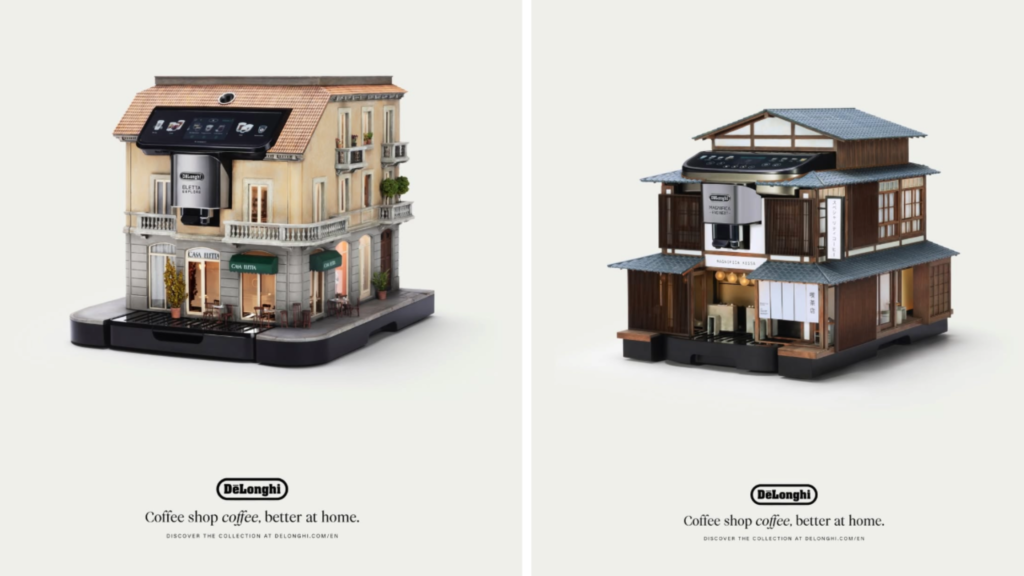
Around 80 percent of coffee is now consumed at home. However, most people still believe the best cup comes from a café. That single tension became the entire foundation of Tiny Coffee Shops, a global campaign by LOLA MullenLowe Madrid for De’Longhi. Instead of arguing the case in words, the agency handed five De’Longhi coffee machines to Simon Weisse, the miniature specialist behind Wes Anderson’s Grand Budapest Hotel and Asteroid City. He turned each machine into a hand-built miniature café from a different global coffee capital.
The result won three Lions at Cannes 2026, including the Grand Prix in Industry Craft, and became one of the most talked-about pieces of work in the festival.
The Idea Behind the Machines
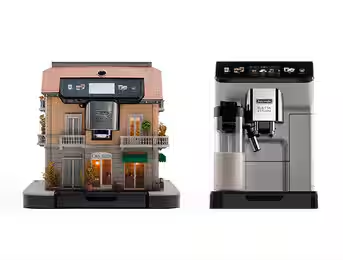
Before the campaign, LOLA Madrid noticed something small but significant. The design language of De’Longhi’s bean-to-cup machines shared the same precision and personality as the design language of iconic coffee shops. In fact, the machines already looked a little like tiny buildings. Meanwhile, De’Longhi’s brief was to compete with the specialty coffee movement, which had been eating into home-brewing perception for years.
The team responded with a single question. What if the machine literally became the café? However, instead of stopping at a decorative mockup, they insisted on functionality. Every miniature had to work as a real coffee machine, which meant the craft had to hide the technology without ever obstructing it. That decision is why Tomás Ostiglia, LOLA’s chief creative officer, brought in Simon Weisse.
The Craft
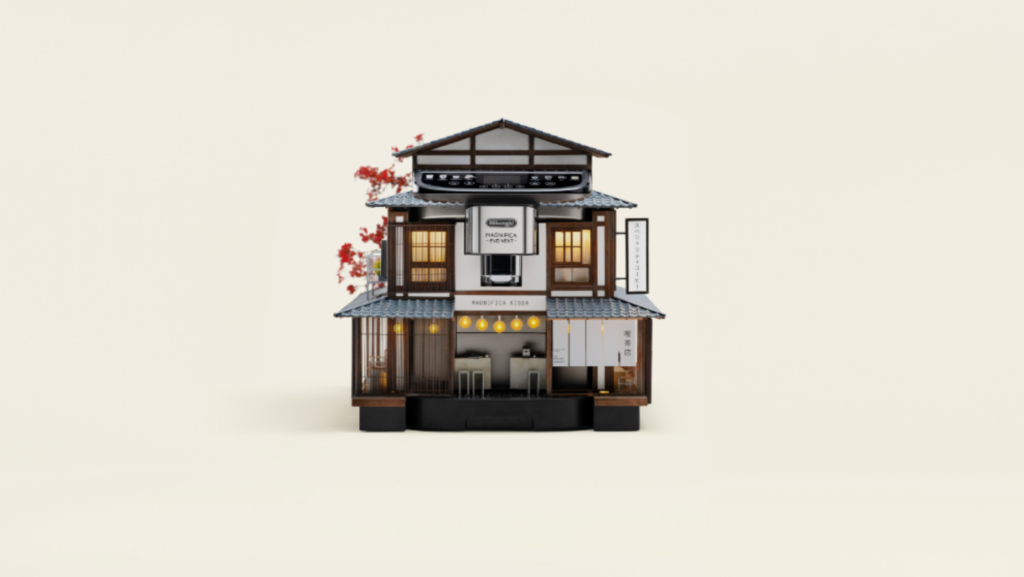
Weisse’s Berlin studio spent more than 1,500 hours hand-crafting five miniature café facades. Each one was built to a 1:12 scale, mounted directly onto a specific De’Longhi model, and inspired by an iconic global coffee culture. Milan. Tokyo. Paris. Copenhagen. Berlin.
Every facade was hand-carved, hand-painted and hand-aged. Furthermore, the studio treated the models like film props rather than product mockups. The painter Hanns Otto painted every single brick on one facade. Meanwhile, model maker Lucy Weisse hand-crafted the chairs, tables, and even the tiny plants. In fact, each miniature also contains at least one hidden detail. Tiny replica coffee machines sitting inside the shops. A readable Japanese newspaper resting on a table in the Tokyo model. Opening balconies and roof windows that let the user access the real machine underneath.
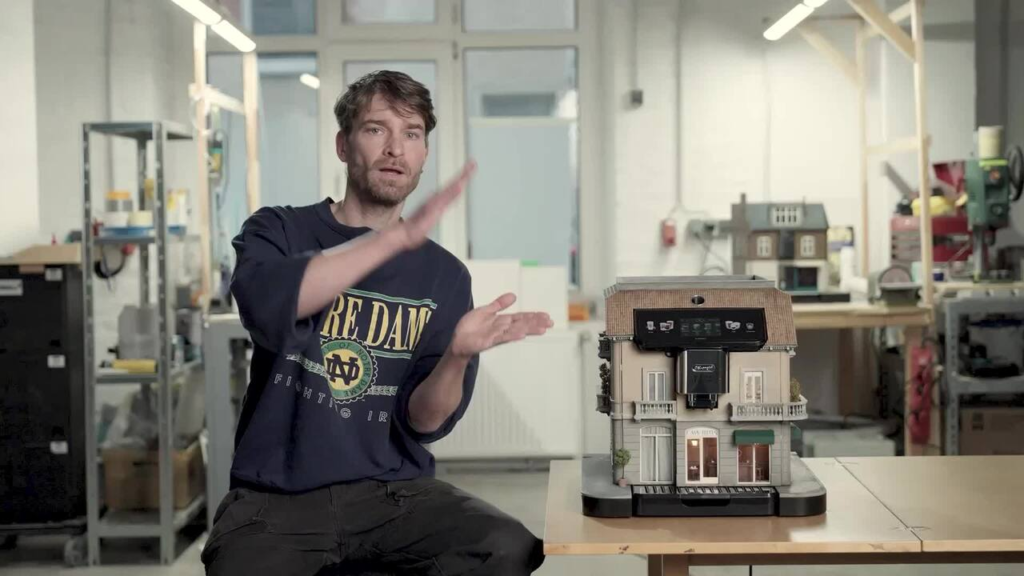
Still, the most quietly brilliant decision was that none of the craft got in the way of function. Every miniature café can still make coffee. The removable sections and hinged roofs are practical, not decorative.
The Rollout
Tiny Coffee Shops debuted at Milan Design Week 2026, where visitors could interact with the physical installations. Meanwhile, a short film titled The World’s Smallest Coffee Shop was directed by Sam Walker through Creators Inc., in collaboration with Weisse himself. The film opens on what looks like a routine morning inside a real café. However, the camera pulls back to reveal the café is only inches tall and sitting on a kitchen counter.
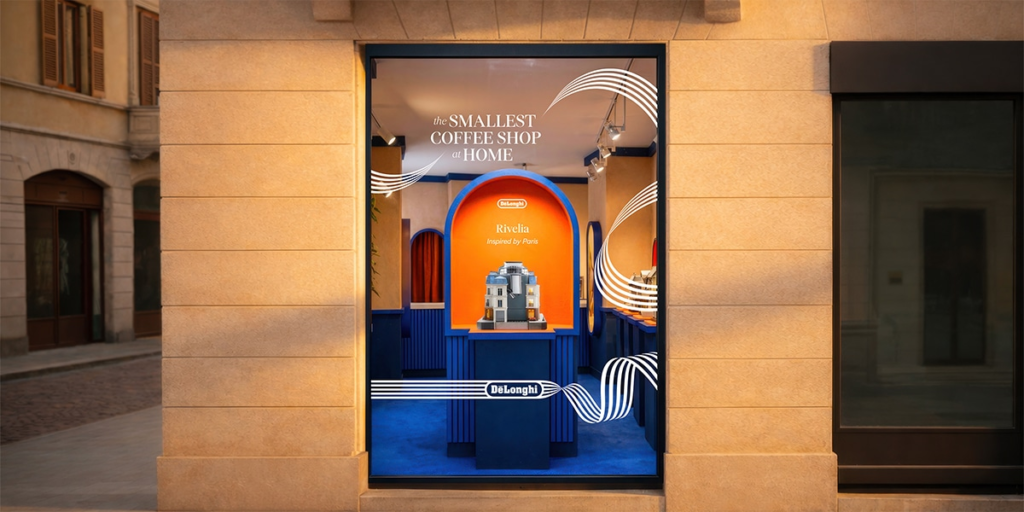
Beyond the installation and the film, the campaign rolled out globally across print, outdoor, digital, social, and retail. Furthermore, influencers received De’Longhi machines in bespoke packaging inspired by the miniatures. In fact, the commercial impact matched the creative ambition. Within 90 days, De’Longhi reported a 22 percent lift in premium bean-to-cup sales across key European markets. Meanwhile, the campaign racked up 450 million global impressions.
The Craft That Won
Tiny Coffee Shops arrived at Cannes 2026 with three Lions. Gold in Outdoor. Gold in Print & Publishing. Grand Prix in Industry Craft. Similarly, it had already collected the Sol Platino at El Sol, the top prize of the Ibero-American festival.
Still, the Industry Craft Grand Prix is the one that matters most, because the entire campaign is a case study in physical craft resisting the pull of generative AI. In an industry increasingly filled with synthetic imagery and machine-made content, De’Longhi and LOLA chose the exact opposite. Real materials. Real hours. Real hands. Furthermore, the choice of Simon Weisse tied the work directly to a cinematic tradition where craft is the message. Just like a Wes Anderson miniature is never just a set piece, a Tiny Coffee Shop is never just a product demo. It’s the argument.
That argument is simple. If you can make something this beautiful with your hands, people will believe you can make coffee at home taste this good too. It’s the kind of quiet, patient marketing that shows rather than tells, and it’s the reason Tiny Coffee Shops sits alongside the boldest craft-driven campaigns of the year.
Credits
Tiny Coffee Shops (2026) — De’Longhi, global campaign originating in Italy and Spain. Agency: LOLA MullenLowe Madrid. Chief Creative Officer: Tomás Ostiglia. Miniature craft: Simon Weisse and his Berlin-based studio, including model maker Lucy Weisse and painter Hanns Otto. Film director: Sam Walker via Creators Inc. Launch venue: Milan Design Week 2026. Awards: Grand Prix Industry Craft, Gold Outdoor, Gold Print & Publishing at Cannes Lions 2026; Sol Platino at El Sol 2026.
Related
More in Case Studies



Popular
Popular posts



More stories