Outdoor
Stroke Association carved a giant brain from ice to show why survival is not enough
 By Archit
·
·
2 min read
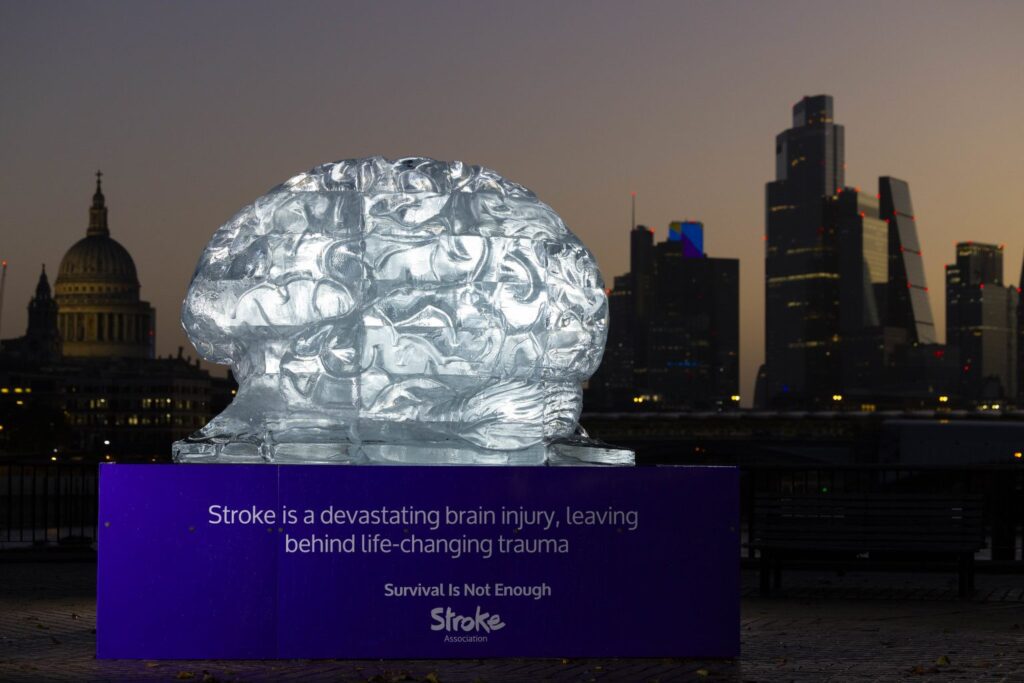
A brain made from ice stands on London’s Southbank, bringing an ordinarily hidden organ into public view. Its scale draws attention, while its material makes it feel vulnerable.
The installation launches “Survival Is Not Enough”, a Stroke Association campaign about the lasting effects of stroke and the need for long-term rehabilitation and support.
Unveiled on October 26, 2026, ahead of World Stroke Day, the sculpture invites people to think about what happens after someone survives.
A fragile material carries the message
Standing 2.5 metres tall, the sculpture was created using 8.5 tonnes of ice over 150 hours. Its design draws inspiration from the brain scans of five stroke survivors, including Tayshelice, who had a stroke aged eight.
Those personal connections give the installation a subject beyond its unusual construction. The brain represents people whose lives have changed, including someone affected in childhood.
Ice also gives the campaign an immediate visual language. The detailed form takes considerable work to create, yet the material remains delicate and temporary. That tension helps communicate how something so complex can also be vulnerable.


The campaign looks beyond the moment of survival
Research commissioned by the charity found that 32% of UK adults did not know a stroke is a brain injury. Meanwhile, 22% believed recovery takes a few months or less.
“Survival Is Not Enough” addresses that gap in understanding. Its message asks audiences to recognise the continuing challenges survivors face and the support required to rebuild their lives.
Actor Josh Whitehouse unveiled the installation. His father survived a stroke almost 20 years ago and lives with aphasia, which affects his ability to communicate. His involvement connects the public display to a family’s experience over many years.
A public sculpture opens a longer conversation
The installation is on display at Southbank’s Observation Point on October 26 and 27.
The wider campaign also supports Trauma: My Broken Brain, a two-part Channel 4 documentary made in partnership with the charity. It follows three young adults after life-threatening strokes.
Together, the sculpture and documentary work at different levels. The installation gives passers-by a reason to stop. The documentary creates space to spend time with individual experiences.
The campaign’s central request carries across both: recognise that saving a life is the beginning of a recovery journey that needs continued support.
Credits
Organisation: Stroke Association. Installation concept: Stream Media Group. PR: Taylor Herring. Campaign spokesperson: Josh Whitehouse.
About the work
Campaign details
- Brand
- Stroke Association
- Agencies
- Stream Media GroupTaylor Herring
- Country
- United Kingdom
- Occasion
- World Stroke Day
- Year
- 2026
Related
More in Outdoor


Popular
Popular posts

More stories