Outdoor
See Things You Could Only Imagine: National Geographic turned Washington into its first exhibit
 By Archit
·
·
4 min read
By Archit
·
·
4 min read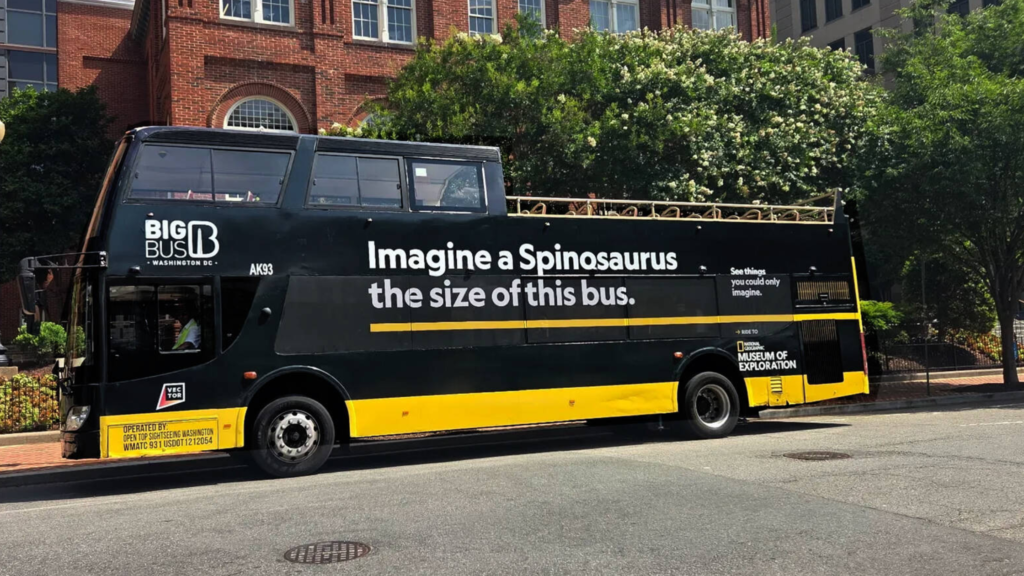
Washington, D.C. never stopped being a city. National Geographic simply asked people to see it differently. An escalator became the height of a wave in the Drake Passage. A city bus became the length of a Spinosaurus. A metro tunnel became a walk through Peru’s cloud forest. Before anyone stepped inside the National Geographic Museum of Exploration, they had already started exploring.
That is the idea behind See Things You Could Only Imagine, an outdoor campaign by Terri & Sandy to launch the National Geographic Museum of Exploration. Instead of filling billboards with photographs from distant places, the campaign transformed familiar spaces into reminders of just how extraordinary the world really is.
The City Became the Museum
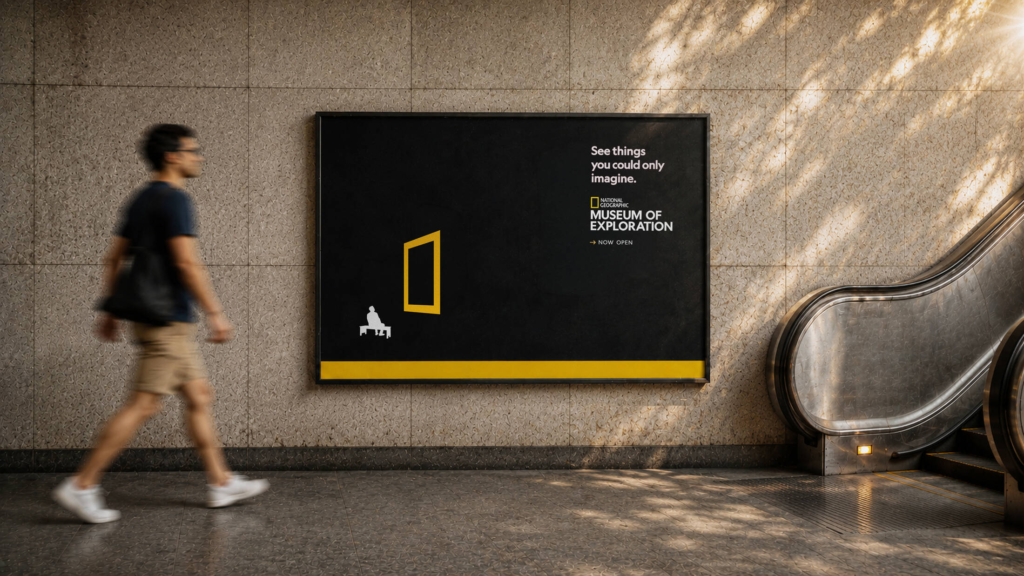
The Museum of Exploration is built around one promise. It brings visitors closer to places, people and discoveries that most of us will never experience first-hand.
The campaign found a simple way to introduce that idea before visitors reached the front door.
Instead of describing what was inside the museum, it turned Washington itself into the first gallery. Subway stations, sidewalks, buses and public walkways became part of the exhibition. Every installation invited people to compare an everyday object with something they could normally only imagine.
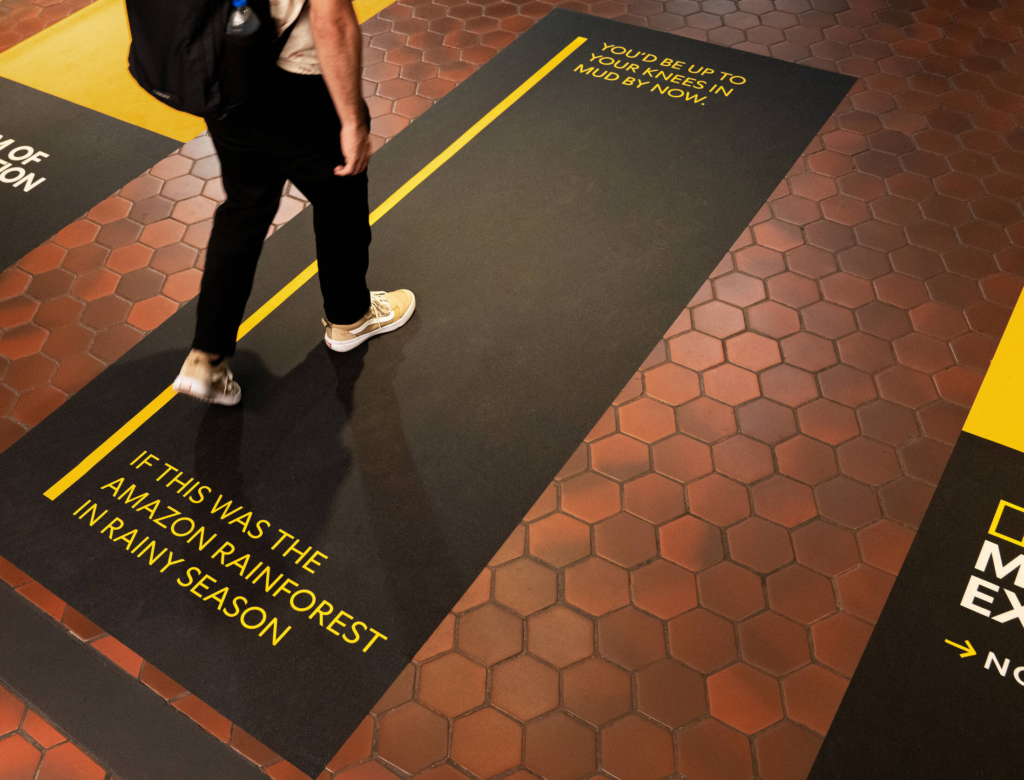
That shift changed the role of outdoor advertising. The campaign was no longer pointing people towards a destination. It was already giving them a small taste of it.
Measuring the Impossible
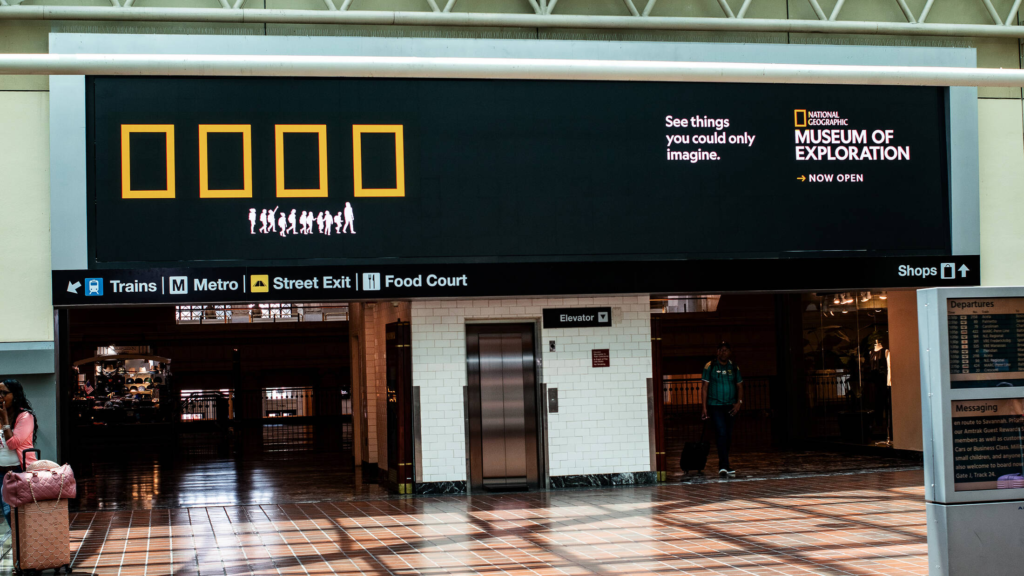
National Geographic’s yellow frame has always represented curiosity. Here, it became something else. It became a measuring tool.
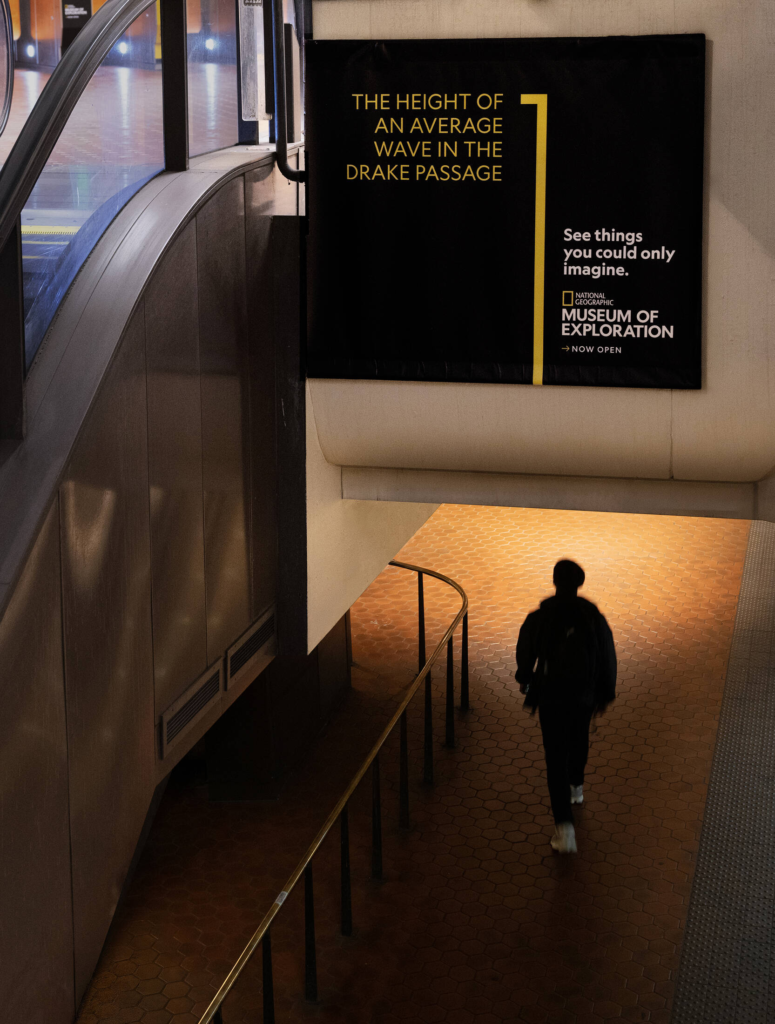
A yellow line stretched up an escalator to show the height of an average wave in the Drake Passage. A floor graphic marked how deep the mud would be during the Amazon rainforest’s rainy season. A city bus carried the message, “Imagine a Spinosaurus the size of this bus.” Pillars inside metro stations compared the height of explorer Sylvia Earle with the height of her armoured diving suit.
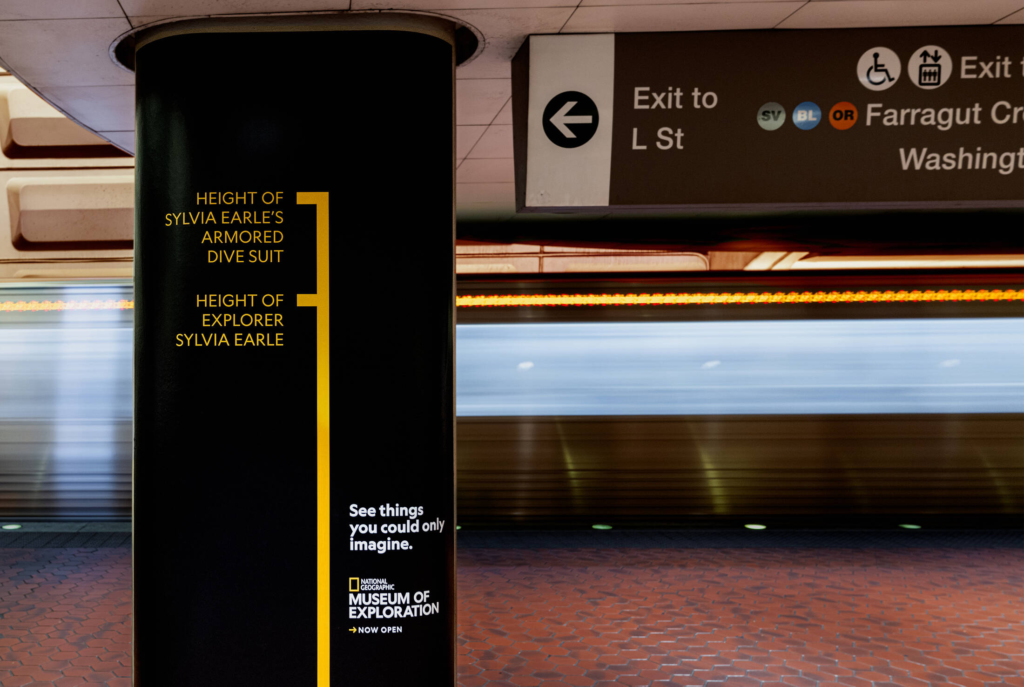
Meanwhile, another installation imagined a station tunnel as a path through Peru’s cloud forest, explaining that it could contain more living organisms than Earth’s human population.
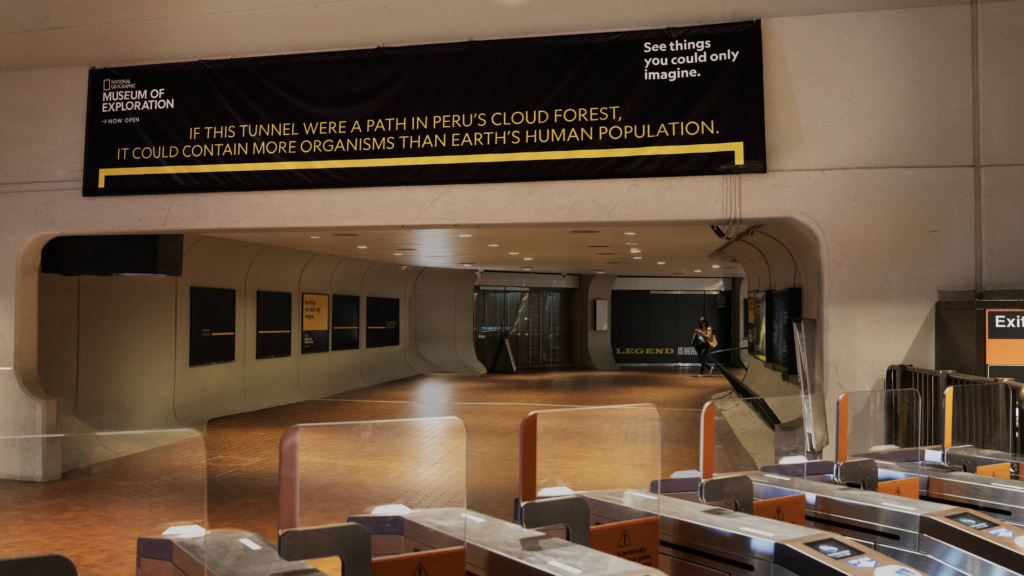
Each comparison borrowed its scale from the place where people were already standing. The surroundings did half the storytelling.
Every Placement Earned Its Space
Good outdoor advertising should only work where it has been placed. This campaign understood that from the beginning.
The bus execution only makes sense because a bus is something everyone instinctively understands. The floor graphics only work because people physically walk across them. The escalator naturally exaggerates height, making it the perfect place to talk about towering ocean waves. Even the station tunnel becomes more interesting because commuters already experience its full length every day.
Nothing feels interchangeable. Move these executions somewhere else and much of the idea disappears.
That attention to placement makes the campaign feel less like a collection of posters and more like a city-wide installation.
What Made It Different
National Geographic did not ask people to imagine impossible places from scratch. Instead, it anchored every fact to something sitting right in front of them.
That small change makes the campaign remarkably easy to understand. People already know the size of a bus. They already know how long an escalator feels. By comparing those familiar objects with distant landscapes, giant prehistoric animals and famous explorers, the campaign gives abstract facts a physical shape.
The Museum of Exploration promises to make the world’s biggest stories feel closer. See Things You Could Only Imagine starts doing exactly that long before visitors buy a ticket. For a few moments, Washington itself becomes part of the exhibition.
Credits
See Things You Could Only Imagine (2025) — National Geographic Museum of Exploration, Washington, D.C. Agency: Terri & Sandy, New York. Chief Creative Officer: Matt Curry. Executive Creative Director: Will Hodge. Creative Directors: Nate Costello and Aaron Thompson. Art Director: Morgan Lott. Copywriter: Matt Krassner. Media and production credits should be confirmed before publication.
Related
More in Outdoor

Popular
Popular posts



More stories