Outdoor
KFC Out-Doors: KFC removed restaurant doors to prove it stayed open
 By Archit
·
·
5 min read
By Archit
·
·
5 min read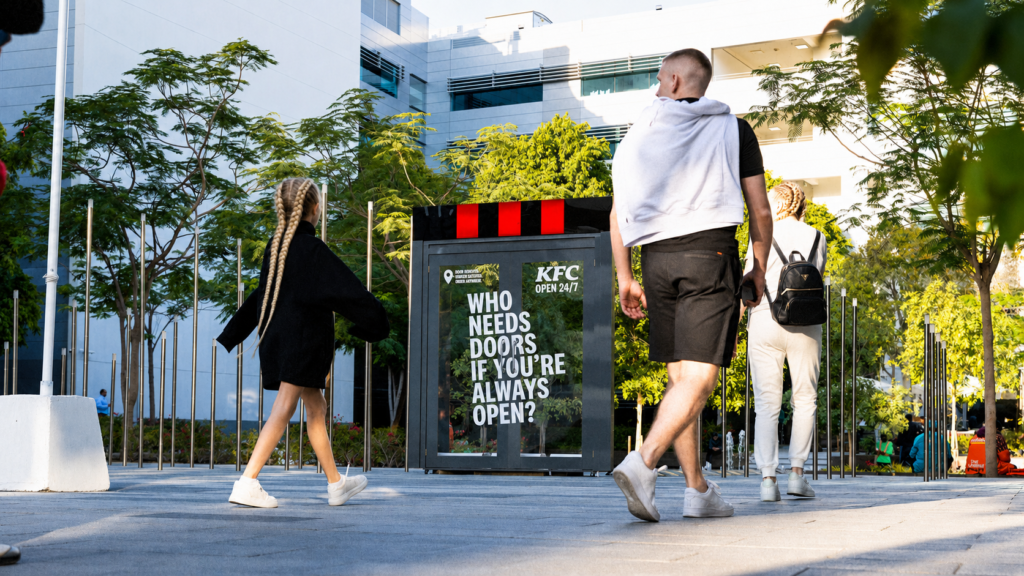
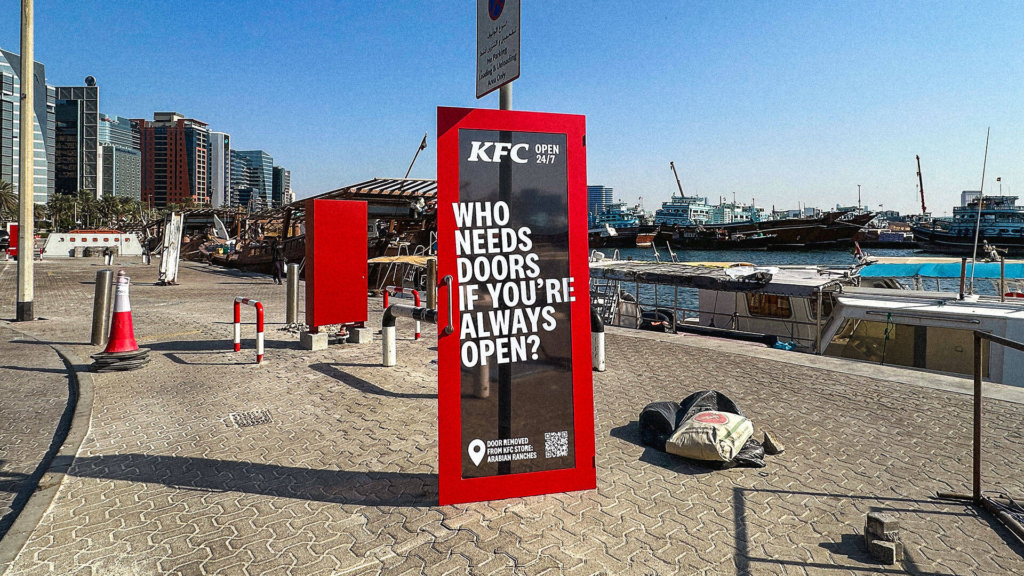
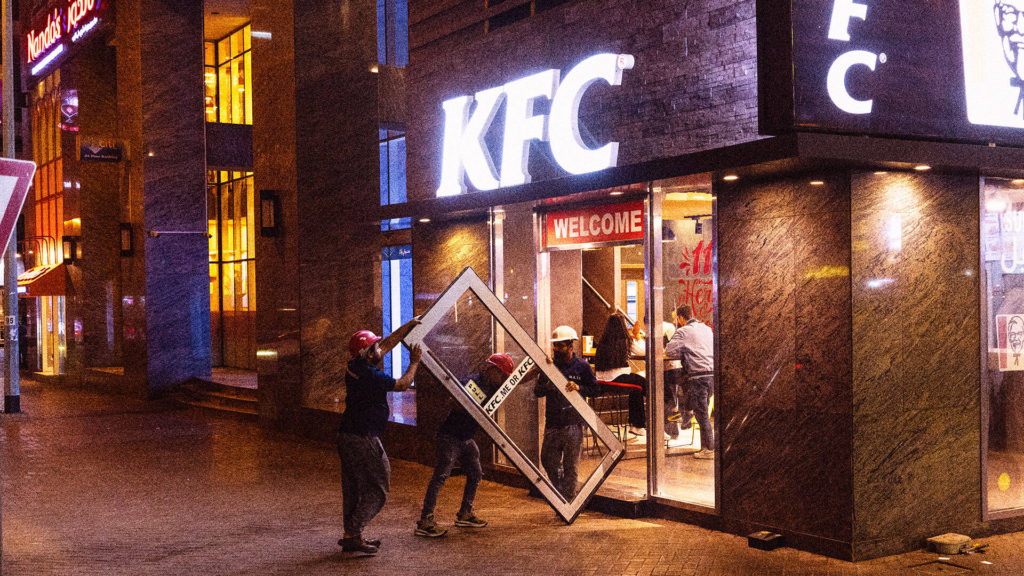
In January 2025, KFC removed the doors from selected restaurants in the UAE. The locations had begun operating around the clock, so the entrances no longer needed to signal a closing time. TBWA\RAAD turned those former doors into outdoor advertisements for KFC Out-Doors.
The restaurants supplied the proof. The removed doors carried it into the city.
The Announcement Became Physical
KFC wanted people to know that more of its restaurants were open 24 hours a day.
The message was especially relevant after midnight, when customers needed to know which food outlets were still serving. However, another advertisement carrying the words “open 24/7” could easily disappear among signs making the same promise.
TBWA\RAAD looked at the object that usually marked the end of service.
A locked door tells customers that a business has closed. If the restaurant never closes, that door loses its most familiar purpose.
KFC therefore removed it.
The change turned the operating hours into something customers could see before reading a headline. An open entrance remained where the door had once been. Meanwhile, the original door was prepared for a second life away from the restaurant.
The Doors Became Billboards
The removed doors were placed at busy intersections and popular public locations.
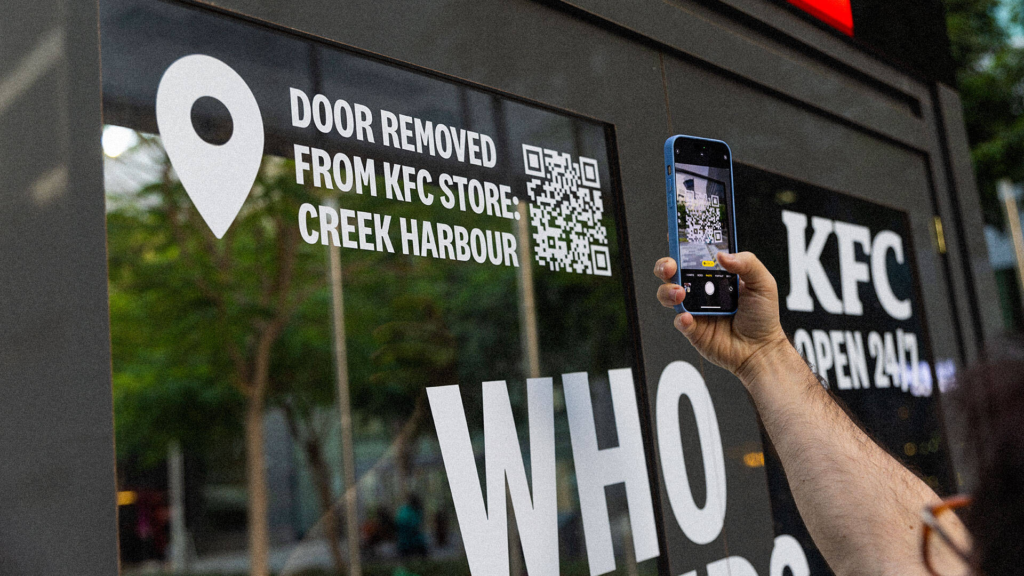
Each one carried the message “Who needs doors when you never close?” KFC branding, location information and a QR code completed the installation.
Some executions also named the restaurant where the door had originally stood. One identified KFC Creek Harbour, giving the outdoor object a direct connection to a real 24-hour location.
That detail helped the campaign feel less like a prop. These were presented as doors taken from working restaurants, then repurposed to announce the change in service.
Their proportions also gave the installations an unusual presence. A standard outdoor poster belongs on a wall or inside a media frame. A restaurant door standing by itself looked like an object that had escaped from a building.
People could walk around it, photograph it and inspect the message at close range. The campaign therefore worked as outdoor media and as a physical curiosity.
The QR Code Gave the Door a Direction
The doors did more than announce that KFC stayed open.
Each installation carried a QR code that directed people towards a nearby 24-hour restaurant. The code also offered a free product that could be redeemed at the participating location.
That gave the stunt a clear next step. Someone seeing a door late at night could scan it, find an open KFC and travel there immediately.
The door became a signpost for the restaurant that no longer needed it.
Furthermore, the system connected each public installation to KFC’s wider late-night push. The campaign was not saying that every restaurant everywhere operated continuously. It helped customers identify the relevant locations.
The physical object created attention. The phone supplied directions. Finally, the restaurant completed the experience.
The Restaurant Kept Repeating the Idea
The campaign continued working after the outdoor installations had been seen.
Anyone visiting one of the participating restaurants could notice the missing door and understand the same message from the other side. The open entrance showed that closing time had disappeared from that location.
That made the restaurants part of the media system.
A poster can claim that a business is always open. KFC changed the building so it appeared ready to receive customers at any hour.
The idea also fitted the late-night occasion without relying on images of empty streets or clocks showing 2 am. The missing door carried the time message throughout the day.
After seeing the campaign once, customers could also recognise the meaning when passing another doorless KFC. The execution taught people to read part of the restaurant itself as advertising.
The Craft
KFC Out-Doors used one object for the message, media and customer journey.
The door had once closed the restaurant. After its removal, it announced that the restaurant no longer closed. Once placed in public, it directed people back towards the open location.
That circular journey gave the idea its strength.
The campaign did not create an oversized model or photograph a door for a conventional billboard. It reused the physical item associated with the operating change.
There are no publicly reported sales or traffic results attached to the work. Still, the product message is complete without them. People only need to see the object and read one sentence to understand what changed.
KFC announced that its doors would stay open by taking them away completely.
Credits
KFC Out-Doors (2025). KFC, United Arab Emirates. Agency: TBWA\RAAD. Managing Director: Joe Lahham. Executive Creative Directors: Santiago Cuesta and Frederico Roberto. Creative Director: Rodrigo Scapolan. Art Director: Ricardo Vallejo. Copywriter: Jaime Ludeña. Senior Art Director: Diogo Seibert. Senior English Copywriter: Sanele Ngubane. Strategy: Cathrine Bannister and Ramez Rahal. Media: Hearts & Science. Production: BKP Production. Executive Producer: Martin Velkov. Photography: Leo James.
Related
More in Outdoor

Popular
Popular posts


More stories