Outdoor
Bookboards: KAYAK turned group chat delays into personal billboards
 By Archit
·
·
5 min read
By Archit
·
·
5 min read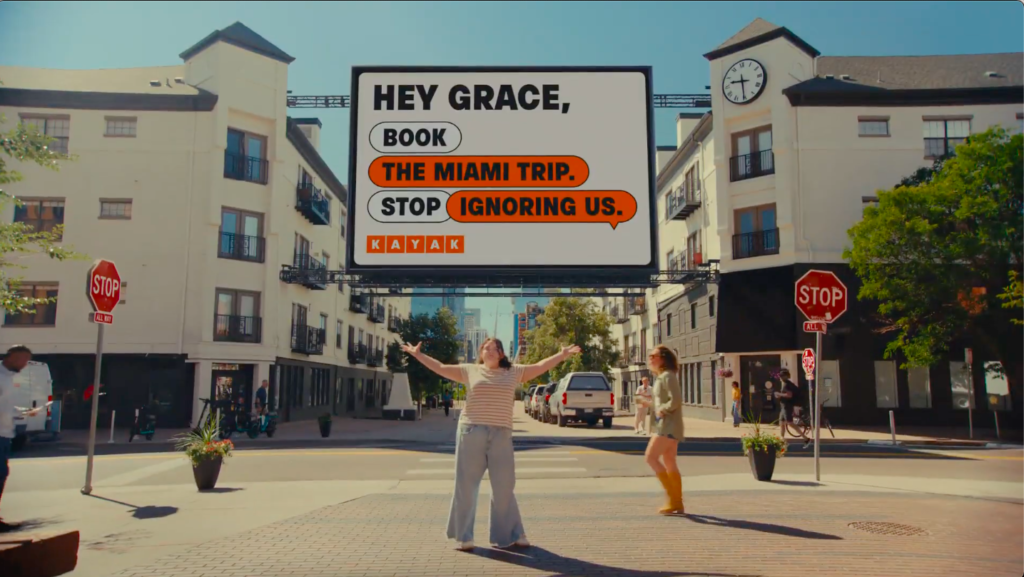
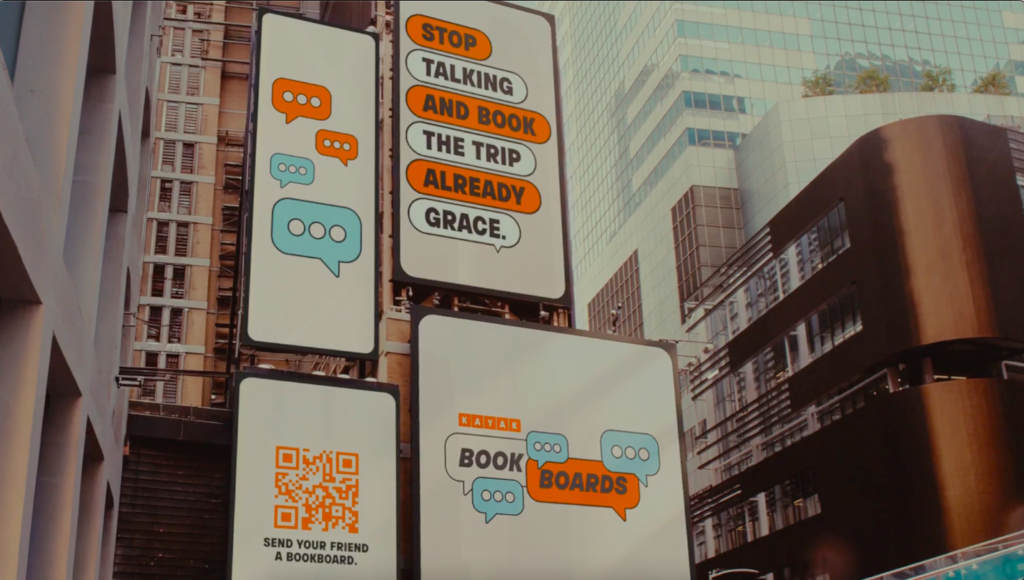
In July 2026, KAYAK invited travellers to nominate the friend who kept delaying their group trip. Selected names would then appear on digital billboards across New York, Chicago and Los Angeles. Created by Rethink New York, Bookboards moved the booking reminder out of the group chat and placed it where it became much harder to ignore.
The campaign took a familiar travel problem and increased the size of the message.
The trip was stuck in the chat
Group trips often begin with excitement. Someone shares a destination. Another person starts checking flights. Dates are suggested, hotels are posted and the chat fills with promises.
Then one person stops answering.
A survey of 2,000 US adults commissioned for the campaign found that 84 percent had experienced a group trip that never moved beyond planning. Furthermore, 90 percent blamed the delay on one person who would not commit.
KAYAK turned that holdout into the centre of the campaign.
Friends could visit the Bookboards website, choose a destination and nominate their group chat. They could also identify the person who needed the strongest reminder.
After that, KAYAK selected submissions for digital outdoor placements during August. The boards appeared in the nominated city, with an additional appearance in Times Square for selected entries.
The booking reminder was no longer another message among hundreds. It had become part of the city.
A private joke became public media
The idea worked because the outdoor message belonged to a real group of friends.
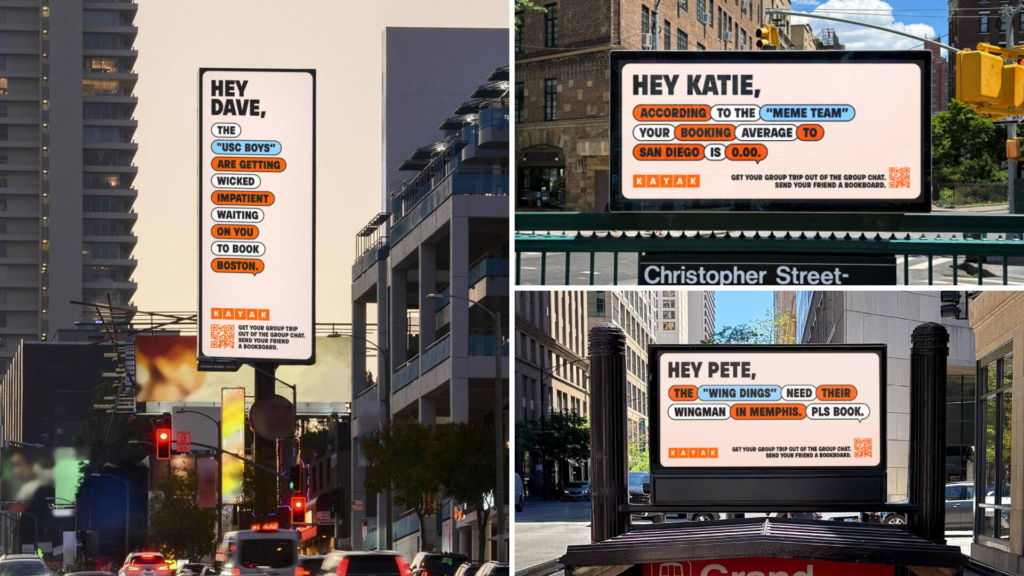
Each Bookboard used a personalised callout rather than a general line about planning travel. The name, destination and group dynamic gave the poster meaning for the people involved. Meanwhile, passers-by could recognise the wider situation without knowing them.
That balance gave KAYAK two audiences.
The first was the nominated friend, who received a very large request to make a decision. The second was everyone passing the screen who had their own unfinished trip sitting inside a chat.
The campaign also placed the boards near neighbourhoods and workplaces connected to the people selected. As a result, the media felt less like a random prize and more like a message following someone through daily life.
Personalisation is often hidden inside an email, app notification or digital advertisement. Bookboards made it physical, local and visible to strangers.
The film made every surface a Bookboard
A comedy film introduced the idea through real-life friends and performers Grace Reiter and Julia Dicesare.
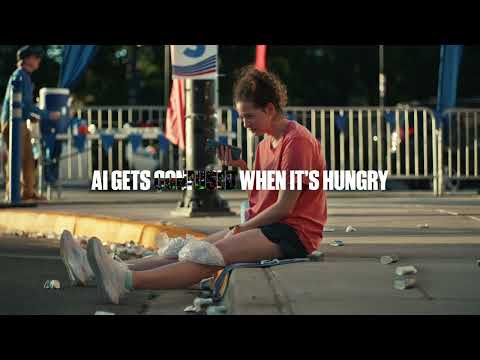
In the film, Grace begins seeing booking reminders everywhere. They appear at bus stops and across Times Square. However, the messages soon escape normal advertising spaces. A reminder reaches her through latte foam, while another appears through a barking dog.
The growing absurdity turns the group chat into something that follows her through the real world.
Julia eventually reveals that Grace is the friend who has been delaying the trip. The film then directs viewers towards the nomination site, where they can send the same kind of pressure towards someone in their own group.
The impossible examples give the film its humour. Meanwhile, the real digital boards make the final offer believable.
That connection keeps the film from becoming a separate joke attached to an outdoor campaign. It shows an exaggerated version of what KAYAK is genuinely offering.
From pressure to planning
Bookboards arrived alongside tools designed to help groups move from discussion towards an actual booking.
KAYAK introduced a Group Trip option within Explore, allowing travellers to compare destinations suited to larger parties. Its Trips tool can also hold shared itineraries and allow several people to edit the same plan.
Those tools deal with the practical work that begins after someone finally agrees to travel.
The billboards solve a different part of the problem. They create a moment when the group must either commit or admit that the trip is not happening.
That gives KAYAK a useful role inside the story. The brand does not choose the destination or force anyone to travel. It helps groups compare the options once everyone has stopped delaying the decision.
The outdoor message creates urgency. The platform provides the next step.
What Made It Different
Bookboards turned personalisation into a public event.
A standard travel advertisement might show a beach, city or hotel. This campaign showed the person preventing everyone else from reaching it.
The idea also matched its audience behaviour. The problem began in a group chat, where reminders were easy to overlook. KAYAK moved the same message into a format built to be noticed.
It is still too early to know how many nominated trips will reach the booking stage. The billboard rollout is continuing through August, and no campaign results have been released.
Still, the idea is clear before any numbers arrive.
A message inside the chat could be ignored. The same message above the street demanded an answer.
Credits
Bookboards (2026). KAYAK, United States. Agency: Rethink New York. Chief Creative Officer: Tara Lawall. Brand Lead: Carolina Montenegro, Senior Vice President of Global Brand Marketing at KAYAK. Talent: Grace Reiter and Julia Dicesare. Media: digital outdoor placements across New York, Chicago and Los Angeles.
Related
More in Outdoor

Popular
Popular posts


More stories