Case Studies
The Meal: McDonald’s removed the Happy Meal smile so children could show every emotion
 By Archit
·
·
6 min read
By Archit
·
·
6 min readAI-assisted
Quick summary
The idea: McDonald’s temporarily removed the famous smile from 2.5 million Happy Meal boxes across the UK during Mental Health Awareness Week in May 2024. Created by agencies Ready10 and Leo Burnett UK alongside BBC Children in Need, the campaign aimed to show children that they do not have to feel happy all the time.
The execution: The limited-edition boxes replaced the smile with a message that it is okay not to feel happy. Restaurants provided sticker sheets so children could select an emotion matching their mood and place it on the box. The campaign included a short film, a digital family hub, influencer partnerships, and donation options.
Why it matters: Research showed nearly half of UK children felt pressured to always appear happy. The campaign generated global attention, millions of impressions, and industry awards while encouraging real conversations between parents and children.
AI-generated from this article. For complete context and credits, read the full story.
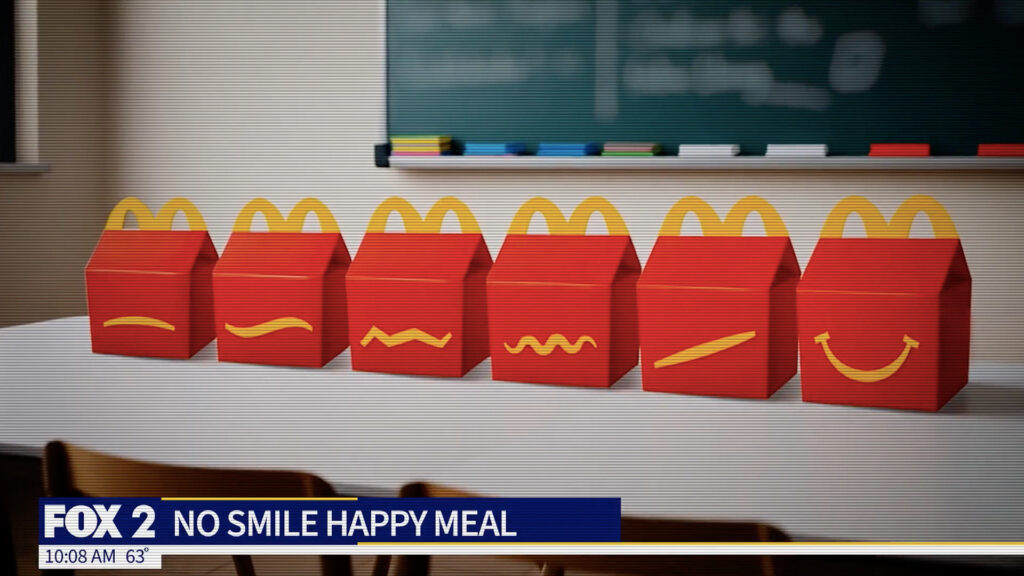
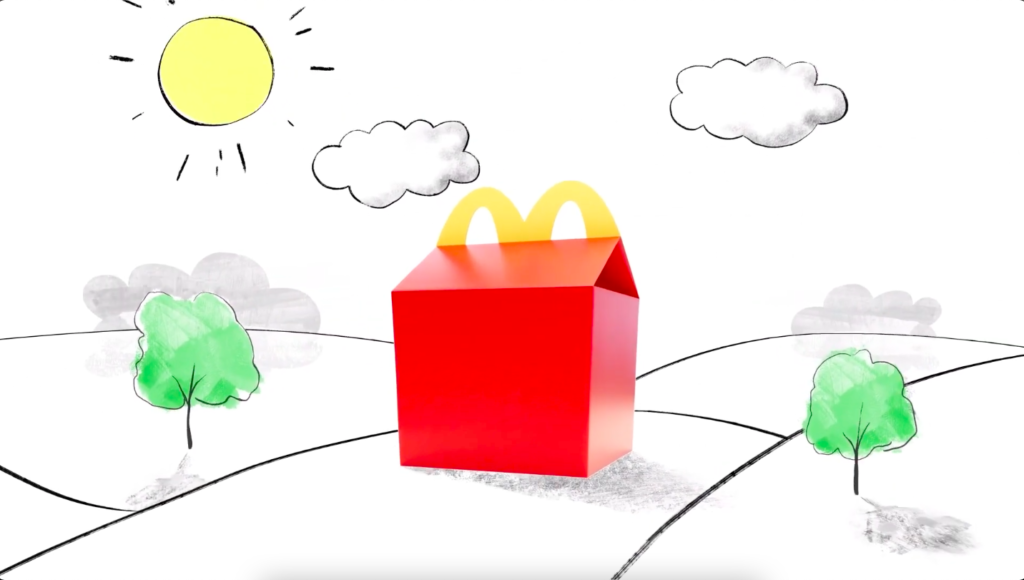
McDonald’s temporarily removed the famous smile from millions of Happy Meal boxes to tell children that they did not have to feel happy all the time.
Called “The Meal,” the UK campaign ran during Mental Health Awareness Week from 13 to 19 May 2024. It was created by Ready10 and Leo Burnett UK in partnership with BBC Children in Need.
The limited-edition box replaced the usual smile with a simple message about accepting different emotions. Children could then choose from a sheet of expressive stickers and place the face that best represented their feelings onto the box.
By changing one of its most recognisable brand assets, McDonald’s turned an ordinary family meal into an opportunity for a more honest conversation.
Research revealed pressure to appear happy
The campaign responded to research showing that many children feel expected to maintain a positive appearance, even when that does not reflect their real emotions.
In a survey of 2,085 UK parents and children aged five to ten, 48% of children said they felt pressure to be happy all the time, even when they did not want to be.
The research also revealed how parental expectations can unintentionally contribute to that pressure. Almost three-quarters of parents said it was important to stop their children from feeling sad, while 63% said they always encouraged their children to be happy.
These findings gave the campaign a clear purpose. It was not arguing against happiness. It was showing families that sadness, worry, anger and uncertainty are also normal parts of childhood.
The Happy Meal lost its famous smile
McDonald’s removed the smile from 2.5 million limited-edition boxes distributed across more than 1,400 UK restaurants.
The change was small enough to be immediately understood but significant enough to attract attention. The Happy Meal name and smile had always promised a positive experience. Removing them created a visible absence that encouraged people to ask why.
The redesigned packaging carried the message, “It’s okay not to feel happy all the time.”
This allowed McDonald’s to use its own branding to challenge the expectation contained within it. The campaign did not introduce an unfamiliar symbol or create a separate educational product. It used a box already recognised by millions of children and parents.
Emotion stickers gave children control
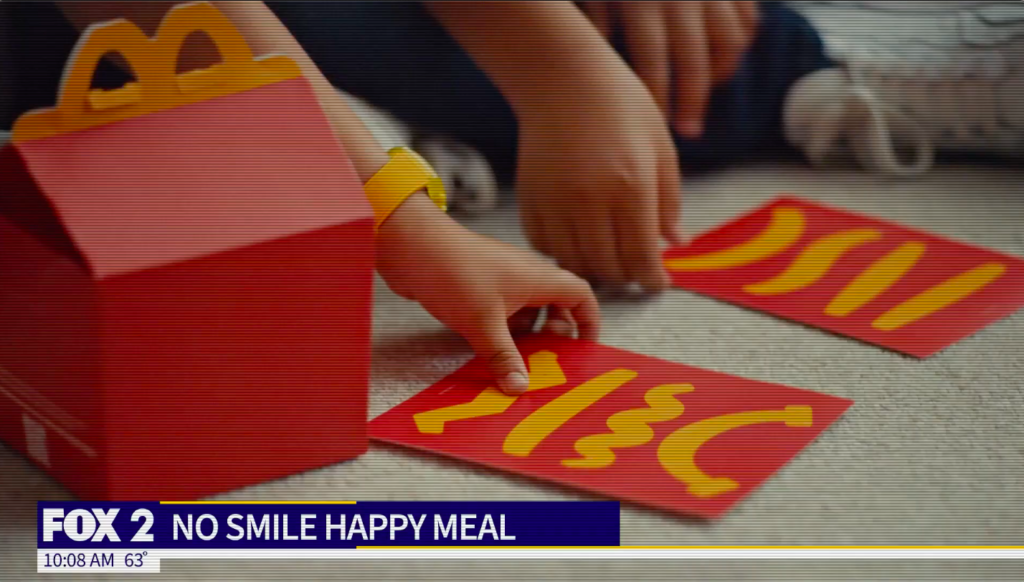
Selected restaurants provided sticker sheets featuring several different facial expressions.
Children could choose a sticker that matched their mood and attach it to the blank space where the Happy Meal smile would normally appear. This turned the packaging into a simple emotional communication tool.
A child who struggled to describe a feeling could begin by selecting a face. Parents could then use that choice to ask questions and start a conversation without demanding an immediate verbal explanation.
The stickers also avoided suggesting that there was one correct emotion. Every expression was presented as valid, supporting the campaign’s message that children should be able to acknowledge how they genuinely feel.
Children explained their emotions in the film
A two-minute campaign film showed children receiving Happy Meal boxes without the familiar smile.
The children reacted to the expressionless packaging before selecting emotion stickers and discussing the feelings behind their choices. Their responses demonstrated that childhood emotions are often more complex than adults assume.
Directed by Jake Mavity through Rogue Films, the film used children’s own observations instead of presenting the subject through clinical language. Footballer and broadcaster Rio Ferdinand provided the voiceover and supported the wider campaign through interviews, photography and social content.
As a father of five, Ferdinand also spoke about the importance of giving children the confidence to express their feelings and helping them understand that every emotion is acceptable.
The campaign extended beyond the packaging
McDonald’s and BBC Children in Need created a dedicated family hub containing resources to support conversations about emotional wellbeing.
Families could access the hub through a QR code printed on the limited-edition boxes, as well as through McDonald’s digital and social channels. Customers could also donate the cash value of their MyMcDonald’s Rewards points to BBC Children in Need through the McDonald’s app.
The campaign was supported through outdoor advertising, social media, streaming video and public relations. Parenting influencers were invited to discuss how they approached conversations about emotions within their own families.
This wider system ensured that the redesigned box was a starting point rather than the campaign’s entire response to a sensitive issue.
A family observation sparked the idea
The original insight came from an unexpected source.
During dinner, the 13-year-old daughter of Ready10 founder David Fraser observed that people eating Happy Meals were not always happy. Her comment exposed a simple tension inside one of the world’s most familiar product names.
Ready10 developed the initial idea and handled public relations, talent and influencer activity. Leo Burnett UK developed the creative executions and digital experience, while other partners supported media, production and customer communications.
The finished campaign kept the clarity of that original observation. Instead of trying to solve children’s mental health through advertising, it created a practical invitation for families to begin talking.
The Meal generated global attention
The campaign produced and sold 2.5 million redesigned boxes during its activation.
It received more than 2,000 pieces of media coverage and generated a reported eight billion impressions. Positive sentiment within news coverage reached 87%, while searches for Happy Meals increased by 75%.
Ready10 also reported that 40% of UK parents discussed the campaign with their child, friend or partner, indicating that the idea moved beyond recognition and into conversation.
“The Meal” received a Wood Pencil in the PR category at the 2025 D&AD Awards. It also earned recognition at other international creative awards, including a Bronze Lion in PR at Cannes Lions.
Its effectiveness came from changing something people already knew. By removing the Happy Meal smile, McDonald’s created space for children to add an emotion of their own.
Credits
Campaign: The Meal. Brand and client: McDonald’s UK. Charity partner: BBC Children in Need. Idea and public relations agency: Ready10. Creative and design agency: Leo Burnett UK. Chief Creative Officer: Mark Elwood. Executive Creative Directors: Andrew Long and James Millers. Creatives: Helen Rogerson and Owen Hunter Jenkins. Design team: Dave Allen, Danny Flint, Charlie Crosthwaite, Carmen Perez and Milan Mezi. Planner: Hamish Cameron. Production Company: Rogue Films. Director: Jake Mavity. Producer: Fred Bonham-Carter. Media Agency: OMD UK. CRM: Armadillo. Voiceover and campaign ambassador: Rio Ferdinand. Campaign period: 13 to 19 May 2024. Market: United Kingdom.
Related
More in Case Studies



Popular
Popular posts
More stories