Spotlight
Classic Porsche Ads: How one image and one sharp line sold the dream of owning a Porsche
 By Archit
·
·
6 min read
By Archit
·
·
6 min read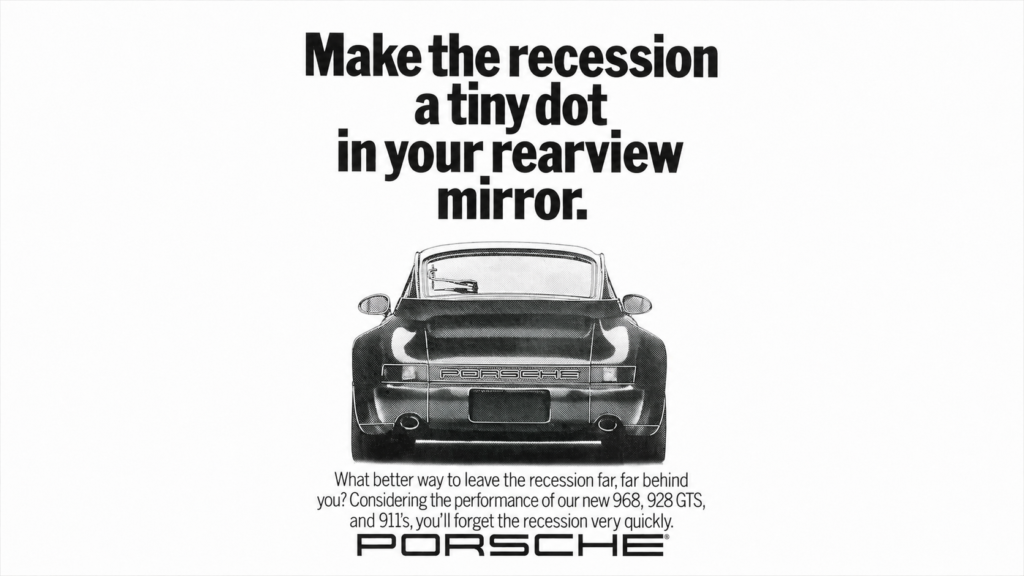
Classic Porsche advertisements continue to circulate decades after they first appeared.
The format was usually simple.
Show the car.
Write one confident headline.
Leave enough empty space for both to make an impression.
The best Porsche print ads did not fill the page with specifications or attempt to justify the purchase logically. They used humour, racing history and cultural recognition to reinforce one idea:
A Porsche was the car people had always wanted.
Not Every Viral Porsche Ad Is Real
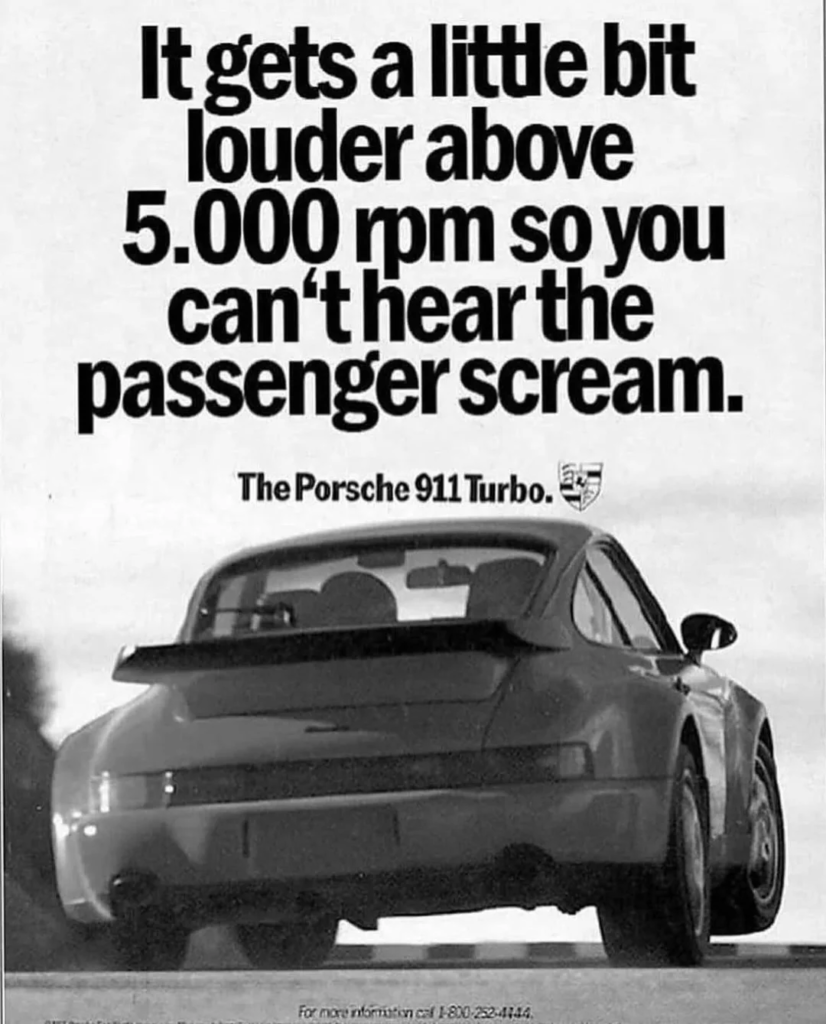
A Reddit gallery titled “Classic Porsche Ads” brought together 17 advertisements and poster designs associated with the brand.
However, the collection mixes authentic Porsche advertising with fan-made work, redesigned posters and images taken from other forms of entertainment.
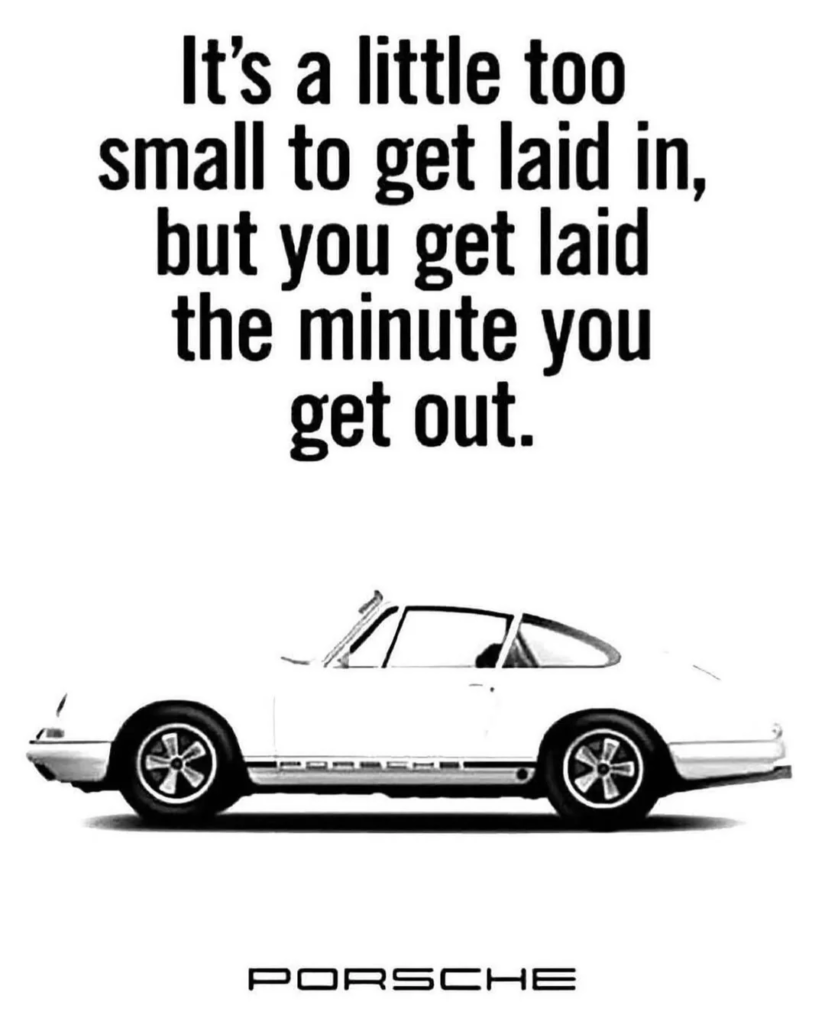
The first image provides the clearest example.
It shows a Porsche 911 beneath the line: “It’s a little too small to get laid in, but you get laid the minute you get out.”
The line was not created for an official Porsche campaign. It originated in the 1990 advertising comedy Crazy People, in which characters develop unusually honest advertisements. Someone later combined the dialogue with a photograph and Porsche branding to make it resemble a vintage print ad.
Other images in the gallery contain mismatched cars, altered typography and grammatical errors that would make their claimed origins difficult to verify.
The authentic Porsche ads remain strong enough without the imitations.
“Nobody’s Perfect” Turned a Race Result Into a Punchline
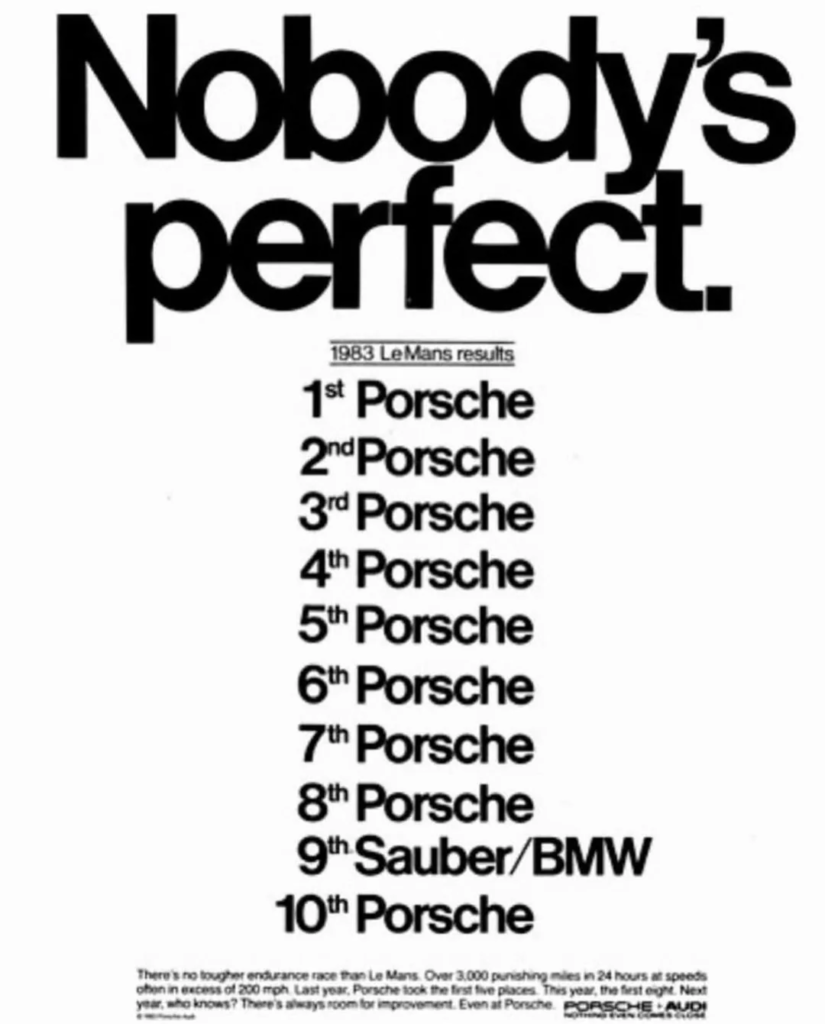
One of Porsche’s most famous advertisements followed the 1983 24 Hours of Le Mans.
Porsche-powered cars occupied first through eighth place and returned in tenth. The only interruption was a Sauber/BMW in ninth.
Rather than presenting the result with a conventional announcement about domination, Porsche used two understated words:
“Nobody’s perfect.”
The apparent admission of failure directed attention towards an extraordinary achievement. Porsche had missed only one position in the top ten, and the advertisement treated that single exception as an imperfection requiring an apology.
The race result supplied the proof. The headline supplied the personality.
Porsche did not need to claim that its engineering was superior. It printed the finishing order and allowed readers to reach that conclusion themselves.
Porsche Sold a Childhood Ambition
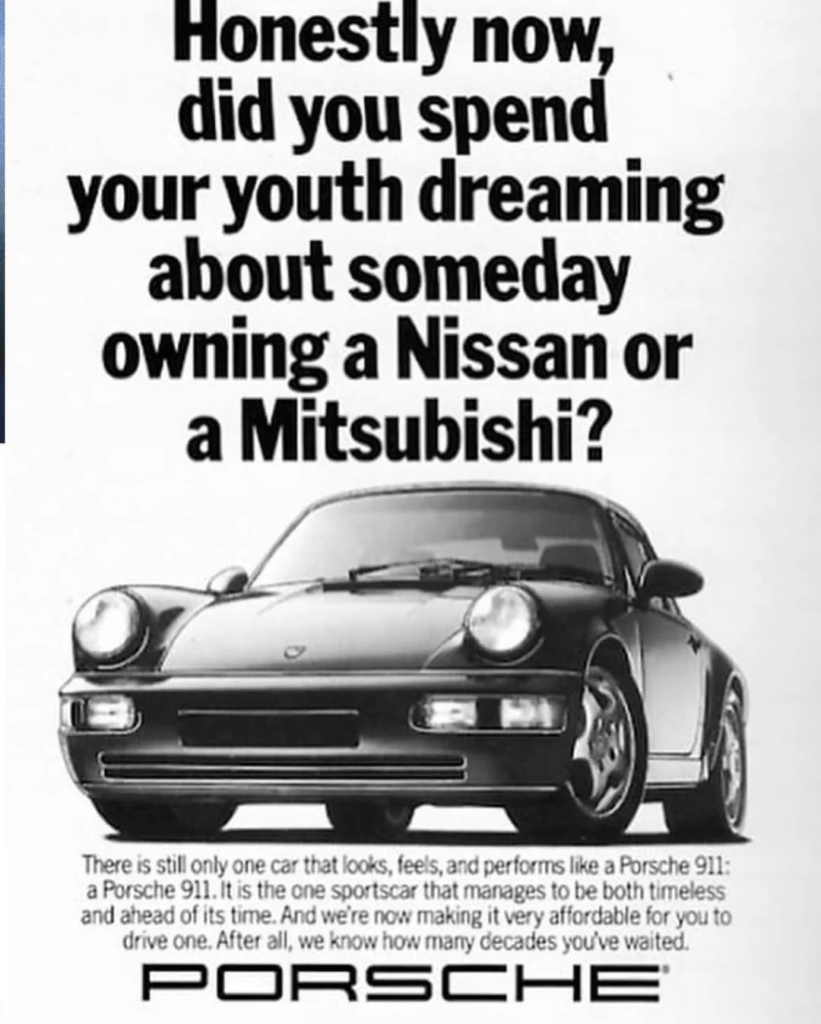
Another well-known execution asked whether people had spent their youth dreaming about owning a Nissan or Mitsubishi.
Created by Fallon McElligott for Porsche Cars North America, the advertisement was built around the cultural status of the Porsche 911.
For generations of car enthusiasts, the 911 had appeared on bedroom walls before it appeared in garages. Porsche used that history to position the purchase as the completion of a much older ambition.
The advertisement was not primarily comparing engines or performance figures. It was comparing emotional meaning.
Its message was that other manufacturers could sell sports cars, but Porsche had already occupied the customer’s imagination.
The brand had started selling the car years before the customer could afford it.
Missing Features Became Evidence of Performance
Porsche’s advertising also knew how to turn a potential weakness into a demonstration of purpose.
One advertisement for the lightweight 911 Carrera RS addressed its lack of air conditioning by suggesting that drivers could visit a track and lower the window at 160 mph.
Instead of apologising for excluding a comfort feature, the copy presented the decision as proof that the car had been built around performance.
The advertisement changed the frame of the conversation.
Air conditioning belonged to ordinary road cars. The Carrera RS belonged on a circuit.
Porsche was not asking the customer to overlook a compromise. It was inviting the customer to feel more serious about driving because of it.
“Kills Bugs Fast” Made Speed Visible
For the 993-generation 911 Turbo, Porsche used a photograph of the car’s front covered with insects and the headline “Kills bugs fast.”
The product demonstration had already taken place before the photograph was captured.
The dead insects became evidence of speed, while the language borrowed the tone of household insecticide advertising. That contrast made the message memorable without requiring the car to be shown moving.
Created by Goodby, Silverstein & Partners in San Francisco, the advertisement won three awards in 1996 and became a cult favourite among Porsche enthusiasts.
Porsche later reproduced it as an official Classic enamel sign, demonstrating how a temporary advertisement had become part of the brand’s collectable history.
Police Cars Demonstrated Reliability Differently
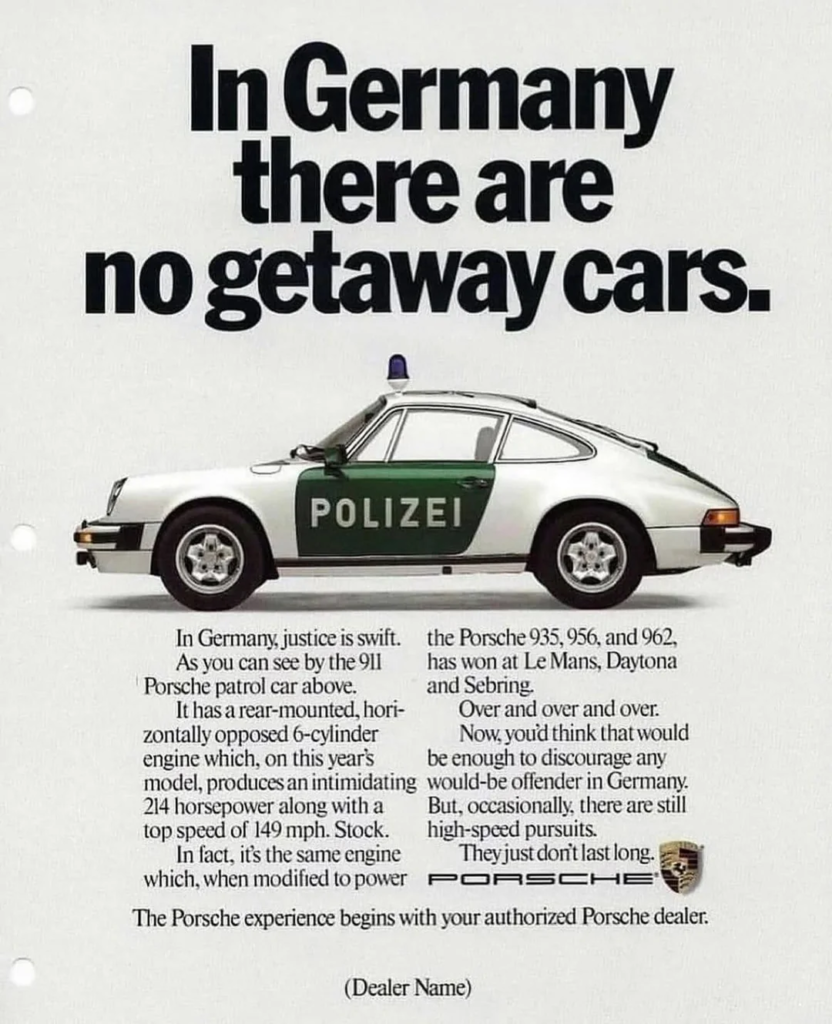
“In Germany there are no getaway cars” featured a Porsche being used by the German police.
The advertisement communicated speed and reliability through the vehicle’s role rather than a technical explanation.
A getaway car can only escape if the pursuing vehicle cannot catch it. Showing a Porsche in police livery turned that familiar crime-story convention into a product demonstration.
Like many of the brand’s strongest print ads, the execution did not explain the joke.
It trusted the reader to complete it.
The Product Usually Occupied Half the Page
Porsche’s classic print formula was remarkably consistent:
- One image of the car
- One central observation
- A restrained visual layout
- Copy that treated the audience as intelligent
- Technical evidence placed beneath an emotional headline
The simplicity was not an absence of information.
It was confidence in the product.
Porsche could show a racing result, an inconvenient feature, a police car or the remains of insects and allow each detail to communicate performance differently.
The advertisements rarely sounded like a manufacturer asking for attention. They sounded like a brand that assumed people were already interested.
The Ads Were Easy to Imitate
The same simplicity that made Porsche’s advertising memorable also made it easy to copy.
A photograph of a 911, a provocative sentence and a Porsche logo can quickly resemble an authentic historical advertisement. Fan-made posters are consequently shared alongside original work without clear attribution.
The Reddit discussion reflects that confusion. Several users questioned the authenticity of individual images, while others identified altered car models, inconsistent typography and material taken from films or video games.
For publishers, collectors and advertising archives, visual similarity is not enough to establish authenticity.
An advertisement should be supported by a period publication, an agency portfolio, an official Porsche archive or another reliable record before being described as genuine.
Why Porsche’s Classic Advertising Still Works
Porsche’s strongest print ads did not simply promote individual models.
They built a consistent attitude around the brand.
The cars were fast enough to catch criminals, focused enough to make comfort unnecessary and desirable enough to become childhood ambitions. Even overwhelming motorsport dominance could be presented as a minor failure.
The advertisements combined confidence with humour, but the humour was usually supported by something real: a race result, a design decision or a performance characteristic.
That is why the authentic ads still feel sharp decades later.
The copy delivered the personality.
The car provided the proof.
Credits
Brand: Porsche
Format: Print advertising
Markets: Primarily North America and Europe
Period: 1980s–1990s
Selected verified agency credits:
“Honestly now…”
Agency: Fallon McElligott
Client: Porsche Cars North America
“Kills bugs fast”
Agency: Goodby, Silverstein & Partners, San Francisco
Model: Porsche 911 Turbo, 993 generation
Recognition: Three advertising awards in 1996
“Nobody’s perfect”
Subject: Porsche’s result at the 1983 24 Hours of Le Mans
Sources: Porsche Centre Oakville, Porsche Newsroom, Reddit gallery
Related
More in Spotlight


Popular
Popular posts


More stories