
Case Studies
Child Wedding Cards: UN Women sent fictional wedding invitations to Pakistan’s lawmakers
 By Archit
·
·
6 min read
By Archit
·
·
6 min readAI-assisted
Quick summary
The idea: UN Women and IMPACT BBDO created fictional wedding invitations to confront Pakistani lawmakers directly with the issue of child marriage, transforming a culturally significant celebratory object into an urgent warning.
The execution: Girls aged five to 15, including a survivor of child marriage, created drawings that were turned into six regional invitation designs. On January 24, 2022, these cards were hand-delivered to National Assembly members and influencers, supported by a short film and social posts.
Why it matters: The low-budget direct-mail campaign reached over 25 million people, sparked public commitments from lawmakers who brought the cards into parliamentary debates, and contributed to ongoing legal reforms, ultimately winning major honors including the Cannes Lions Grand Prix for Good.
AI-generated from this article. For complete context and credits, read the full story.
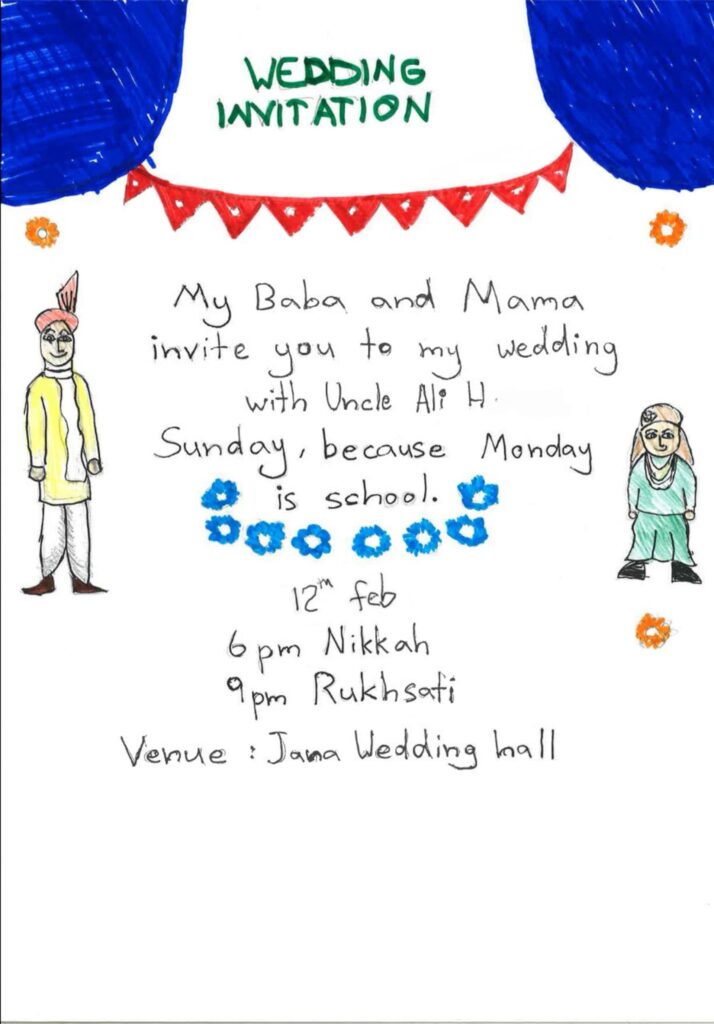
Wedding cards usually announce a celebration. UN Women used them to confront lawmakers with a wedding that should never take place.
“Child Wedding Cards” invited members of Pakistan’s National Assembly to the fictional marriage of a child. The invitations were created from drawings made by girls aged five to 15, including one who had already experienced child marriage.
IMPACT BBDO developed the campaign with UN Women Pakistan. Instead of addressing the general public first, the team delivered the cards directly to the people capable of changing the law.
A Celebration Became a Warning
Pakistan has the sixth-highest number of child brides in the world. UNICEF estimates that approximately 19 million girls in the country were married before turning 18.
Advocacy groups had spent years demanding stronger protections. However, changing the minimum marriage age remained legally and politically difficult.
UN Women needed to make the subject personal for lawmakers.
The campaign found its medium inside Pakistani wedding culture. Printed invitations are traditionally hand-delivered and treated with considerable social importance. Receiving one creates an expectation that the recipient will acknowledge the marriage.
“Child Wedding Cards” kept that sense of obligation while reversing its emotional meaning.
A lawmaker opening the envelope did not find an invitation to celebrate two adults. They found a card announcing the fictional wedding of a child.
The format placed the issue directly in the recipient’s hands.
Children Designed the Invitations
UN Women invited dozens of girls from different socioeconomic backgrounds to draw and sketch freely.
The participants were between five and 15 years old. One contributor was a child bride, connecting the campaign’s fictional invitations with a real experience of early marriage.
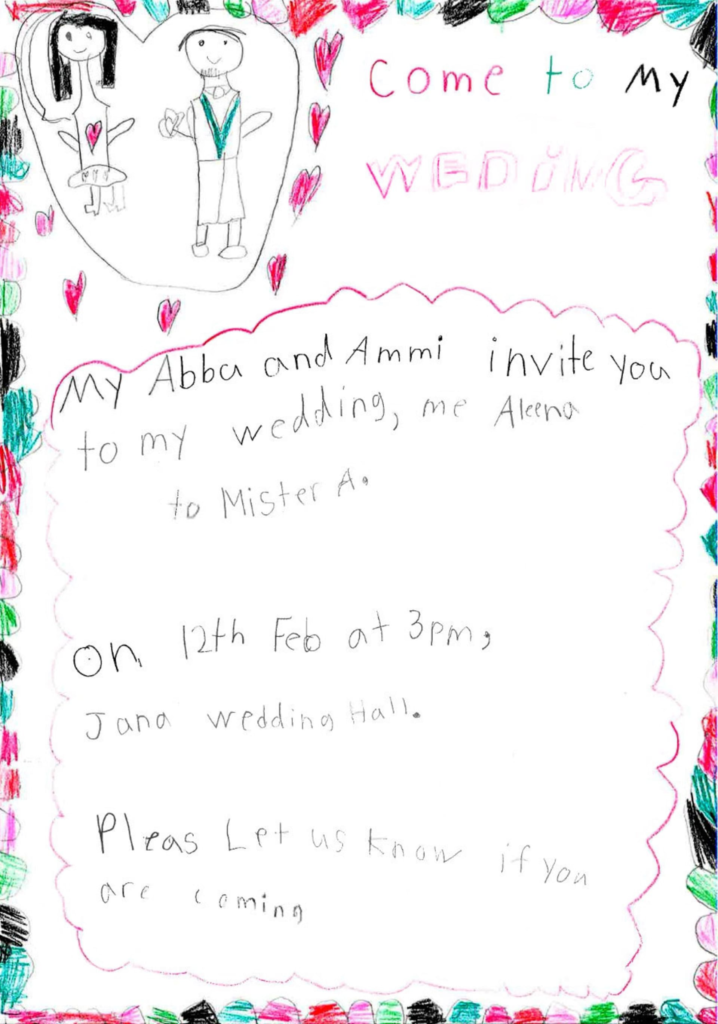
IMPACT BBDO combined their drawings into six finished wedding-card designs. Each represented a different province or region of Pakistan.
The illustrations deliberately retained the visual language of childhood. Colours, figures and handwritten details that might normally appear in a school notebook instead decorated invitations to marriage.
That contrast carried the message. The artwork showed that the imagined bride should still have been drawing, learning and playing.
The cards did not attempt to imitate adult design perfectly. Their emotional force came from looking unmistakably as though children had made them.
The One Show case study confirms that the designs were sent to members of the National Assembly, political leaders and other influential figures.
Direct Mail Reached the People With Power
The campaign records date the original activation to 24 January 2022.
Each invitation was delivered directly to a selected lawmaker or influencer. A short film showed children drawing and assembling the cards, while social posts allowed the idea to travel beyond Parliament.
This was a highly targeted campaign rather than a large advertising rollout. The complete production reportedly cost less than $1,500.
That limited budget shaped the strategy. UN Women did not need to buy enough media to reach the entire country before reaching decision-makers. It used individual cards to begin with the people who could influence legislation.
The response arrived quickly.
More than a dozen lawmakers publicly joined the campaign. Several recorded videos while holding the cards and asked other politicians to support stronger protections against child marriage.
The invitations then appeared inside a National Assembly session, where lawmakers displayed them while demanding that the minimum marriage age be raised to 18.
The physical card had moved from a child’s drawing table into the country’s legislative debate.
The Campaign Reached Beyond Parliament
The lawmakers’ responses gave the campaign a second life through news coverage and social media.
According to LBB’s report on the campaign, dozens of political figures spoke publicly and the resulting conversation reached more than 25 million people.
The campaign film extended the emotional effect of the cards. Director Asma Humayun kept the children’s identities hidden while showing their hands painting and drawing. This protected the participants while keeping their contribution at the centre of the story.
Zohaib Kazi’s music supported the film without turning the children’s experiences into spectacle. The cards remained the main evidence.
Together, the physical invitations and film allowed the campaign to work at two different scales. Direct mail created a personal confrontation for lawmakers. Digital distribution made their response visible to the public.
The Court Ruling Requires Careful Context
Campaign summaries frequently state that “Child Wedding Cards” helped change Pakistan’s child-marriage laws. The outcome is significant, but the legal distinction matters.
On 6 March 2023, Pakistan’s Federal Shariat Court dismissed a challenge to the Sindh Child Marriage Restraint Act. That provincial law established 18 as the minimum marriage age for both girls and boys in Sindh.
The court ruled that allowing the state to set a minimum age of 18 was not contrary to Islamic injunctions. The decision removed an important religious-law objection that had repeatedly complicated attempts at reform. The Federal Shariat Court lists the judgment among its leading decisions.
However, the ruling did not immediately create one nationwide marriage age of 18. It upheld Sindh’s law and established that such a minimum was religiously permissible, giving lawmakers elsewhere a stronger foundation for future legislation.
Further changes followed through longer-running advocacy. In 2025, Pakistan introduced a new law setting 18 as the minimum marriage age for both sexes in the Islamabad Capital Territory. Other provinces continued considering or introducing their own reforms.
Therefore, it is reasonable to describe “Child Wedding Cards” as part of the pressure that moved the issue through Parliament and strengthened public support. It should not be treated as the only cause of the court decision or every later legal change.
Its clearest documented result is that lawmakers received the cards, publicly committed themselves to the issue and used the campaign material during legislative advocacy.
Recognition Followed the Impact
“Child Wedding Cards” received the Lions Health and United Nations Foundation Grand Prix for Good at Cannes Lions 2024. The official Cannes Lions announcement identified the campaign as that year’s Grand Prix recipient.
D&AD awarded the work a 2024 Graphite Pencil in Impact. The campaign later received Best of Non-Profit and two Gold Pencils at The One Show 2025.
The awards recognised more than the appearance of the cards. The campaign used design as a form of access.
Statistics explained the size of child marriage in Pakistan. The invitations made an individual lawmaker imagine receiving notice of one specific child’s wedding.
UN Women transformed a respected cultural object into evidence that something was wrong. Then it delivered that evidence to the people with the authority to respond.
Credits
Client: UN Women
Campaign: Child Wedding Cards
Agency and Design Agency: IMPACT BBDO Dubai
Production Company: Shiny Toy Guns, Karachi
Chief Creative Officer: Ali Rez
Executive Creative Director: Atiya Zaidi
Creative Director: Rana Sadek
Associate Creative Directors: Moiz Khan and Osama Siddiq
Art Directors: Jithesh Narayanan and Hassaan Aftaab
Copywriters: Aunindo Sen, Archna Singh and Tamara Pinto
Designer: Atif Pasha
Strategist: Eya Benzaied
Director: Asma Humayun
Director of Photography: Kohi Marri
Motion Designer: Shoaib Ahmed
Music Director: Zohaib Kazi
Market: Pakistan
Launch: January 2022
Related
More in Case Studies



Popular
Popular posts


More stories