Spotlight
CringeMart: DoorDash built a store for purchases people avoid making in public
 By Archit
·
·
5 min read
By Archit
·
·
5 min read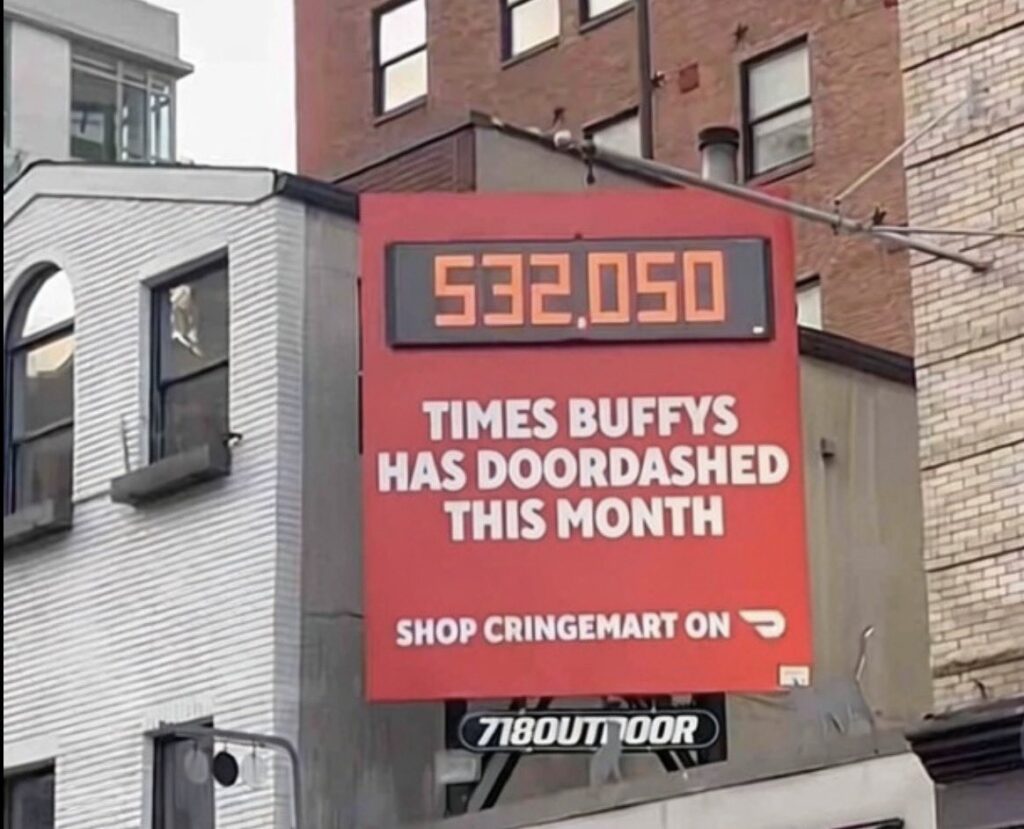
In August 2026, DoorDash opened CringeMart, an in-app store for the products people may feel awkward carrying to a checkout. Condoms, UTI tests, laxatives, toilet paper and other personal essentials were organised around situations customers might prefer to handle privately. Creative studio Loop launched the idea with a hidden-camera series starring Tana Mongeau.
The products were ordinary.
Buying them in front of other people was the uncomfortable part.
The checkout created the problem
There are purchases people need but may not want to explain.
A packet of condoms can attract an unwanted comment. Hemorrhoid cream can suddenly feel very visible on a conveyor belt. Meanwhile, a UTI test or emergency plunger can become more personal than the customer intended once another person is standing behind them.
DoorDash already delivered many of these products.
Its own data showed that more than four million customers ordered what the company classified as awkward essentials between April 2025 and April 2026. A condom was ordered every 37 seconds, while two laxatives were ordered every minute.
One customer placed more than 659 orders from the category during the year.
Those numbers suggested that privacy was already part of the reason people used delivery for more than food.
DoorDash turned that behaviour into a store of its own.
CringeMart organised everything people wanted delivered quietly
Customers could search for CringeMart directly inside DoorDash.
The storefront collected personal care, medicine and household essentials into themed sections rather than making customers find each product separately.
The naming kept the tone playful.
A UTI-related section became “Go Piss Girl.” Digestive products appeared under “Daily Dump.” Other categories covered contraception, bathroom emergencies and personal-care situations that could feel uncomfortable at a physical checkout.
The humour did not change what the products were for. Instead, it acknowledged the awkward feeling around buying them.
That distinction mattered.
CringeMart was not suggesting that someone should feel embarrassed about needing condoms, laxatives or health products. The joke was about the social situation around the purchase.
Delivery offered the alternative.
Someone could choose what they needed on a phone and have it brought to their door without standing under supermarket lights while a stranger scanned it.
Tana Mongeau made the checkout as awkward as possible
To demonstrate that problem, DoorDash and Loop temporarily did the opposite of what CringeMart promised.
They made shopping in person much more uncomfortable.
The centre of the launch was CringeMaxxing, a three-part hidden-camera series filmed inside a New York City grocery store. Internet creator Tana Mongeau appeared at the checkout while unsuspecting shoppers encountered increasingly exaggerated reactions to personal purchases.
Actors were positioned around the shop to add pressure.
In one scene, a customer trying to buy a UTI-related product heard people begin chanting about it. Other moments used loud announcements and awkward checkout interactions to turn a normally private purchase into public information.
Mongeau was a natural fit for the format because her online persona is closely connected with oversharing and personal stories. Here, that openness was turned against the situation.
The customer wanted discretion.
Everything around them refused to provide it.
The episodes rolled out across TikTok, Instagram and YouTube, turning a practical delivery feature into social entertainment.
The exaggeration also made the product benefit easier to understand. CringeMart did not need to promise faster delivery or explain another feature of the app.
It offered a checkout with nobody watching.
DoorDash turned its order data into outdoor media
The campaign then moved the private behaviour back into public.
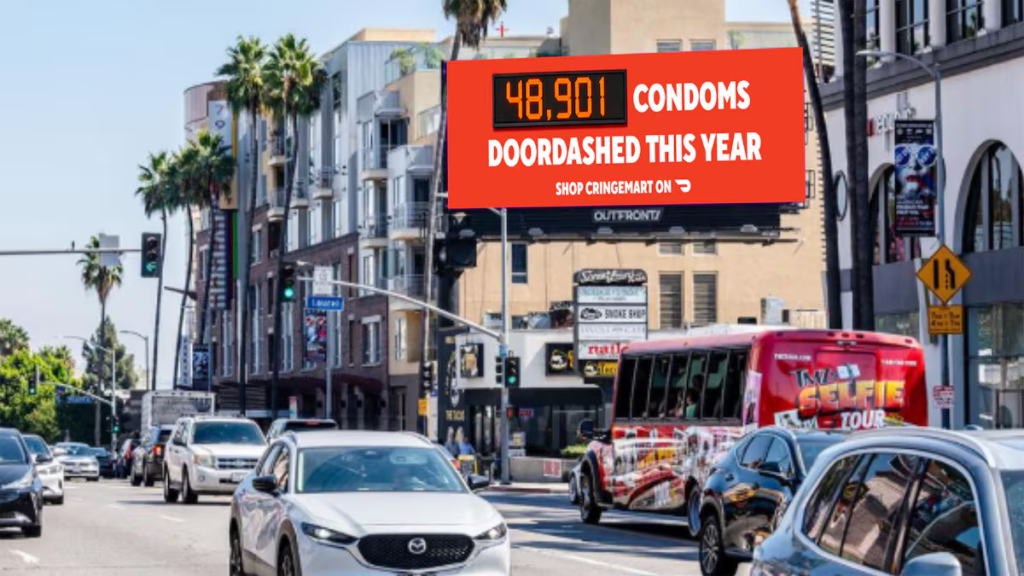
DoorDash planned digital billboards in New York and Los Angeles with live counters showing condom purchases happening through the platform.
The mechanic revealed something that individual customers were using DoorDash to avoid revealing themselves.
People did not see who had placed an order. They only saw that another condom had been purchased somewhere through the service.
That scale changed the meaning of the supposedly embarrassing purchase.
One person buying something intimate might feel exposed. Thousands of anonymous purchases made the behaviour look completely ordinary.
The same point was visible in DoorDash’s wider data.
Customers had paired digestive medicine with spicy snacks. Condoms had been ordered with candles. Other combinations mixed practical necessities with everyday groceries.
Once combined, the orders looked less like unusual confessions and more like normal life.
CringeMart used comedy to get people into the subject. The sales counter supplied a quieter message.
Lots of people need this stuff.
What Made It Different
CringeMart connected the advertising directly with a reason to use DoorDash.
The hidden-camera films created an exaggerated version of the awkward checkout. The storefront removed that checkout. Meanwhile, the billboards showed how common these purchases already were.
Each part pushed towards the same behaviour.
The idea also helped DoorDash stretch beyond its original association with restaurant meals. A delivery service becomes more useful when the item is not only inconvenient to collect, but uncomfortable to buy in person.
There are no campaign performance results yet. The work had only just launched in August 2026, and the three-part content series was still rolling out.
Still, CringeMart found a clear benefit inside products people rarely advertise together.
Sometimes delivery is useful because you do not want to leave the house.
Sometimes it is useful because you do not want anyone asking what you are buying.
Credits
CringeMart (2026) — DoorDash, United States. Creative studio: Loop. Talent: Tana Mongeau. DoorDash Head of Social: Zaria Parvez. Loop Founder and CEO: Nick Gallo. Content: CringeMaxxing, a three-part hidden-camera series filmed in New York City. Media: DoorDash app, TikTok, Instagram, YouTube and digital outdoor in New York and Los Angeles.
Related
More in Spotlight


Popular
Popular posts


More stories