Outdoor
Greenpeace asks people to recycle before wildlife has to do it for them
 By Archit
·
·
3 min read
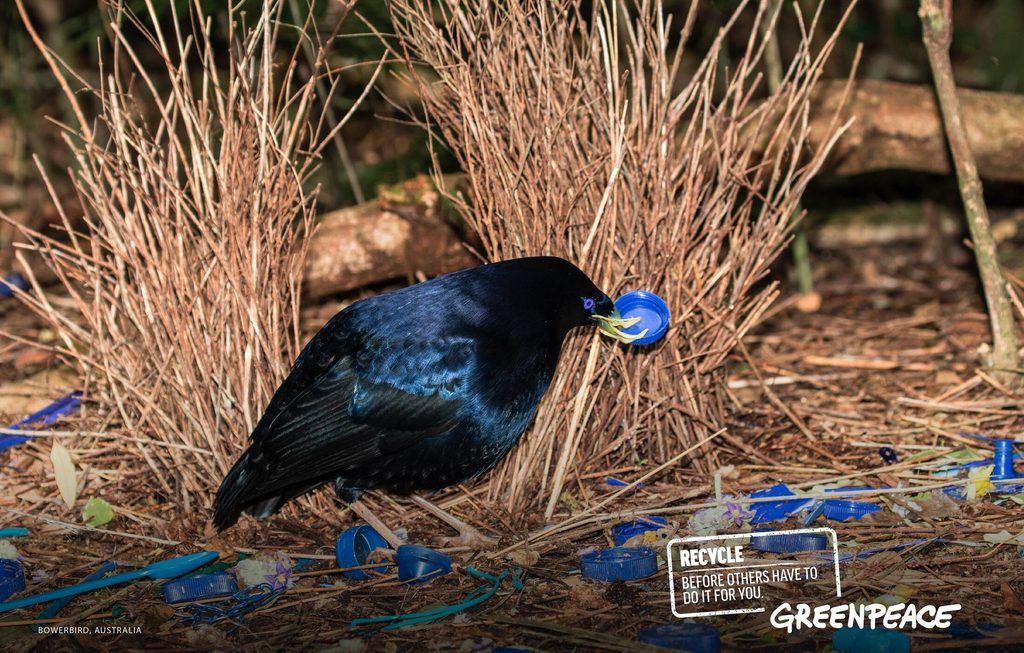
A crab emerges from a discarded metal container. A bird sits in a nest surrounded by packaging and broken objects. Elsewhere, a bowerbird holds a blue bottle cap among twigs and scattered plastic.
Greenpeace’s “Recycle” campaign brings these encounters together under one line: “Recycle before others have to do it for you.”
Created by Santiago agency Pedro, Juan y Diego and released in Chile in June 2021, the outdoor campaign turns an everyday instruction into a question of responsibility. The “others” in its headline are the animals living alongside human waste.
Four scenes give the headline its meaning
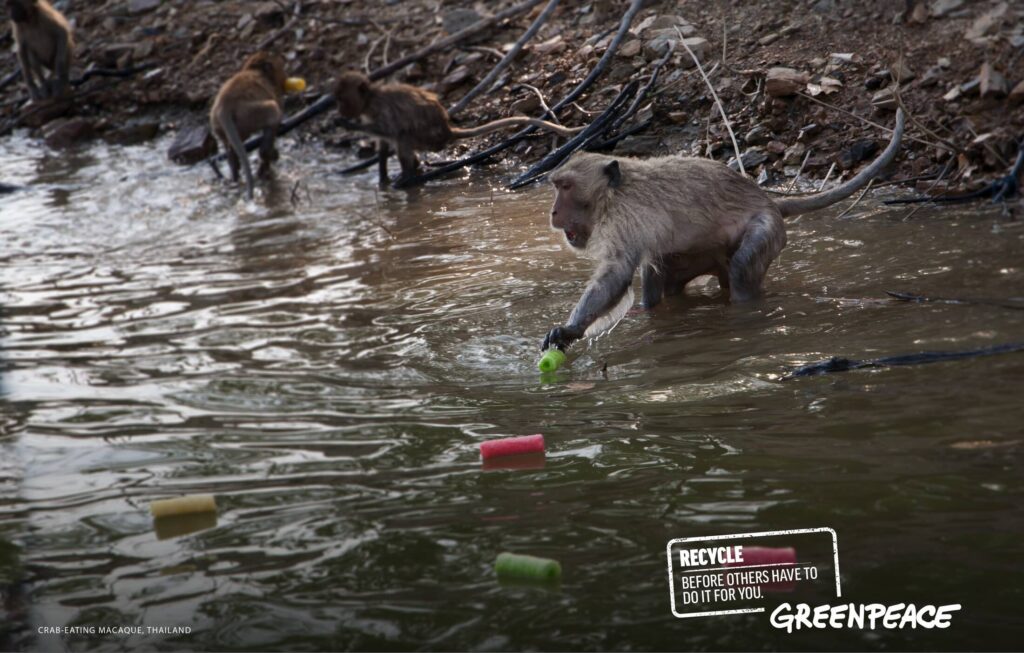
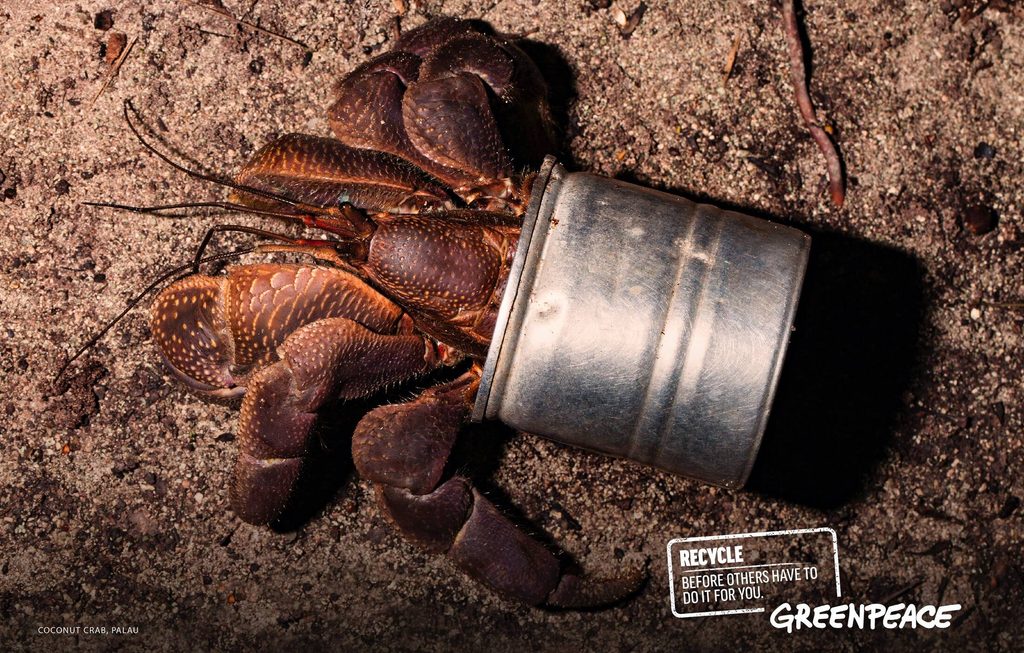
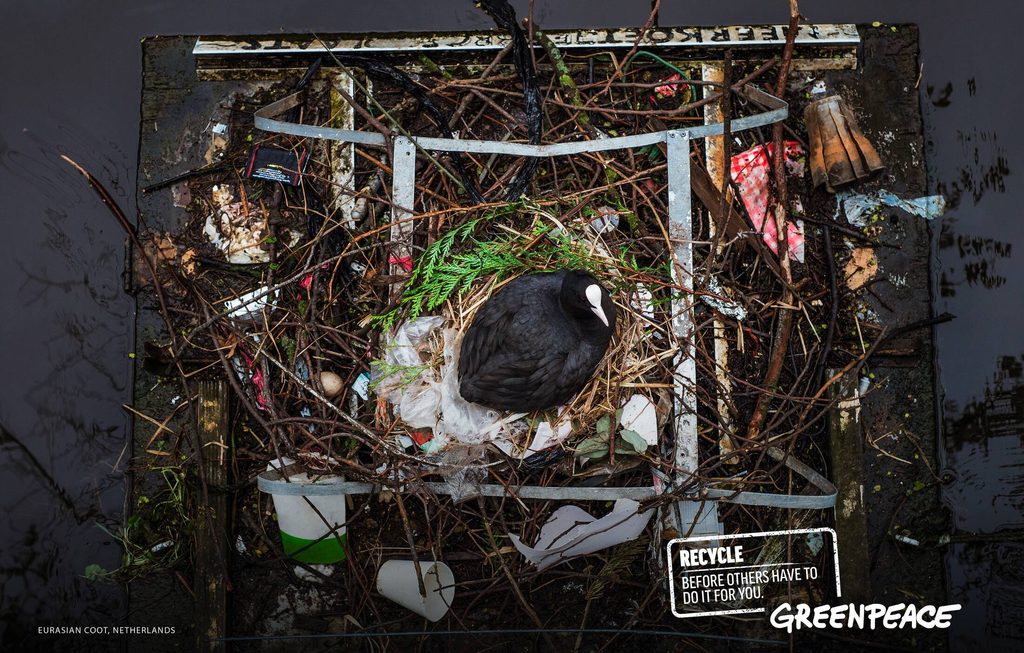
Each execution identifies the animal and location shown. The series includes a coconut crab in Palau, a crab-eating macaque in Thailand, a Eurasian coot in the Netherlands and a bowerbird in Australia.
The photographs offer different relationships between wildlife and rubbish. The crab occupies a metal container. The macaque reaches towards a green plastic object in the water. The coot’s nesting site contains an assortment of discarded materials, while the bowerbird’s surroundings include blue caps and plastic pieces.
Those differences give the campaign more to work with than a repeated image of litter. Waste appears within the animals’ immediate surroundings, becoming part of the spaces they move through and occupy.
The viewer has to look at what the rubbish is doing in the picture, rather than seeing it only as an untidy background.
“Recycle” becomes an uncomfortable word
The headline borrows a positive environmental action and applies it to a troubling scene. Animals appear to be finding uses for, or interacting with, materials people have discarded.
That framing is a creative provocation. The photographs do not depict a recycling system. They show wildlife encountering the objects that remain after human use.
“Before” gives the instruction its urgency. It asks people to act earlier, while the material is still their responsibility, rather than leaving another creature to encounter it later.
The wording makes the audience’s role clear without needing a long explanation beside each photograph.
The details keep the message grounded
Small captions naming the species and places give each execution a specific setting. Together, they take the idea across several countries while keeping the campaign’s address to the viewer consistent.
The white headline and Greenpeace signature sit in a corner, leaving most of the space to the photograph. There is room to notice the textures of the animals, their surroundings and the manufactured objects mixed into them.
The campaign’s strongest connection happens in that act of recognition. A bottle cap or container is familiar to the viewer. Seeing it beside wildlife changes the context, asking people to consider where an object goes after they stop using it.
Credits
Client: Greenpeace. Advertising agency: Pedro, Juan y Diego, Santiago, Chile. General Creative Directors: Hernán Ramos and Cristian Kemp. Creative Director: Jonathan Chauque. Art Directors: Eduardo Casassus and Javier Cortés. Copywriter: José Rojas. Head of Art: Manuel Manquepi. Photography: Adri, Ken Griffiths, Piero Malaer and Siriporn Lin.
About the work
Campaign details
- Brand
- Greenpeace
- Agency
- Pedro Juan y Diego
- Country
- Chile
- Year
- 2021
Related
More in Outdoor




Popular
Popular posts



More stories