Editor's Pick
The Real Guy: Windhoek Beer made a six-fingered hand model its answer to AI
 By Archit
·
·
5 min read
By Archit
·
·
5 min readAI-assisted
Quick summary
Windhoek Beer has chosen Kenyan creator James Kumar, who was born with polydactylism giving him six fully formed fingers on each hand, as the hand model for its new South African campaign, The Real Guy. Developed by TBWAHuntLascaris, the integrated campaign responds to online viewers frequently dismissing Kumar’s real hands as artificial intelligence errors. The work features a documentary titled I’m Not AI, I’m a Real Guy, which follows Kumar from Kenya to South Africa and centers his own experiences and humour.
Alongside the campaign, Windhoek introduced a 100% Real pledge committing the brand to exclude AI-generated imagery from final consumer-facing communications, including synthetic influencers and digital pack shots. While internal planning and production may still use AI, the new policy establishes a strict public standard for all finished advertising across video, digital, social, and outdoor channels in South Africa.
AI-generated from this article. For complete context and credits, read the full story.
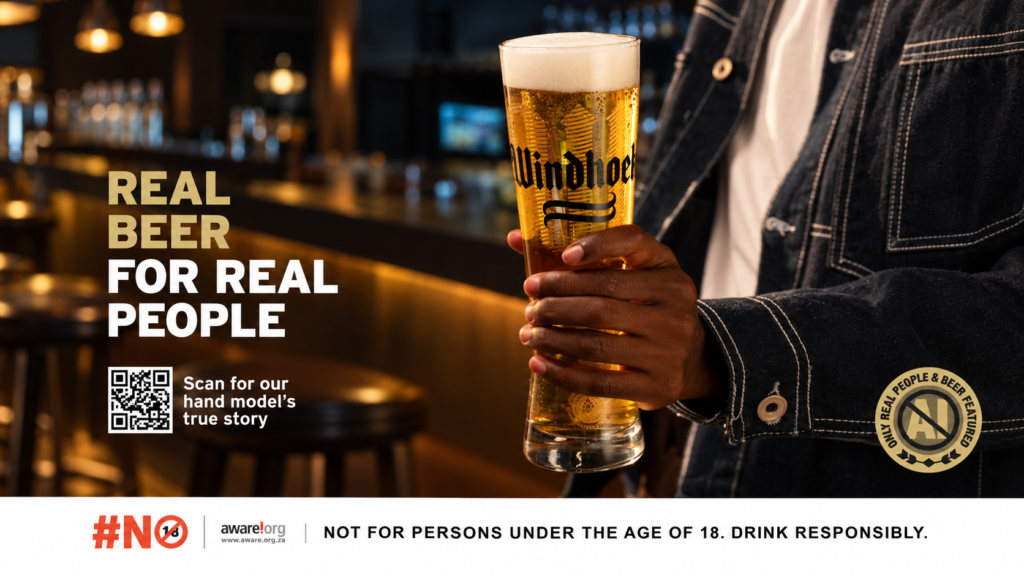
A hand with six fingers is often dismissed online as an AI mistake. For Kenyan creator James Kumar, it is simply his hand.
Windhoek Beer has made Kumar its newest hand model in The Real Guy, an integrated South African campaign created by TBWA\Hunt\Lascaris. The work uses the confusion around his real hands to start a wider conversation about artificial images, physical difference and the growing value of knowing that something is genuine.
Alongside the campaign, Windhoek has made a formal commitment to keep AI-generated imagery out of its final consumer-facing communications.
James Kumar was already being called fake
Kumar was born with polydactylism, a congenital condition that gave him six fully formed fingers on each hand. When he began sharing videos online, his appearance attracted millions of views. However, many viewers assumed that his extra fingers had been created with visual effects or artificial intelligence.
Some accused him of hiding a finger. Others described his videos as fake. Meanwhile, the errors commonly seen in AI-generated hands made those assumptions appear believable to people who had never met him.
That strange situation became the starting point for The Real Guy. Windhoek recruited Kumar as a hand model because his hands look like something a machine might get wrong, even though they are entirely real.
The campaign was developed with Kumar rather than simply placing him in an existing advertising idea. As a result, his own experiences and sense of humour shape the story.
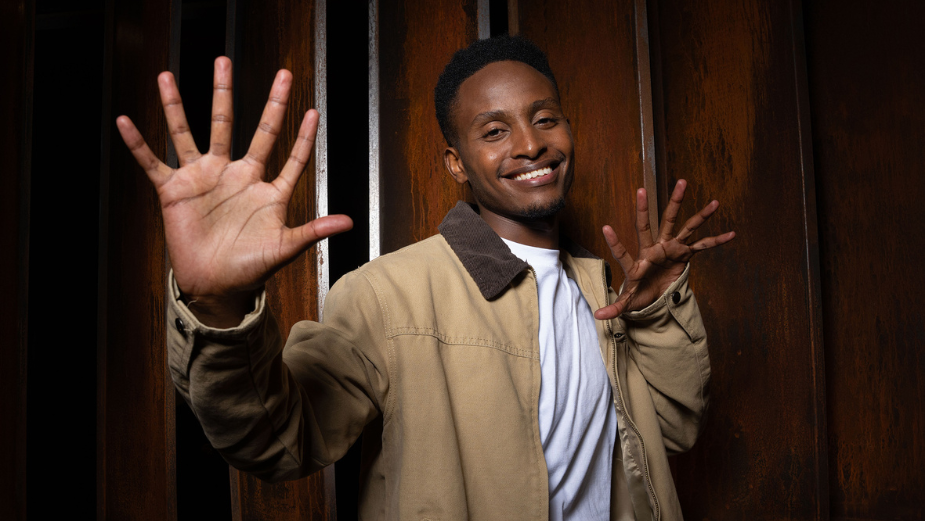
A documentary gives Kumar room to speak
The campaign’s main documentary, I’m Not AI, I’m a Real Guy, follows Kumar from his life and community in Kenya to his first major brand collaboration.
It also documents his first journey outside Kenya as he travels to work with the Windhoek team in South Africa. During the film, Kumar talks about discovering that his hands were considered different, the reactions he receives online and some of the practical parts of living with twelve fingers.
His typing speed is one advantage. Finding gloves that fit is a more difficult task.
However, the film’s purpose reaches beyond his hands. It gives Kumar control over a story that strangers have repeatedly tried to explain for him. His answer to the online speculation is direct. He is not an AI image. He is a real person with ambitions, humour and a life that exists beyond the comments.
The campaign continues across video, digital, social media and outdoor advertising in South Africa.
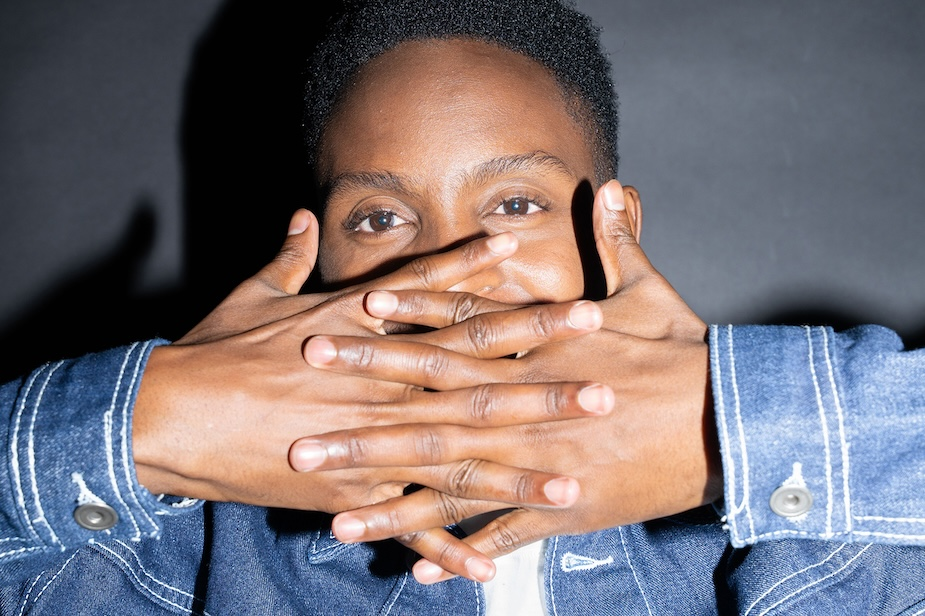
The campaign comes with an actual policy
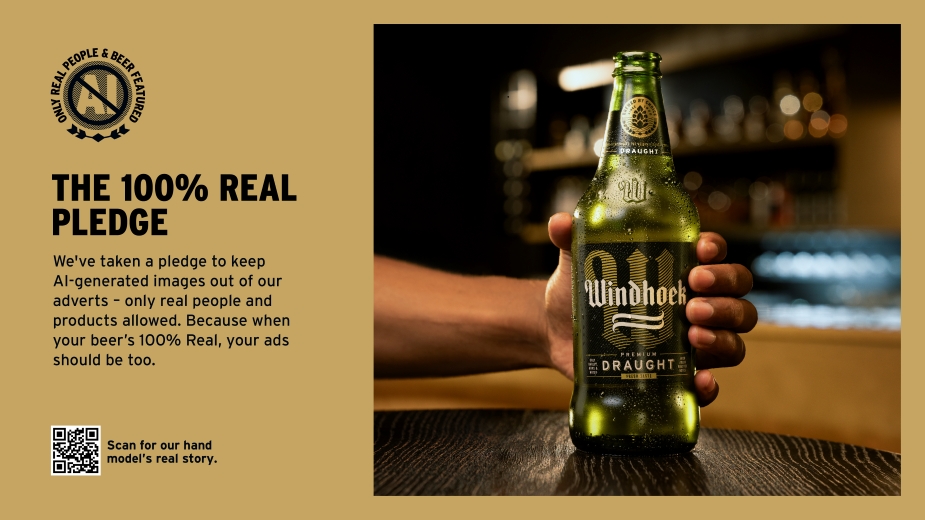
The Real Guy also introduces Windhoek Beer’s 100% Real pledge. Under the policy, the brand will not use AI-generated imagery in final communications made for consumers.
That commitment covers synthetic people and influencers, generated product images, artificial pack shots and digitally created beer serves. Instead, the finished advertising must show real people, genuine Windhoek Beer and products photographed or filmed through real-world production.
Furthermore, the requirement is being added to contracts with the brand’s agencies, production companies and content partners. Heineken Beverages will oversee the policy across Windhoek’s partner network.
The pledge still allows AI to support internal work such as planning, strategy, early ideas, optimisation and parts of the production process. Therefore, it is a rule about what audiences finally see rather than a rejection of the technology itself.
That distinction gives the promise more weight. It defines a clear public standard without pretending that AI has no place inside a modern business.
Where it fits in
Windhoek has long used “100% Real” to describe the beer. The brand is brewed according to the Reinheitsgebot purity law using barley, hops and water.
The Real Guy extends that product position into the way the brand presents people. In fact, the choice of Kumar connects the two ideas neatly. His appearance attracts attention because digital culture has trained viewers to question unusual images. His story then gives Windhoek a human way to explain what “real” means.
There is also a risk in turning a person’s physical difference into an advertising device. However, Kumar’s involvement in developing the campaign helps the work move beyond spectacle. The documentary gives his voice more space than a conventional product advertisement could.
Campaign performance figures have not been released. Still, The Real Guy makes Windhoek’s position measurable in another way. Every future image the brand releases can now be judged against the promise it has made.
Credits
The Real Guy (2026), Windhoek Beer and Heineken Beverages South Africa. Agency, TBWA\Hunt\Lascaris Johannesburg. Chief Marketing Officer, Andrea Quaye. Mainstream and Affordable Premium Beer, Boipelo Malao. Portfolio Marketing Manager, Keval Ramraj. Senior Brand Manager, Corinne Anderson. Chief Creative Officer, Carl Willoughby. Executive Creative Officer, Shane Forbes. Creative Directors, Brendan Jack and Greig Watt. Copywriter, Brendan Jack. Art Director, Greig Watt. Designer, Sacha Traest. Animation and editing, Louis du Pisani and Ryan Paikin. Business Lead, Debbie Laing. Business Unit Director, Erin Hess. Project Manager, Natalie Bawa. Senior TV Producer, Nonhlanhla Khanye. Media agency, Dentsu Redstar, with Jared Jacobs and Kyle Moschini. Post-production, Mushroom Media. Colourist, Kyle Stroebel.
About the work
Campaign details
- Brand
- Heineken
- Agency
- TBWAHuntLascaris
- Country
- South Africa
- Year
- 2026
Related
More in Editor's Pick

Popular
Popular posts

More stories