Outdoor
MoleMaps: Marie Keating Foundation turned every Irish county into a suspicious mole to make skin cancer feel local
 By Archit
·
·
6 min read
By Archit
·
·
6 min readAI-assisted
Quick summary
The idea: The Marie Keating Foundation and Boys+Girls launched MoleMaps to warn that ultraviolet exposure happens at home, not just on foreign holidays. The campaign turns the outlines of Ireland’s counties into suspicious-looking skin moles to make skin-cancer risk feel local and personal.
The execution: Created for July and August 2026, the campaign uses geotargeted advertising across outdoor posters, digital channels, radio, and national media. Each county outline is photographed like a mark on skin and paired with copy comparing local exposure to holiday destinations.
Why it matters: Ireland has one of Europe’s highest melanoma incidence rates, driven by a false sense of security in cooler weather. The campaign encourages everyday sun protection and early detection, though no campaign results have been announced yet.
AI-generated from this article. For complete context and credits, read the full story.
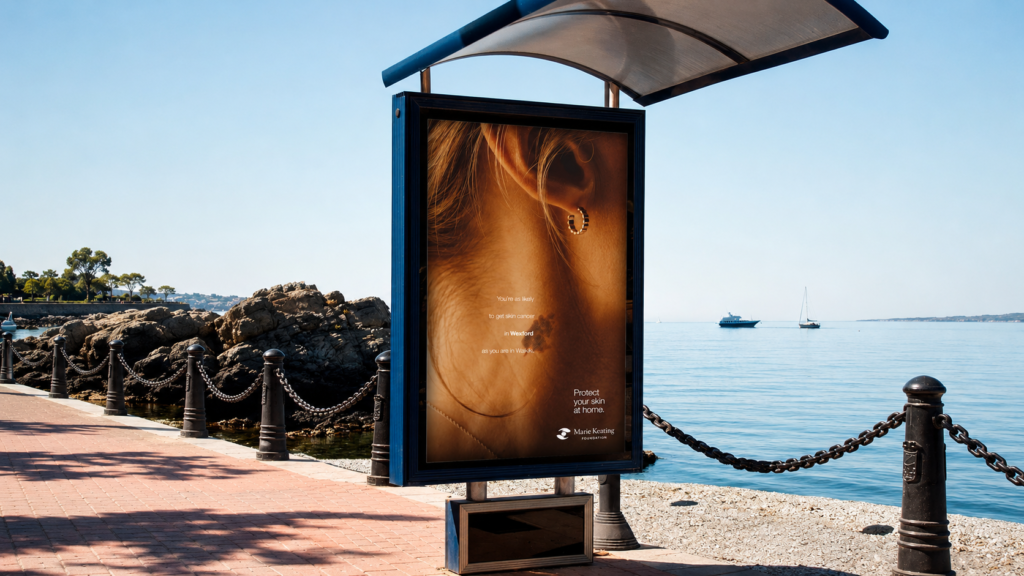
The Marie Keating Foundation has transformed the outlines of Ireland’s counties into suspicious-looking skin moles for a nationwide campaign warning that harmful ultraviolet exposure does not only happen on holidays abroad.
Created by Boys+Girls, “MoleMaps” addresses a familiar gap in sun-protection behaviour. People who carefully pack sunscreen for a holiday in Spain may spend hours gardening, walking, attending a match or visiting an Irish beach without taking the same precautions.
The campaign makes that risk feel closer to home by giving every county its own MoleMap. Instead of presenting skin cancer as a distant or abstract health issue, it places the warning directly inside the communities it wants to reach.
Every Irish county became a mole
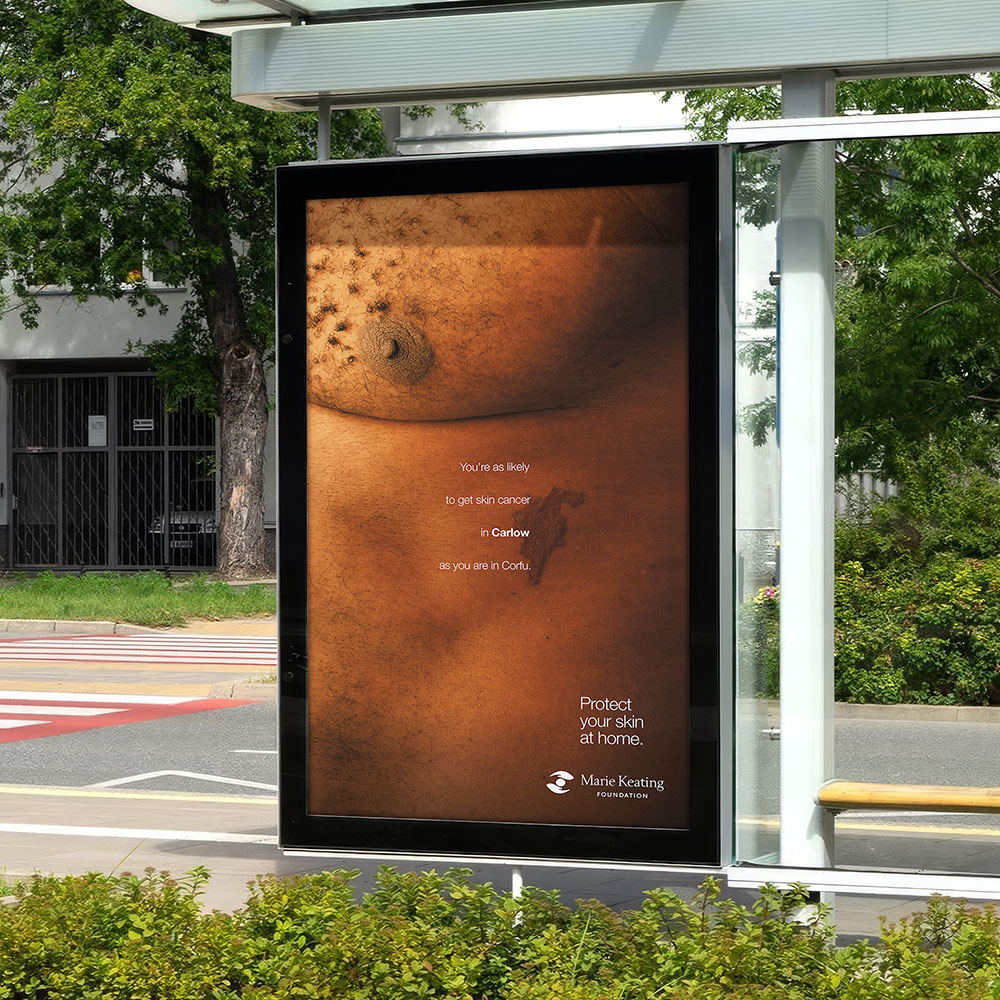
The campaign’s central visual idea is built around the similarity between irregular geographical borders and the uneven outlines of suspicious moles.
Boys+Girls created an individual execution for every county in Ireland. Each map is photographed and presented like a mark being examined on someone’s skin, changing a familiar geographical shape into a potential health warning.
The visual transformation is simple enough to understand immediately. The county represents home, while the mole represents a risk people may overlook until it begins to change.
By combining the two, MoleMaps communicates that skin cancer can develop wherever people are exposed to ultraviolet radiation. A warm foreign destination is not required.
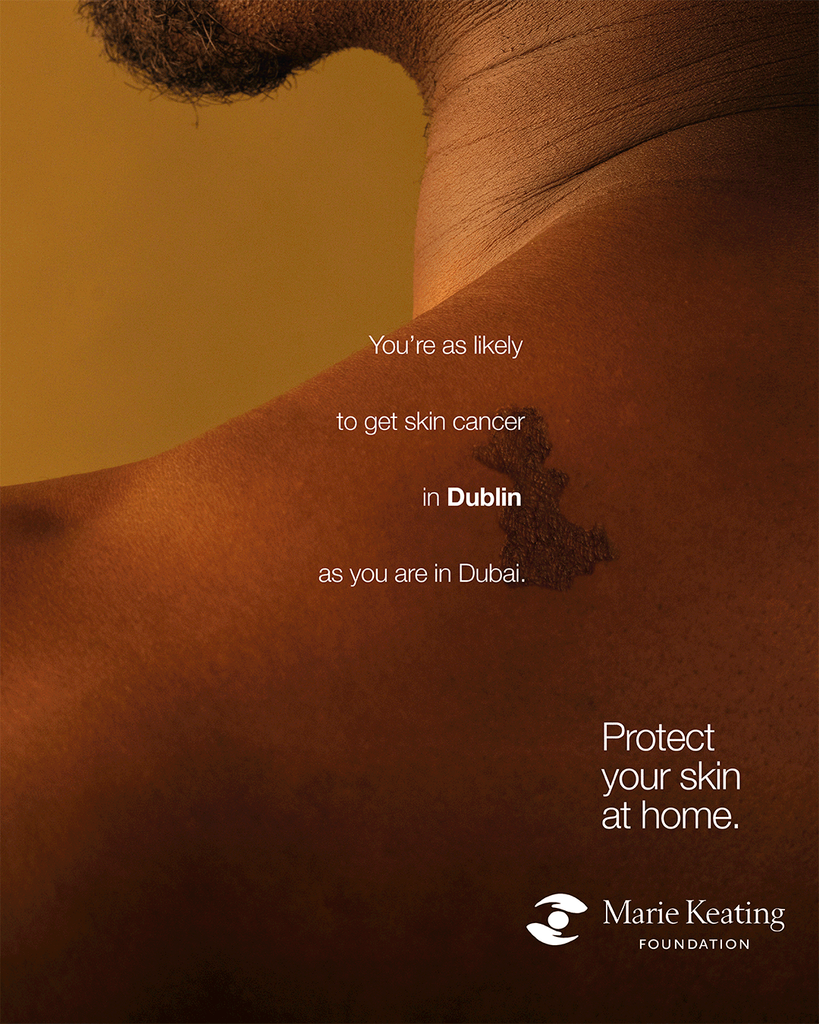
Geotargeting makes the warning personal
Rather than showing the same national message everywhere, the campaign uses geotargeted advertising to deliver the relevant MoleMap to people in each part of the country.
Someone in Cork can see Cork transformed into a mole, while someone in Wexford receives an execution based on Wexford’s outline. This local adaptation makes the campaign more personal and difficult to dismiss.
The accompanying copy reinforces the idea through comparisons between Irish counties and familiar holiday destinations. The campaign warns that someone can be just as exposed in Cork as on the Costa del Sol, while melanoma does not care whether it appears in Wexford or Waikiki.
These lines challenge the assumption that the Irish sun is somehow safer than the sun experienced abroad.
The danger comes from UV radiation, not heat
Ireland’s comparatively cool and cloudy weather can create a false sense of security. People may assume that they are safe because the temperature is low, the sky is overcast or their skin does not feel as if it is burning.
However, ultraviolet radiation can still damage unprotected skin in these conditions.
That distinction is central to MoleMaps. The campaign does not attempt to convince people that Ireland has the same climate as Spain or Australia. It reminds them that heat and UV exposure are not the same thing.
Ireland has one of Europe’s highest melanoma incidence rates despite its cooler climate. Skin cancer is also the most common cancer in the country, making everyday protection a domestic health issue rather than something to consider only before travelling.
The campaign extends beyond outdoor posters
MoleMaps launched nationwide in July 2026 and runs across July and August through outdoor advertising, digital channels, radio and national media.
Digital audio executions use the same comparison between exposure at home and abroad, allowing the campaign’s central idea to work without the county-shaped visuals. The locally adapted messages also extend the relevance of the outdoor work into people’s personal media environments.
This integrated approach helps the campaign reach people while they are making everyday decisions about spending time outside. The warning can appear before a trip to the beach, a walk, a sports event or an afternoon in the garden.
The campaign is supported by the Marie Keating Foundation’s industry partners Bristol Myers Squibb, MSD and Regeneron.
MoleMaps encourages protection and early detection
The campaign asks people to “Protect Your Skin at Home” by making SunSmart behaviour part of their normal routine.
Recommended precautions include using broad-spectrum SPF 30 or higher, reapplying sunscreen regularly, covering exposed skin with suitable clothing, wearing a broad-brimmed hat and sunglasses, seeking shade and avoiding prolonged exposure to strong sunlight.
MoleMaps also encourages people to become familiar with what is normal for their skin.
A new mole, a changing mark, an unusual-looking patch or a sore that does not heal should be discussed with a GP. Regularly checking the skin can help people recognise possible warning signs sooner and seek professional advice.
The Foundation says approximately nine in ten skin-cancer cases are linked to ultraviolet radiation, meaning many cases may be preventable through consistent protective behaviour.
Familiar geography delivers an unfamiliar warning
Public-health campaigns often struggle to make long-term risk feel immediate. MoleMaps solves that problem by using something people already recognise and identify with: the shape of the place they call home.
Each county outline becomes both a location and a possible warning sign. The maps demonstrate that skin-cancer risk exists in Cork, Galway, Dublin, Wexford and every other part of Ireland.
The creative idea does not depend on fear alone. It gives people practical actions they can take, from applying sunscreen to checking their skin for changes.
No campaign results have been announced. Its effectiveness will ultimately depend on whether the locally targeted messages encourage more people to use sun protection consistently and seek medical advice when they notice something unusual.
MoleMaps nevertheless provides a memorable reframing of the issue. People do not leave UV exposure behind when they return from holiday. The risk is already mapped across the country.
Credits
MoleMaps was created for the Marie Keating Foundation by Boys+Girls. Chief Creative Officer: Rory Hamilton; Creative Directors: Jake O’Driscoll and Dean Ryan; Senior Copywriter: Jack Walsh; Executive Strategy Director: Tara Finegan; Head of Operations: Lauren McNinney; Chief Relationship Officer: Pat Stephenson; Executive Relationship Director: Caroline Keogh; Account Manager: Sára Benkő; Head of Design: Colm Coonagh; Finished Art: Maxi McDonnell; Motion Designer: Ruby Valdez; Production Assistant: Ben White; Photographer: Matthieu Chardon; Photography Assistant and Digital Operator: Leah Byrne; Lighting Assistant: Eamon Corcoran; Runner: Evgenia Gavrilovich; Behind-the-Scenes Photographer: James Kanu; Sound Design: Blast Audio; Sound Designer: Will Farrell; Chief Executive Officer, Marie Keating Foundation: Liz Yeates; Communications Manager, Marie Keating Foundation: Jayne O’Toole; Director of Communications and Public Affairs, Marie Keating Foundation: Cathy Gray.
About the work
Campaign details
- Agency
- Boys+Girls
- Country
- Ireland
- Year
- 2026
Related
More in Outdoor




Popular
Popular posts


More stories