Case Studies
The Life Saving Receipt: CHOROGUSAN printed vaccine help on grocery receipts
 By Archit
·
·
4 min read
By Archit
·
·
4 min read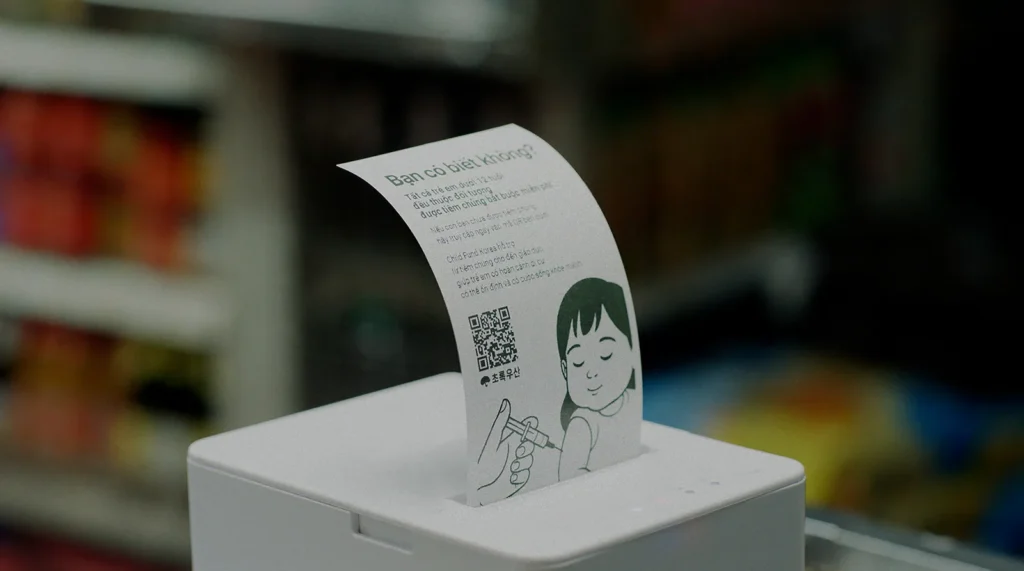
A grocery receipt normally closes a shopping trip. The Life-Saving Receipt used that final slip of paper to begin a healthcare journey for migrant parents in South Korea. When someone bought baby formula, diapers or lotion at a participating international grocery store, the till printed vaccination information in a language they could understand. CHOROGUSAN created the campaign with Seoul agency DMINUSONE.
The receipt also included a QR code connecting parents to free vaccination information, medical services and interpretation support.
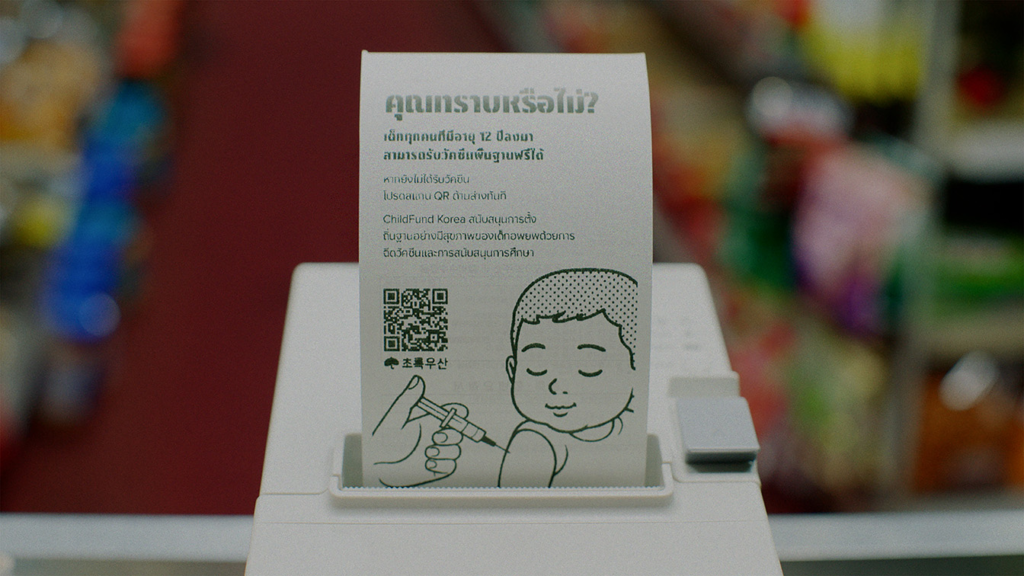
The Message Appeared With the Right Purchase
Many migrant families in South Korea can access free childhood vaccinations. However, language barriers and unfamiliar paperwork can make the system difficult to use.
DMINUSONE looked for a place where the right parents could be reached without asking them to find a new service first. International grocery stores offered that point of contact.
These shops already serve communities looking for familiar food, ingredients and household products. In fact, they often become informal local hubs for families who share a language or country of origin.
The campaign then narrowed the moment further. The health message appeared when a customer bought something connected to caring for a baby, such as formula, diapers or lotion. As a result, the receipt reached someone who was likely to need the information soon.
How the Receipt Changed
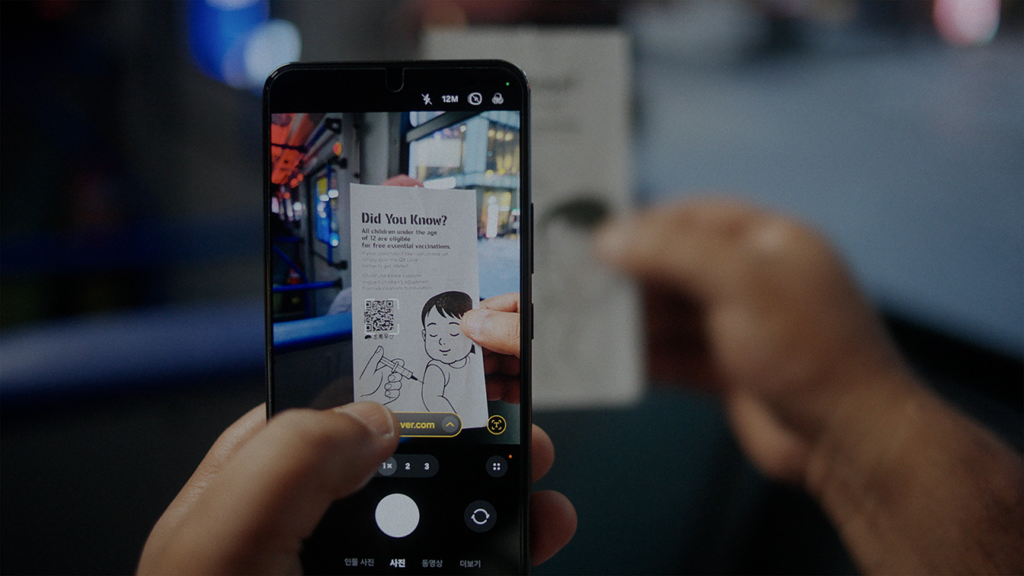
DMINUSONE introduced a new rule into participating point-of-sale systems. When the till detected an eligible childcare product, it added a health message to the receipt.
The message reminded the parent that vaccinations and medical care were another essential part of looking after their child. Meanwhile, the text was printed in languages used by the store’s local migrant community.
A QR code beneath the message led to information about free vaccinations and available medical services. It also connected families with CHOROGUSAN programmes covering interpretation, counselling and wider healthcare support.
The printed receipt required almost no change in behaviour. The parent completed the same purchase, received the same piece of paper and left through the same door. However, the information they carried home was now different.
Why the Grocery Store Mattered
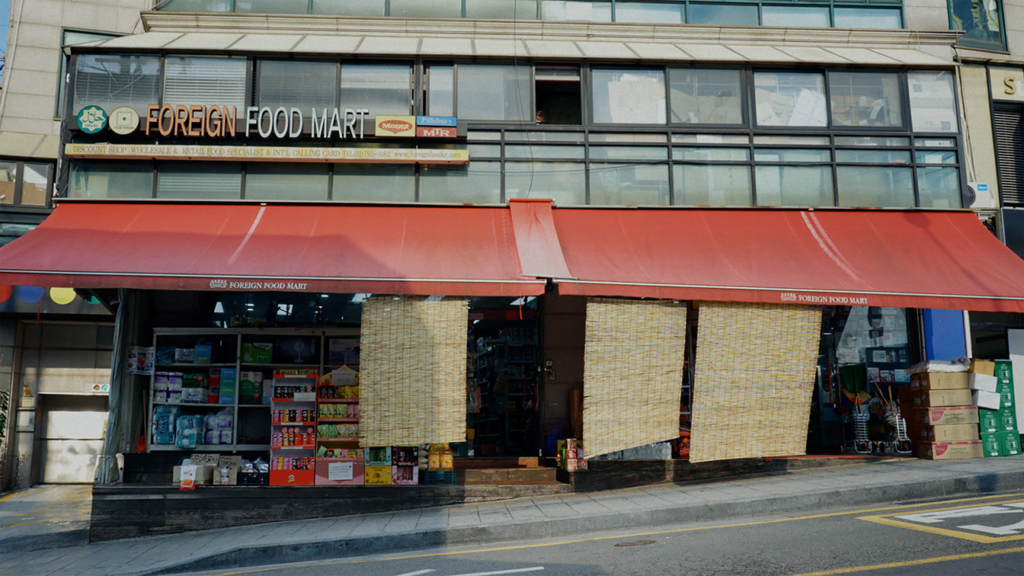
The placement made the receipt more useful than a broad public health message.
A national advertisement could tell families that vaccinations were available. Still, it might appear in a language they could not read or direct them towards a system they did not understand.
The Life-Saving Receipt began inside a trusted shop serving a specific community. The store could use the right language. The purchase indicated a likely need. More importantly, the QR code provided a direct next step.
The campaign started in migrant communities around Icheon, Gimpo and Incheon. After that, it expanded with support from supermarket groups, product brands, regional CHOROGUSAN offices and local organisations.
More than 1,000 institutions joined the initiative, including 40 CHOROGUSAN offices and 68 partner organisations. The rollout also received support from Babybonjuk, Bebesup, the Korea Supermarkets Alliance and Incheon Metropolitan City.
The Bigger Point
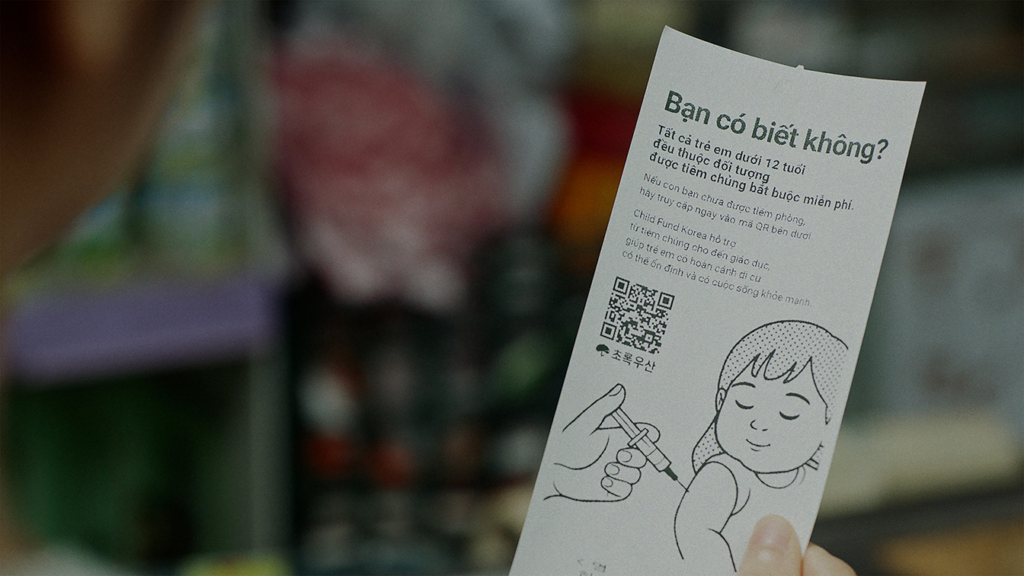
The Life-Saving Receipt found media inside an object that was already being printed.
That choice kept the message close to the behaviour that revealed the need. A parent buying formula received information about infant healthcare. A local store supplied the right language. Meanwhile, the QR code connected a small printed message to a much larger support system.
The receipt also made the communication private. Parents could read it after leaving the counter, scan the code when ready and ask for help without discussing their situation in the shop.
The campaign did more than place health advice at checkout. It gave the checkout system a new responsibility. The printer still recorded what a family had bought. At the same time, it helped protect the child they were buying it for.
Credits
The Life-Saving Receipt (2025) — CHOROGUSAN, South Korea. Agency: DMINUSONE, Seoul. Creative Directors: Donggil Kim and Janghan Kim. Account Executives: Sewon Kim, Yeonju Lee and Doyoon Son. Copywriter: Hongkyun Kim. Art Directors: Jiwoo Lee and Jisoo Lee. Production: Episode Film, South Korea. Director: Eunwoo Choi. Launch partners: Babybonjuk, Bebesup, the Korea Supermarkets Alliance and Incheon Metropolitan City.
Related
More in Case Studies


Popular
Popular posts

More stories