Case Studies
Pollution Capture Pencils: Otrivin turned Bengaluru’s classroom pollution into pencils
 By Archit
·
·
5 min read
By Archit
·
·
5 min read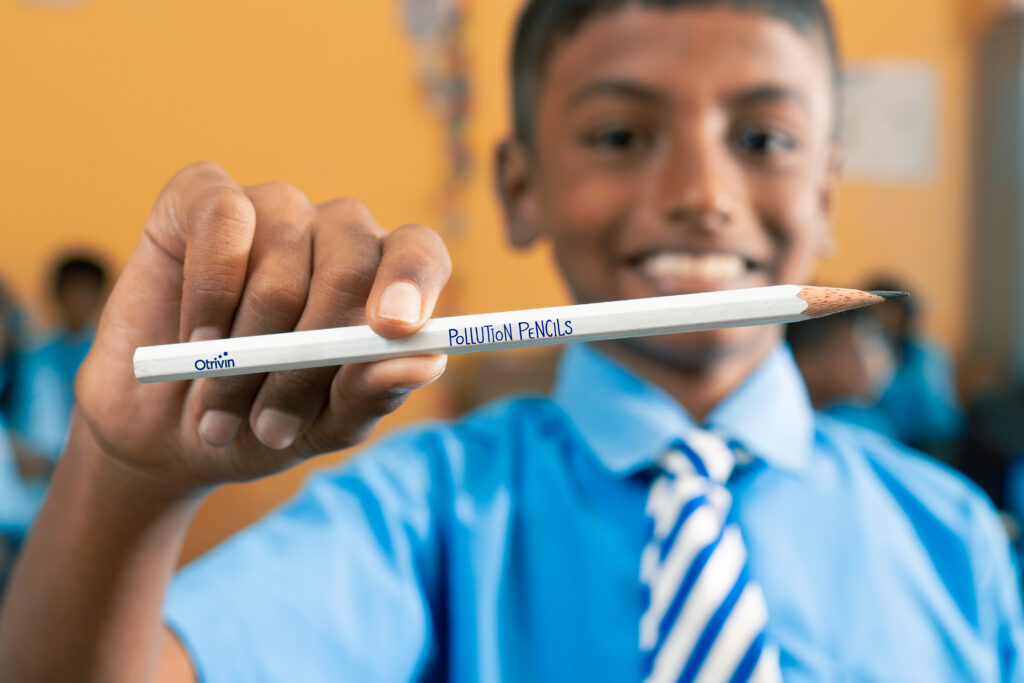
In 2022, 22 air purifiers began collecting particulate pollution from classrooms at three schools in Bengaluru. Otrivin then mixed the captured residue with graphite and turned it into 10,000 pencils for the children studying there.
Pollution Capture Pencils was developed by Wunderman Thompson Singapore and India with technology partner Panjurli Labs. The pilot gave more than 1,500 students cleaner classroom air. Furthermore, the pencils helped raise money for the project’s next group of purifiers.
The Problem Was Inside the Classroom
Air pollution followed the children into school.
Otrivin selected three schools in the industrial areas of Peenya, Hegganahalli and Mallasandra after assessing local air quality. According to the campaign case study, pollution in poorly ventilated classrooms could reach four times the limits recommended by the World Health Organization. Children could spend up to eight hours a day inside these rooms.
The project’s publicity also stated that 98 percent of children in India breathe toxic air. However, the WHO report behind that figure uses 98 percent for children under five across all low and middle income countries, rather than India alone. The directly verified global figure is that 93 percent of children under 15 were exposed to fine particulate pollution above WHO guidelines when the report was published in 2018. WHO also links air pollution with impaired neurodevelopment, reduced lung function, asthma and respiratory illness in children.
The conditions inside the three schools gave Otrivin a specific place to act. The nasal health brand installed purifiers where children were breathing, studying and spending much of their day.
The Purifiers Collected Material for the Pencils
Indian clean-air company Panjurli Labs created energy-efficient purifiers using its soot-capture technology. Eleven units were placed inside the schools and eleven outside.
The machines were designed to remove up to 74 percent of airborne pollutants. Over two months, Otrivin reported that they processed more than two billion cubic feet of air and improved classroom conditions for over 1,500 students.
Meanwhile, Panjurli Labs collected the particulate residue trapped by the machines. The material was then combined with graphite and used to create the cores of 10,000 custom pencils. Manufacturer Guna Pencils produced the final objects, which campaign materials described as certified non-toxic.
The pencils were distributed among students at the three schools. Indian illustrator Gautam Dutta also created separate packaging for each location. He visited the schools before drawing the designs, adding details connected to the children and their surroundings.
As a result, the material removed from the classroom returned as something the students could safely use.
Each Pencil Helped Fund Another Purifier
Part of the pencil production was reserved for sale and fundraising. Revenue and donations would pay for more purifiers, which could then collect more residue for future pencils.
That model was central to the project. The first installation improved the air in three schools. Meanwhile, sales gave the programme a way to continue without depending entirely on another advertising budget.
According to the campaign’s Caples Awards entry, pencil sales and donations returned 4.5 times the project’s original investment. The funding was then allocated towards a second installation intended to benefit more than 6,800 students in Delhi.
The expansion did move forward. Panjurli Labs later reported that Actions to Breathe Cleaner was operating across 13 government schools in Bengaluru and Delhi. The company said the installed purifiers were benefiting approximately 13,000 children each day. However, these later figures come from the implementation partner’s own project report rather than an independent assessment.
The Impact
Pollution Capture Pencils generated 241 million media impressions. It also won the Campaign of the Year Grand Prix at the 2023 PR Awards Asia and Gold at the Clio Health Awards. Further recognition included a Bronze and two Merits at The One Show, followed by Gold at Spikes Asia in 2024.
Still, the physical result matters more than the reach. Haleon’s 2022 annual results confirmed that Otrivin provided 10,000 Pollution Capture Pencils to schoolchildren as part of its Actions to Breathe Cleaner programme. The company described the wider initiative as a response to the effects of polluted air on children’s health.
The project could not remove the pollution produced by Bengaluru’s traffic and industry. Its scale was limited to a small number of schools. However, it reduced exposure inside those classrooms and created a route for funding further installations.
The pencil made the process easy to understand. Pollution entered the purifier. The captured particles became a usable object. That object helped pay for cleaner air somewhere else.
Credits
Pollution Capture Pencils (2022 to 2024). Otrivin and Haleon, India. Agencies: Wunderman Thompson Singapore and Wunderman Thompson India, working as part of WPP Team GSK/Haleon. Global Chief Creative Officers: Bas Korsten and Daniel Bonner. Chief Creative Officer: Mateusz Mroszczak. Executive Creative Director: Jon Loke. Creative Directors: Aarti Nichlani and Gerald Chue. Associate Creative Director: Tulika Shanker. Art Directors: Nuttawee Pisanprechatam and Ee Min Goh. Technology and implementation: Panjurli Labs. Pencil manufacturing: Guna Pencils. Illustration: Gautam Dutta. Production: Tandem Media Labs. Director: Shamik Sen Gupta. Producer: Danny V Lobo. Director of Photography: Yashveer Singh. Client leads: Farhad Nadeem and Ahsan Malik. Awards: Campaign of the Year Grand Prix at PR Awards Asia 2023, Gold at Clio Health 2023, Bronze and two Merits at The One Show 2023, and Gold at Spikes Asia 2024.
Related
More in Case Studies



Popular
Popular posts
More stories