KFC’s FCK ad turned a chicken shortage into the greatest apology in advertising
 By Ridhi
·
·
4 min read
By Ridhi
·
·
4 min read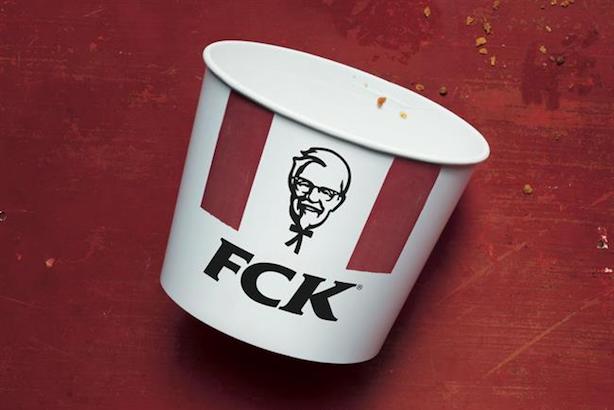
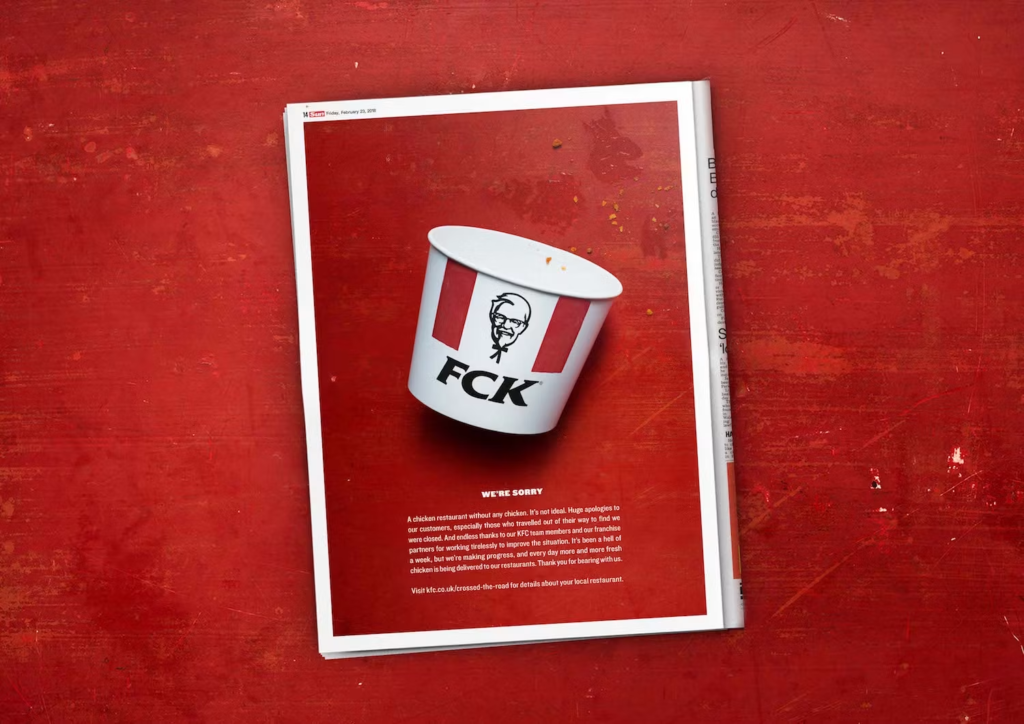
In February 2018, KFC ran out of chicken. That sentence alone should be enough to end a fast food chain’s decade. Instead, it became the setup for one of the most celebrated apology ads ever made. The brand rearranged three letters of its own logo, put them on an empty chicken bucket, and printed the word FCK across full pages of The Sun and Metro. Then it apologised, honestly, with self-deprecation and warmth.
Directed by Mother London, the FCK ad turned a genuine operational crisis into a moment of brand affection that people still quote seven years later.
What Actually Went Wrong
Before the ad, KFC had made an operational decision that quickly turned into a national headline. In February 2018, the chain switched its UK delivery contract from Bidvest, a specialist food distribution group, to DHL, a global logistics giant with far less experience handling fresh chicken supply chains. Meanwhile, the transition went sideways almost immediately.
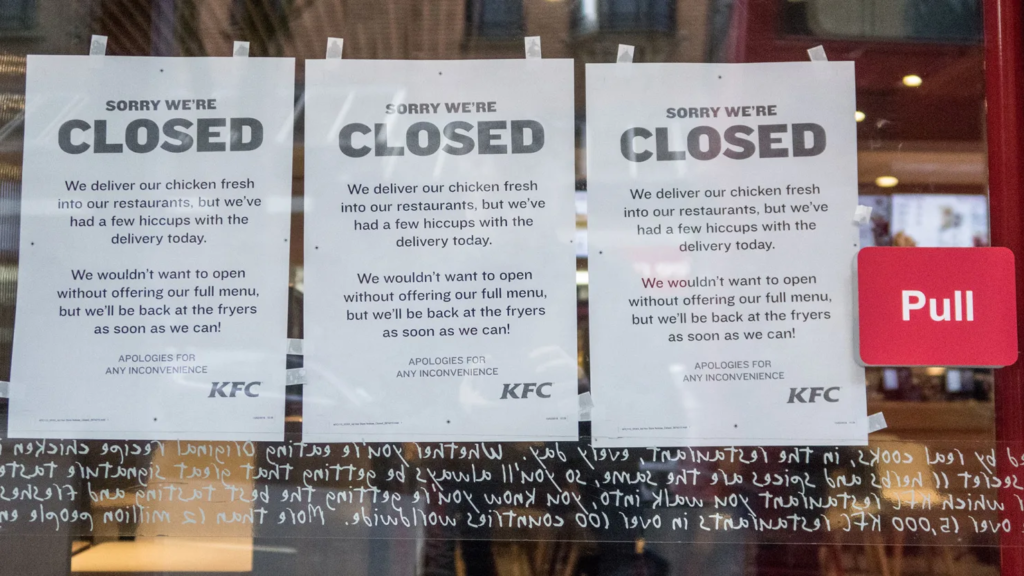
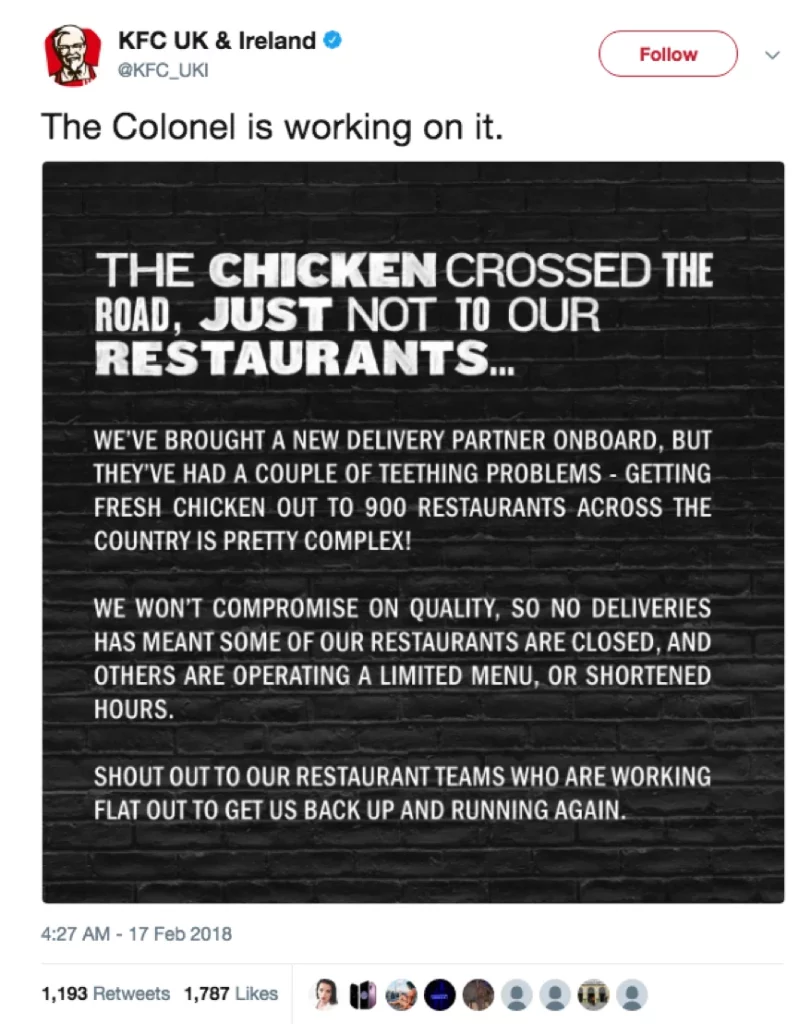
Within days, deliveries stalled. As a result, KFC was forced to close nearly 900 of its UK restaurants because the stores had no chicken. In fact, the shortage was so widespread that some customers called the police to report the closures. Newspapers ran the story on their front pages. Furthermore, KFC was suddenly the punchline of a very public logistics failure.
How Mother London Fixed It
Instead of hiding behind PR speak or a corporate statement, KFC turned to its creative agency Mother London. The response came in the form of a full-page print ad in The Sun and Metro, two of the highest-circulation newspapers in the UK.
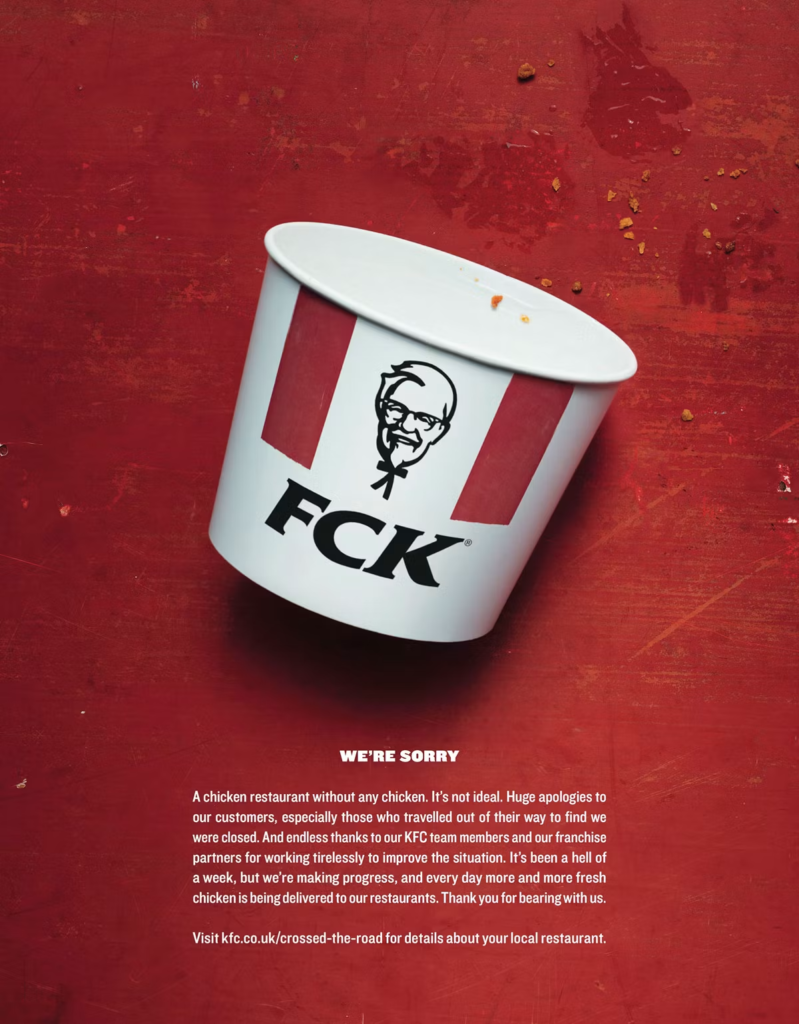
The ad was disarmingly simple. A single, empty red KFC chicken bucket sat in the centre of the page. However, the letters on the bucket had been rearranged. Instead of KFC, they read FCK. Underneath, the copy opened with a line most brands would never dare print in a national newspaper.
“A chicken restaurant without any chicken. It is not ideal.”
The rest of the ad thanked KFC’s team members, thanked customers for bearing with the brand, and directed people to a microsite where they could check the status of their local restaurant. Meanwhile, no excuses were made about DHL, no corporate deflection was offered, and no attempt was made to spin the crisis into something it wasn’t.
Why It Worked
Most apology ads try to protect the brand by minimising the problem. Instead, KFC did the opposite. The brand acknowledged the failure in three letters, made a joke about it, and moved on. That confidence is what made the ad work.
Furthermore, the timing was extraordinary. The ad ran in print just days after the shortage began, at a moment when the crisis was still active. Meanwhile, most brands would have taken weeks to approve a response of that scale. Mother London and KFC pushed the FCK ad through in a matter of days, which is why it hit while the story was still trending.
Still, the strongest reason the ad worked is that it never once tried to distance the brand from what had happened. In fact, the FCK bucket is the brand admitting to itself. The self-mockery is the apology.
The Legacy
The FCK ad has since become one of the most awarded pieces of print advertising in modern history. It won the Cannes Lions Grand Prix in the Print & Publishing category in 2018, along with a further wave of golds across Outdoor, PR and Direct. Furthermore, it is now taught in almost every advertising and communications degree in the world as the textbook example of how to handle a brand crisis.
More importantly, the ad quietly rewrote the rules of corporate apology. Before FCK, the standard playbook for a brand in crisis was cautious, legalese-heavy, and deeply defensive. However, after FCK, brands started to realise that customers respond better to honesty than to spin. In the years since, similarly styled apology ads have appeared from KFC itself, Burger King, Aldi, and many others.
That is the real legacy of FCK. Not the award count, not the print placement, but the fact that it made honesty the new default for brands in trouble.
Credits
FCK (2018) — KFC UK, by Mother London. Executive Creative Directors: Ana Balarin and Hermeti Balarin. Creative Directors: Richard Tahmasebi and Pilar Peace. Business Lead: Andy Ballantyne-Gilbert. Designer: Jon Gregory. Media agency: Blue449. Placed in The Sun and Metro, February 2018.
Related
More in Print

Popular
Popular posts

More stories