Case Studies
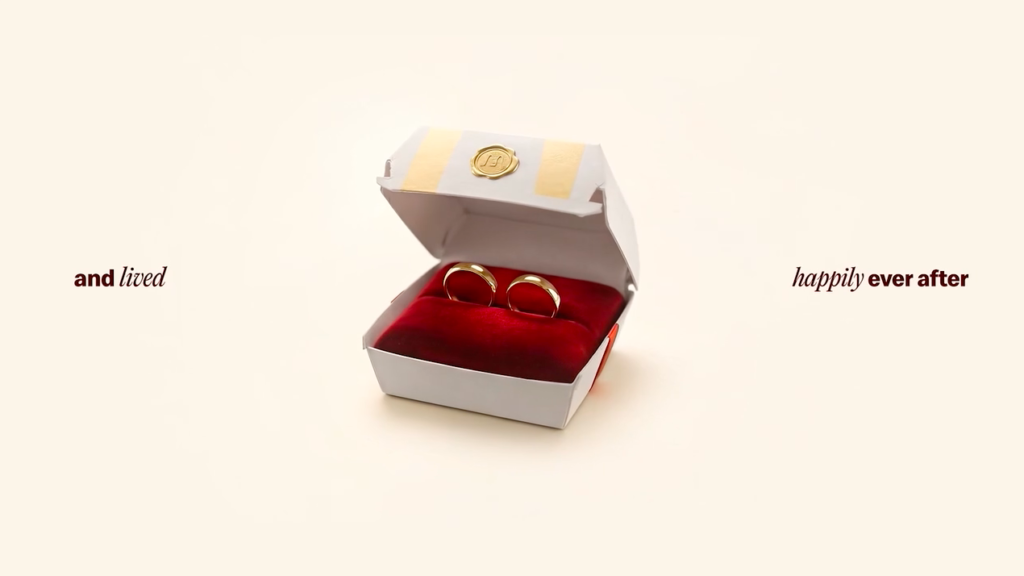
AutoWeddings: McDonald’s turned its Chilean drive-thrus into wedding venues
 By Archit
·
·
6 min read
By Archit
·
·
6 min read
Some newly married couples in Chile make an additional stop after leaving their ceremony.
They visit McDonald’s.
McDonald’s Chile and Digitas noticed couples arriving at AutoMac drive-thrus in decorated cars, still wearing their wedding clothes and ordering food before continuing their celebrations.
For Valentine’s Day 2026, the brand turned that existing customer behaviour into “AutoWeddings.”
Couples could drive into participating restaurants, exchange symbolic vows and leave with photographs, a commemorative certificate and a special McCombo. After registrations filled, McDonald’s expanded the activation to include two legally recognised civil marriages.
The drive-thru stopped being somewhere couples visited after their wedding. It became the wedding venue itself.
A Customer Habit Became the Campaign
AutoMac is the name McDonald’s uses for its drive-thru service in Chile.
Digitas found that newlyweds were already visiting AutoMac after their ceremonies. The behaviour connected an important life event with an ordinary McDonald’s experience.
Rather than creating an unrelated Valentine’s Day promotion, the agency formalised what customers were already doing.
The idea was introduced through the line “Me Gustas Así. ¡Acepto!” It combined the language of personal acceptance with the traditional wedding response of “I do.”
McDonald’s invited couples to register for ceremonies on 14 February. The available places were reportedly booked quickly, demonstrating that people were willing to turn the joke into a real experience.
The insight gave the campaign a natural role for the brand. McDonald’s did not ask people to imagine the restaurant as part of their relationships. Couples had already made it part of their celebrations.
AutoWeddings simply gave that behaviour a name, a date and a ceremony.
AutoMac Became the Altar
Four McDonald’s restaurants across Chile participated in the Valentine’s Day activation.
Couples arrived in decorated cars and moved through an experience based around the familiar drive-thru journey. However, the usual ordering process had been redesigned as a short wedding ceremony.
A master of ceremonies welcomed each couple. Wedding music played while they exchanged symbolic vows from inside their vehicle. A professional photographer documented the moment, and the restaurant provided a commemorative certificate.
The couples then received a special meal named the “Me Caso” McCombo, meaning “I’m getting married.”
That menu item gave the food a small ceremonial role without allowing the promotion to replace the experience. The campaign was not primarily about launching another limited-edition burger. Its main product was the memory created at the restaurant.
The drive-thru format also kept the idea recognisably McDonald’s. Couples did not enter a conventional event space temporarily decorated with Golden Arches. The ceremony took place inside a part of the business customers already understood.
McDonald’s changed the purpose of the lane while preserving its structure.
Symbolic Weddings Became Legal Marriages
AutoWeddings was initially presented as a collection of symbolic ceremonies.
The registrations generated enough attention for McDonald’s Chile to expand the idea. Two selected couples were offered legally recognised civil marriages at the AutoMac Kennedy restaurant in Santiago.
A judge from Chile’s Civil Registry officiated the ceremonies. The couples attended with relatives, witnesses and decorated vehicles. They exchanged rings and signed their official marriage documents beneath the Golden Arches.
Lizette and Nicolás were one of the couples.
They had known each other since adolescence and already had a child together. Nicolás’s mother had worked at McDonald’s for years, and he grew up visiting the restaurant to see her. He arrived at the ceremony carrying a McDonald’s pin that was more than 20 years old.
The second couple, Nicole and Roberto, had known each other for 13 years. They were already planning to marry later in 2026 but brought the date forward after being selected for AutoWeddings.
McDonald’s had also been a regular meeting place during their relationship.
These personal connections gave the legal ceremonies more credibility. The couples were not chosen simply to generate unusual wedding photographs. The restaurants already had a place inside their shared histories.
Arcos Dorados documented both couples and the legal ceremonies.
Seventy-Two Couples Participated
Across the four participating restaurants, 72 couples took part in AutoWeddings.
That figure includes the two civil marriages held at AutoMac Kennedy. The remaining couples received the symbolic drive-thru experience with music, photography, certificates and the “Me Caso” meal.
The number is modest compared with the reach of a national media campaign. However, participation is the more relevant measure for this idea.
AutoWeddings asked people to connect their relationships publicly with McDonald’s and make the restaurant part of their Valentine’s Day story. Every available place was filled, and two couples trusted the brand with their real wedding ceremonies.
The activation also produced photographs, videos and personal stories that could continue through social media after the event ended.
Consequently, the 72 ceremonies became both the live experience and the content used to explain it.
The Restaurant Became Part of the Memory
Fast-food marketing often focuses on convenience, price or limited products.
AutoWeddings gave convenience an emotional role.
The AutoMac exists because customers want to collect food quickly without leaving their cars. The campaign kept that practical format but used it to stage a moment people would remember for years.
The contrast made the idea entertaining. Weddings usually require months of planning, formal venues and carefully organised schedules. AutoWeddings placed the ceremony inside a drive-thru designed to complete transactions in minutes.
However, the execution did not treat the couples’ relationships as disposable. McDonald’s added a photographer, music, certificates and a master of ceremonies. For the legal weddings, it worked with the Civil Registry to provide the formal requirements of marriage.
The humour came from the location, while the couples were treated seriously.
McDonald’s Formalised Something Customers Already Owned
The campaign worked because the underlying behaviour did not begin inside an agency presentation.
Couples were already visiting AutoMac after getting married. McDonald’s recognised that habit and built an experience around it.
This gave the brand permission to participate.
A restaurant cannot simply announce that it belongs inside people’s most important moments. Customers establish that relationship through repeated visits, family memories and personal rituals.
AutoWeddings made those existing connections visible.
The registration process turned interest into participation. The symbolic ceremonies made the idea accessible to more couples. The “Me Caso” McCombo connected it with the menu. Finally, the two civil marriages showed that McDonald’s was prepared to carry the concept beyond a Valentine’s Day joke.
Seventy-two couples entered a McDonald’s drive-thru to celebrate their relationships.
Two drove away legally married.
Credits
Brand: McDonald’s Chile
Operator: Arcos Dorados Chile
Campaign: AutoWeddings
Agency: Digitas Chile
Head of Marketing, Arcos Dorados Chile: Mercedes Rojo
Group Brand Manager: Jordan Jafet Zafira
Marketing Manager: Lizolys Linares
Brand Affinity, Family & Menu Leader: Sandra García
CEO, Publicis Groupe Chile: Mariana Caperochipe
Regional Business Director: Gabriel Fanciulli
Managing Director, Digitas South Cone: Juan Cáceres
Regional Creative Director: Fernando Sosa
Chief Creative Officer, Publicis Groupe: Ricardo Corsaro
Creative Directors: Félix Padilla and Sebastián Vega
Senior Copywriter: Michelle Bustamante
Senior Art Director: Luis Cerda
Art Directors: Diego Prado and Maureen Reyes
Account Director: Yasmín Sukni
Account Executive: Camila Ramírez
Community Manager: Neileth Martinez
Broadcast Producer: Julián Cornejo
Production Company: Central Films
Market: Chile
Activation: 14 February 2026
Related
More in Case Studies



Popular
Popular posts
More stories