
Greenpeace showed plastic outliving the people who used it
 By Archit
·
·
4 min read
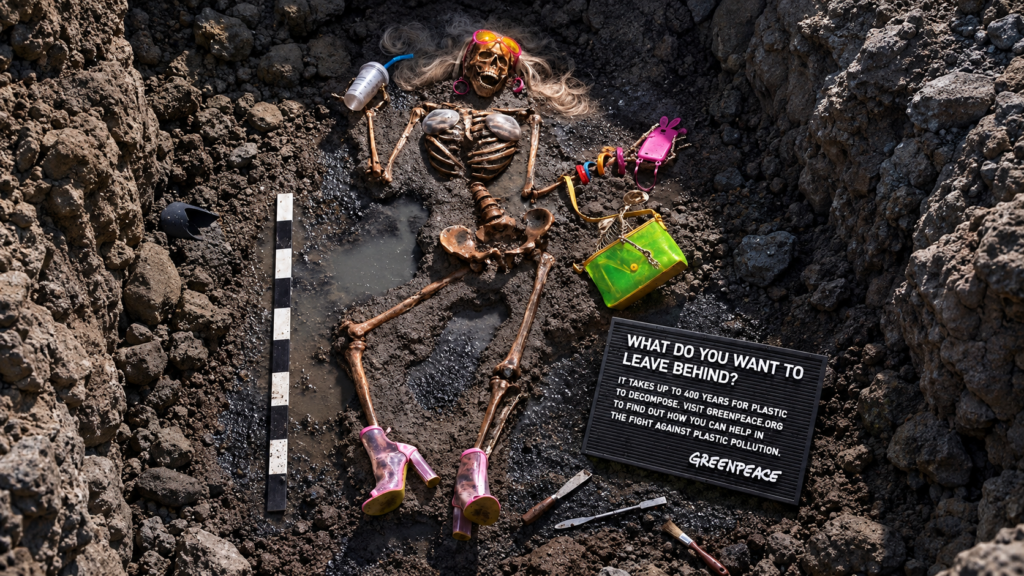
A person may use disposable packaging for only a few minutes, but the plastic can remain in the environment for centuries.
Greenpeace made that contrast visible through Plastic Legacy, a print campaign depicting archaeological excavations from the distant future. Human skeletons are discovered alongside the containers, bottles and food packaging they used during their lives.
The people have almost disappeared, but their rubbish remains recognisable.
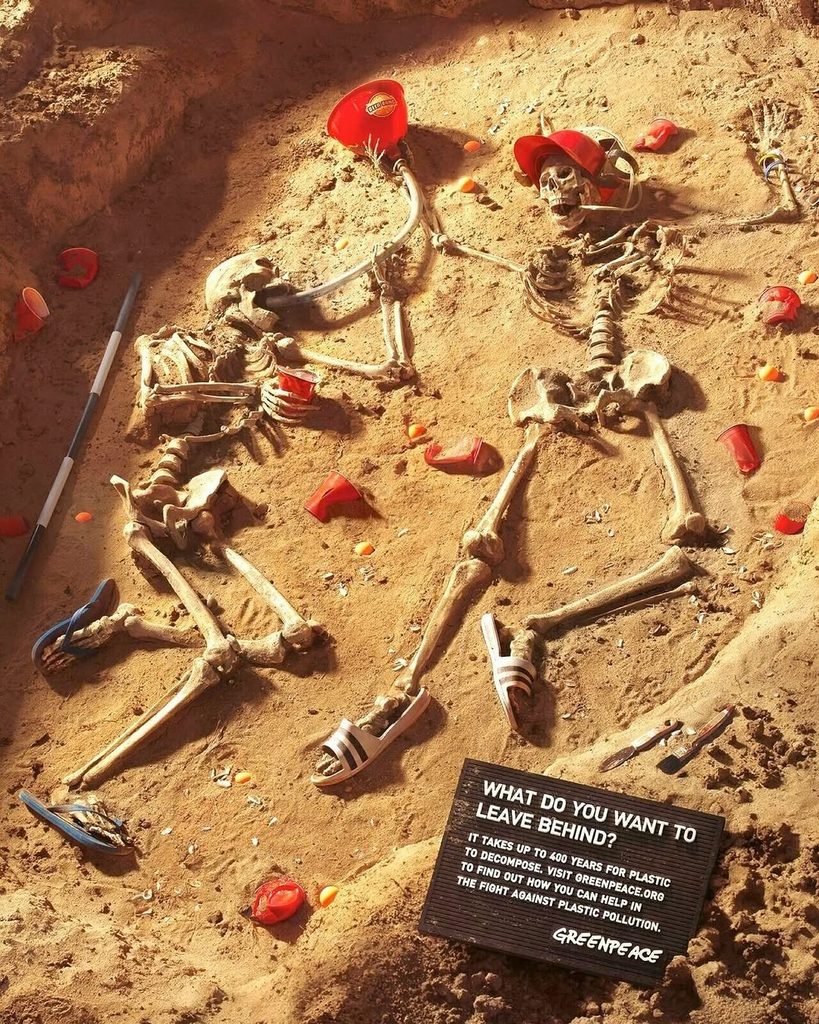
Archaeologists uncovered scenes from everyday life
Each poster is presented from above, giving viewers the perspective of an archaeologist examining a newly uncovered site.
Skeletons remain positioned around ordinary meals. One person appears beside a burger and its packaging, while another is discovered sitting with a pizza. Measuring tapes, brushes, excavation grids and numbered markers make the fictional scenes resemble genuine archaeological documentation.
The poses preserve familiar moments from modern life. What initially appears humorous gradually becomes uncomfortable as viewers notice how well the plastic has survived.
The advertisements suggest that disposable packaging could become one of the most visible records of today’s society.
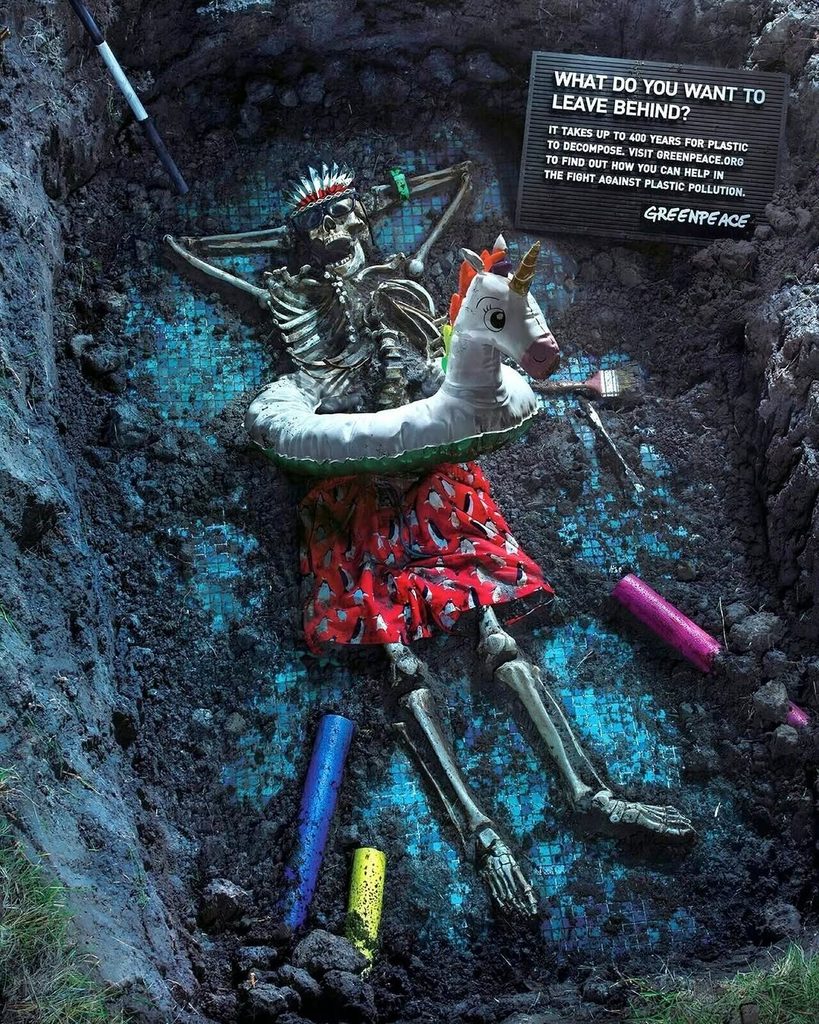
Plastic became an unwanted legacy
A legacy usually refers to something valuable or meaningful passed to future generations.
Greenpeace gave the word a darker interpretation. Instead of leaving knowledge, art or cultural objects behind, the people in these images are remembered through their discarded packaging.
The campaign was based on the warning that some plastic can pollute the environment for up to 400 years. It may gradually break into smaller fragments rather than fully disappearing, allowing its effects to continue across soil, rivers, oceans and food systems.
By placing plastic beside human remains, the campaign translates that timescale into a direct comparison. The person who used the object is gone, but the object is still there.
Ordinary behaviour created the lasting problem
Plastic Legacy does not show factories, overflowing landfills or deliberate dumping.
Its characters are simply eating meals packaged for convenience. Their actions look harmless because they resemble choices people make every day.
This focus makes the campaign difficult to dismiss as someone else’s problem. Each tray, bottle or wrapper appears insignificant when viewed alone, yet millions of similar items create a lasting environmental burden.
The posters show how unconscious habits can produce consequences extending far beyond a single lifetime.
Dark humour drew viewers into the message
The campaign balances environmental warning with visual humour.
Skeletons sitting beside burgers and pizzas create absurd archaeological discoveries. The detailed excavation equipment adds to the joke by suggesting that future researchers are carefully studying today’s takeaway habits.
That humour gives people a reason to examine the images more closely. Once the visual joke becomes clear, the surviving plastic changes the meaning of the scene.
The campaign therefore delivers its warning without relying on familiar images of polluted beaches or injured wildlife. Humanity becomes both the cause of the problem and part of the archaeological evidence.
Detailed illustrations made the future appear believable
The campaign’s three images were constructed to resemble photographic excavation sites.
Earth, bones, tools, shadows and food packaging were carefully composed within each frame. Muted natural colours make the remains feel old, while brighter plastic objects stand out from their surroundings.
The overhead viewpoint allows the images to communicate without lengthy explanations. Viewers can understand who the person was, what they were doing and what remained after them.
A short message about plastic’s lifespan connects the fictional future to the environmental choices being made today.
The campaign asked what people want to leave behind
Plastic Legacy was released in Germany in December 2019 to highlight the growing problem of plastic waste.
Rather than showing pollution only as a present-day issue, Greenpeace projected its consequences hundreds of years forward. Future generations become responsible for uncovering and dealing with materials they did not produce.
The campaign asks viewers to consider how routine decisions might be interpreted long after they are gone.
By imagining disposable packaging as a future archaeological discovery, Plastic Legacy turns a brief moment of convenience into a record that could survive for centuries.
Credits
Plastic Legacy, 2019. Client Greenpeace. Advertising agency fischerAppelt Berlin, Germany. Executive Creative Director David Morales. Creative Director Philip Bolland. Senior Art Director Jessica Philipp. Copywriter Max List. Art Buyer Johanna Merensky. Illustration and production by Carioca Studio.
Related
More in Print

Popular
Popular posts




More stories