Editor's Pick
Mosaix: A Japanese student made bandages that appear to censor injuries in real life
 By Archit
·
·
5 min read
By Archit
·
·
5 min readAI-assisted
Quick summary
A 21-year-old Japanese art student known online as イ7♩ has turned a university design assignment into a viral concept called Mosaix. The project applies pixelated red, pink, and skin-toned color blocks onto transparent patches, creating the physical illusion that a cut or scrape has been digitally censored. Developed over four weeks to replace the frustration of minor injuries with humor, the design deliberately draws attention to the wound rather than trying to blend into the skin.
After images of the mockups were shared online in August 2026, the post quickly generated millions of views and widespread requests to purchase the bandages. However, the current prototypes are handmade from transparent matte sticker paper and are not medically approved or commercially produced. Following the appearance of unauthorized imitations, the creator has explored finding manufacturing partners and potential alternative formats like temporary tattoo stickers or decorative tape.
AI-generated from this article. For complete context and credits, read the full story.
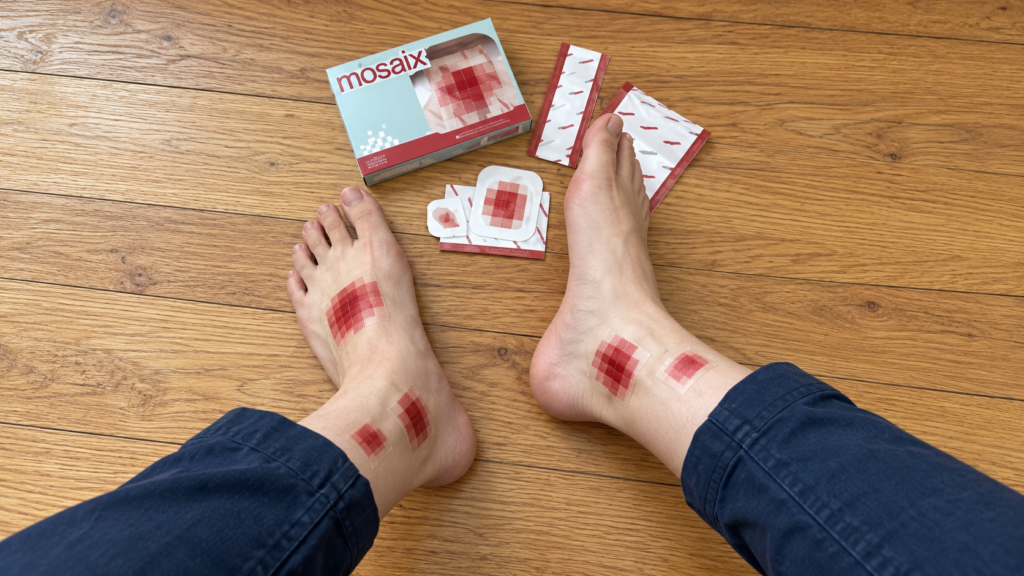
A Japanese art student has turned the pixelated mosaic normally used to hide sensitive images into a playful concept for covering cuts and scrapes.
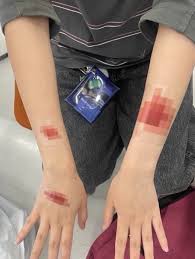
Named “Mosaix,” the project applies blocks of red, pink and skin-toned colour to transparent patches. Once placed over an injury, the pattern creates the illusion that the wound has been digitally censored.
The idea was independently created by a 21-year-old student known online as イ7♩. What began as a university assignment quickly became a viral design concept, attracting millions of views and requests from people wanting to buy it.
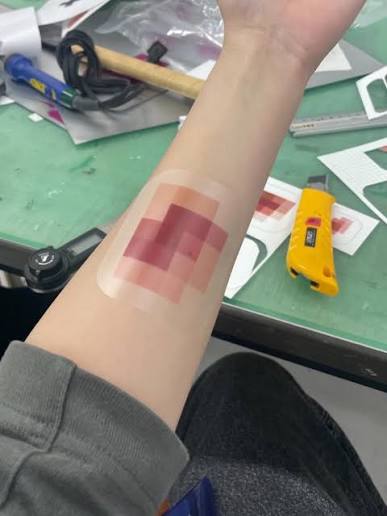
A digital effect moves into the physical world
Pixelated mosaics are commonly used in Japanese television, photography and online video to conceal graphic or sensitive content.
Mosaix transfers that familiar visual effect onto the body.
Instead of trying to make a bandage disappear against the skin, the design deliberately attracts attention. Its blocky pattern suggests that the covered injury is too graphic to be shown clearly, even when the actual cut is minor.
The name combines “mosaic” with a stylised ending that helps the concept feel like a complete product rather than a one-off visual experiment.
Mock packaging and several patch sizes were created to demonstrate how the system could work across small cuts, larger scrapes and injuries on different parts of the body.
The idea began as a university assignment
The student developed Mosaix in response to a university brief asking participants to design something that could improve everyday life.
An injury often creates frustration, pain or embarrassment. The creator wondered whether humour could change that negative emotional response into something more positive.
Adding a censorship pattern to the bandage gave the injury a new meaning. Rather than simply hiding the wound, the patch turns it into a visual joke that people may want to show others.
The project reportedly took around four weeks to develop alongside other university work.
The original patches are mockups
Despite images showing the designs applied to hands and arms, Mosaix is not yet a medically approved or commercially produced bandage.
Printing the design directly onto real adhesive dressings was difficult, so the creator used transparent matte sticker paper to construct the visual prototypes. The material offered a texture and appearance similar enough to demonstrate the idea in photographs.
This distinction is important because the mockups have not been tested for wound care, hygiene, adhesion or skin safety.
The project currently demonstrates what the product could look like. It should not be treated as a medical dressing available for immediate use.
The pattern supports the bandage’s purpose
The idea works because digital mosaics and physical bandages perform similar roles.
A bandage covers and protects an injury. A mosaic visually conceals content that an audience is not supposed to see clearly.
Mosaix combines those two forms of concealment. The patch physically covers the wound while its printed pattern creates the visual impression that the injury has been blurred.
The creator has explained that this connection is central to the project. It is not simply a decorative print that could be replaced with another pattern. The meaning comes from placing a censorship graphic on an object already designed to hide and protect damaged skin.
The concept received a huge response
Images of Mosaix were shared on August 17, 2026, alongside a simple explanation that a mosaic-patterned bandage might be interesting.
Within ten days, the original post had reportedly generated more than 20 million views, approximately 780,000 likes and around 45,000 reposts.
Many responses asked whether the bandages were available to purchase. Others suggested that the playful design could help children feel less upset after a minor injury or work as a visual accessory for performances and events.
The reaction showed that people understood the joke immediately, even without a lengthy product explanation.
Product demand arrived before production
The creator had not initially planned to manufacture Mosaix.
After the images went viral, unauthorised imitations reportedly began appearing for sale in China. The development highlighted how quickly a widely shared concept can be copied before its original designer has the resources to produce it.
The student has since explored whether the idea could become a real product and has asked for help finding manufacturers capable of printing on transparent medical bandages.
Alternative formats may be easier to produce, including temporary tattoo stickers or decorative tape designed to cover scars. These versions could preserve the visual illusion without making unsupported medical claims.
No official retail version, launch date or price has been announced.
One visual joke carries the entire idea
Mosaix demonstrates how a small design change can transform the meaning of an ordinary object.
There is no app, electronic component or complicated instruction. The humour appears as soon as the pixelated patch is placed over the skin.
The concept does not make an injury invisible. It makes the attempt to hide it impossible to ignore.
That contradiction is what gives Mosaix its appeal. A product normally designed to blend in becomes something people notice, photograph and discuss.
Credits
Mosaix was independently created by a 21-year-old Japanese art student known online as イ7♩, using the handle @if_life_s2. The concept was developed over approximately four weeks for a university assignment about making everyday life better. The photographed patches were handmade mockups using transparent matte sticker paper and are not currently commercial medical products. No brand, advertising agency or manufacturing partner was involved in the original project.
About the work
Campaign details
Related
More in Editor's Pick


Popular
Popular posts



More stories